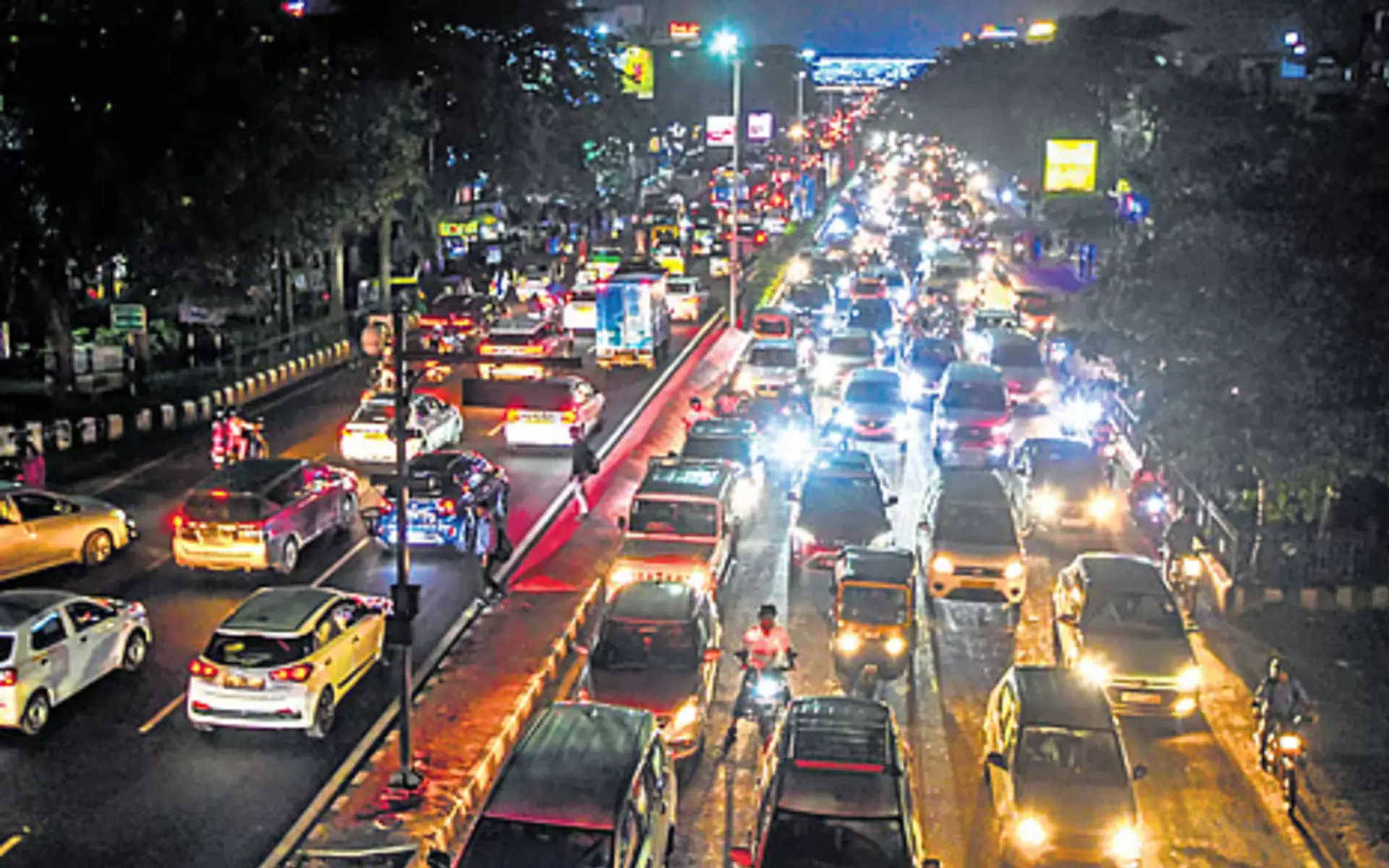
Pune has rolled out a real-time, data-driven traffic monitoring platform developed in partnership with Google India, marking a significant shift in how the city manages congestion across its expanding road network. Officials say the system is already improving vehicle speeds and helping authorities respond faster to traffic bottlenecks.
The Pune Google traffic management system integrates live inputs from Google Maps with a dedicated monitoring dashboard used by city traffic police. The city has been digitally mapped into 550 micro-zones based on road hierarchy, traffic density and junction behaviour, allowing officers to track congestion patterns street by street rather than relying solely on physical inspections. According to senior police officials, the platform has been in use for nearly two months and early indicators show measurable impact. Average vehicular speeds across key corridors have reportedly increased from about 20 kmph to 26.8 kmph a notable improvement in a city where peak-hour congestion often spills into residential neighbourhoods and commercial hubs.
The system identifies slow-moving traffic, unexpected road blockages and recurring choke points in areas such as Hadapsar, Kalepadal, Navale Bridge and the Katraj–Kondhwa corridor. Officials say this granular visibility enables quicker deployment of personnel, signal recalibration and short-term diversions. Over time, aggregated data is expected to support longer-term infrastructure planning. Urban mobility experts view the Pune Google traffic management system as part of a broader transition towards algorithm-assisted governance in Indian cities. As Pune’s population expands and vehicle ownership rises, traditional traffic policing has struggled to keep pace. Real-time analytics can help reduce idle time, cut fuel wastage and lower tailpipe emissions a key consideration in a city grappling with deteriorating air quality.
However, specialists caution that technology alone cannot resolve structural congestion. Road geometry, public transport capacity, last-mile connectivity and land-use patterns all influence traffic flow. Without parallel investment in mass transit, pedestrian infrastructure and non-motorised transport, digital monitoring may deliver incremental rather than transformative change. City officials indicate that an artificial intelligence-based layer is under development to predict congestion before it forms, using historical traffic behaviour and event-based modelling. If implemented effectively, predictive systems could improve signal timing, prioritise emergency vehicles and support coordinated responses during festivals or heavy rainfall.
For businesses, smoother traffic movement has economic implications. Reduced travel time improves labour productivity and logistics efficiency, especially for service-sector firms and small enterprises that depend on reliable urban mobility.
As Pune positions itself as a technology-forward metropolitan region, the success of this initiative will likely be measured not only by speed gains but by its integration with sustainable transport goals. Data transparency, privacy safeguards and cross-agency coordination will determine whether the model becomes a template for other Indian cities seeking smarter, lower-carbon mobility systems.
Pune Google Traffic Management System Launched