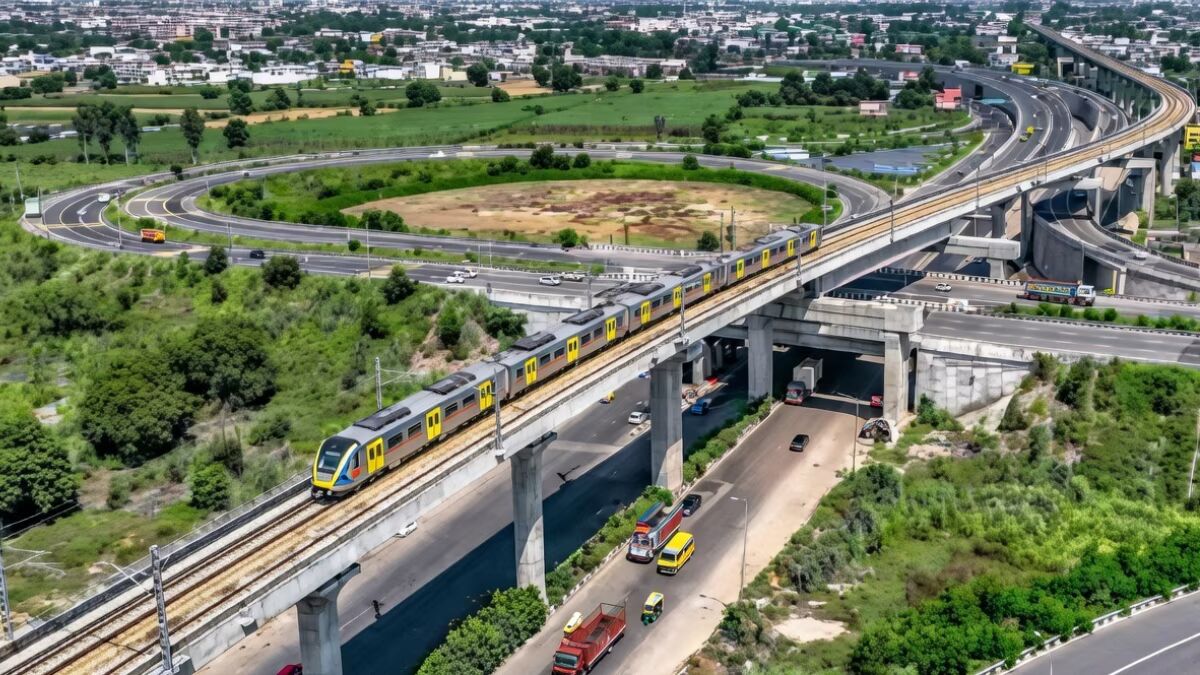
Delhi NCR — Delhi’s transport landscape is set to undergo a transformational shift with the operational launch of a large-scale multimodal transport hub at Sarai Kale Khan, designed to link the Delhi Metro, Inter-State Bus Terminal (ISBT), Indian Railways and multiple Regional Rapid Transit System (RRTS) corridors under one integrated infrastructure framework.
The development represents a strategic effort to reduce commuter travel time, enhance regional connectivity and support sustainable urban mobility across the wider National Capital Region (NCR). The Sarai Kale Khan hub, now fully commissioned, forms the focal point of India’s first operational RRTS network and is expected to provide seamless interchange between rapid regional rail and intra-city transport systems. The hub connects three priority corridors — Delhi–Meerut, Delhi–Alwar and Delhi–Panipat/Karnal — enabling passengers to traverse long distances across the NCR with minimal transfer friction. Integration with the Metro’s Pink Line, the Hazrat Nizamuddin railway station and the Veer Haqeeqat Rai ISBT is intended to streamline door-to-door journeys and reduce reliance on private vehicles. Urban mobility specialists highlight that multi-modal integration is critical to managing the NCR’s rapid population growth and commuter demand.
By connecting mass transit services at a single nodal point, planners aim to alleviate congestion on major highways and arterial roads, particularly routes that currently see high volumes of intercity traffic. The hub’s design anticipates at least 60–70 per cent reduction in travel times compared with conventional road journeys, especially along the Delhi–Meerut and future Alwar and Panipat corridors, which previously involved multi-hour road commutes. The operationalised Delhi–Meerut RRTS corridor, spanning over 82 km, exemplifies this ambition: where traditional road travel could take up to three hours, the rapid transit system’s high-speed services now allow similar cross-regional commutes in roughly 55–60 minutes. Such time savings could dramatically reshape labour and residential choices in the NCR, opening up satellite towns as viable commuter hubs and easing housing pressure in Delhi’s core. From an economic standpoint, the hub’s connectivity also has implications for productivity and business linkages. Faster transit not only expands labour market catchments but supports tighter supply chains between commercial centres in Delhi, Ghaziabad, Modinagar and beyond.
Freight and logistics operators, while not direct beneficiaries of passenger rail, could see secondary gains from reduced road congestion and improved last-mile connectivity. Environmental sustainability is another key dimension. By offering a compelling alternative to car travel, the integrated system is expected to cut per-capita emissions and reduce urban air pollution — a persistent challenge in Delhi NCR. Multi-modal hubs such as Sarai Kale Khan can anchor transit-oriented development around dense yet low-emission nodes, aligning with broader climate resilience strategies. However, challenges remain. Effective utilisation of the hub will depend on feeder network improvements, affordable fare integration across modes and accessible pedestrian linkages. Adequate last-mile connectivity — whether through buses, shared mobility services or e-cycles — is essential to ensure that peripheral and low-income communities can fully benefit from the enhanced transit infrastructure.
As Delhi NCR moves toward fully operationalising all three RRTS corridors, policymakers will need to balance rapid deployment with inclusive and climate-responsive design. The Sarai Kale Khan hub’s early success could provide a blueprint for future transport integration across India’s urban corridors, forging a more interconnected, efficient and sustainable regional mobility ecosystem.