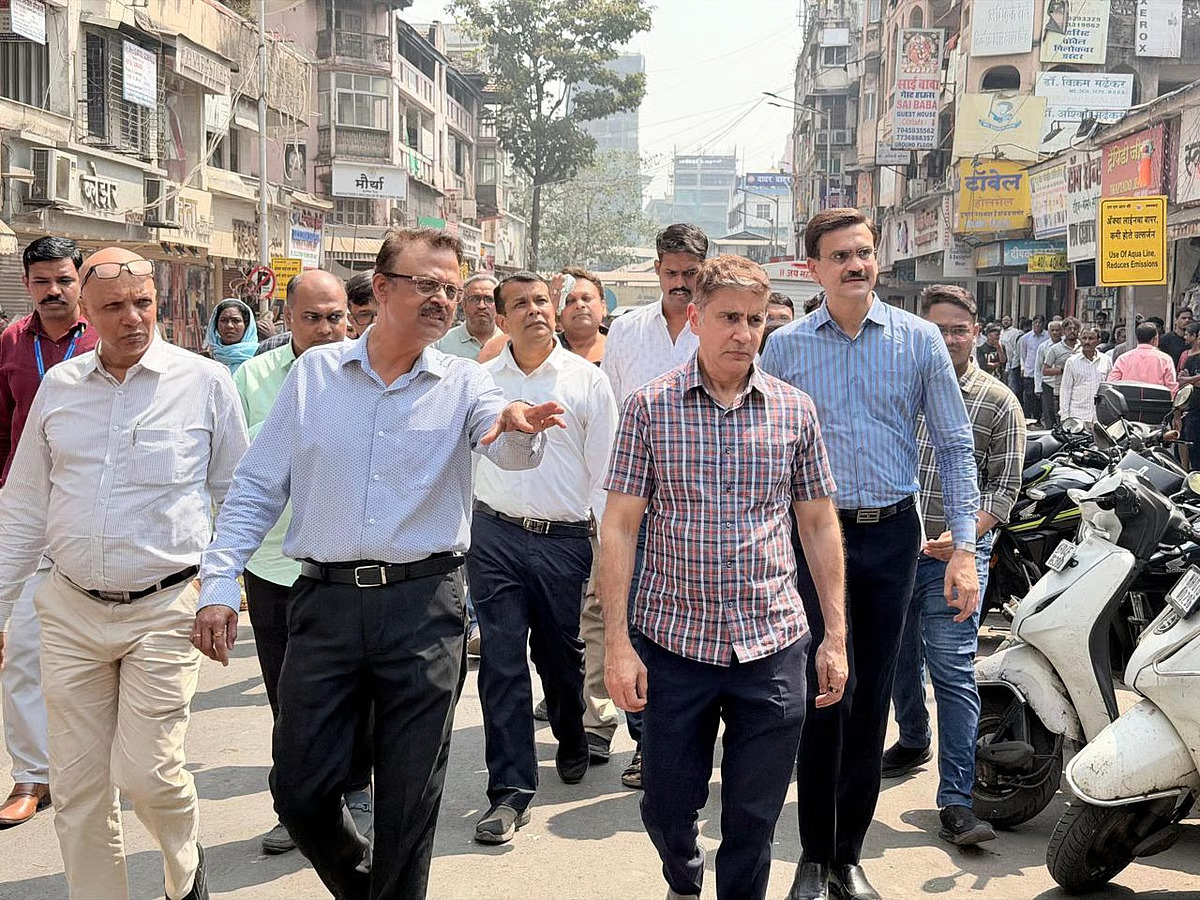
Mumbai’s municipal authorities have intensified efforts to regulate street vending, with illegal hawkers cleared from key city footpaths under the supervision of Municipal Commissioner Bhushan Gagrani. The action, conducted across wards including F North, F South, and G North, targeted congested areas such as Dadar, Parel, Matunga, Sion, and Mahim. Officials said the drive seeks to reclaim public spaces while balancing urban mobility and pedestrian safety.
During a surprise site inspection, Commissioner Gagrani engaged with local residents and traders to assess concerns and gather suggestions for a structured approach. A senior civic official noted that encroachments along narrow footpaths, under flyovers, and near schools, hospitals, and railway stations create not only traffic bottlenecks but also safety hazards, including higher accident risks for pedestrians and motorists. The BMC’s campaign follows directives from the Bombay High Court and emphasises the creation of clearly defined “vendor-free zones” along major thoroughfares. By enforcing these zones, municipal authorities aim to reduce street congestion and ensure unobstructed access to essential civic infrastructure, while also maintaining compliance with urban planning regulations.
Officials underlined that the operation is not intended to undermine livelihoods. Instead, it seeks to formalise street vending by identifying and surveying eligible, registered vendors for inclusion in designated hawker zones. Urban planners and industry experts suggest that such regulated zones provide a sustainable model, balancing economic opportunity with public space management. The BMC is simultaneously developing rehabilitation and operational plans for vendors, ensuring continued income while adhering to spatial guidelines. Analysts highlight that reclaiming pedestrian corridors contributes to a more equitable and climate-resilient urban environment. Open and accessible footpaths reduce vehicle reliance for short trips, supporting pedestrian mobility and lowering emissions. Moreover, regulated hawker zones can be integrated with transport hubs and commercial areas, improving last-mile connectivity while maintaining orderly urban streetscapes.
Civic officials confirmed that the drive will continue in phases, with monitoring and enforcement mechanisms strengthened across Mumbai. Commissioner Gagrani emphasised that feedback from traders and citizens will inform adjustments to zoning, rehabilitation strategies, and future vendor allocations. The initiative represents a step towards people-first urban management, seeking to harmonise citizen convenience, street safety, and sustainable economic activity. Municipal authorities said the city-wide plan aims to deliver long-term benefits, ensuring that public spaces remain accessible, safe, and usable for all, while simultaneously providing regulated commercial opportunities for street vendors.
Illegal hawkers cleared as Commissioner Bhushan Gagrani leads BMC drive