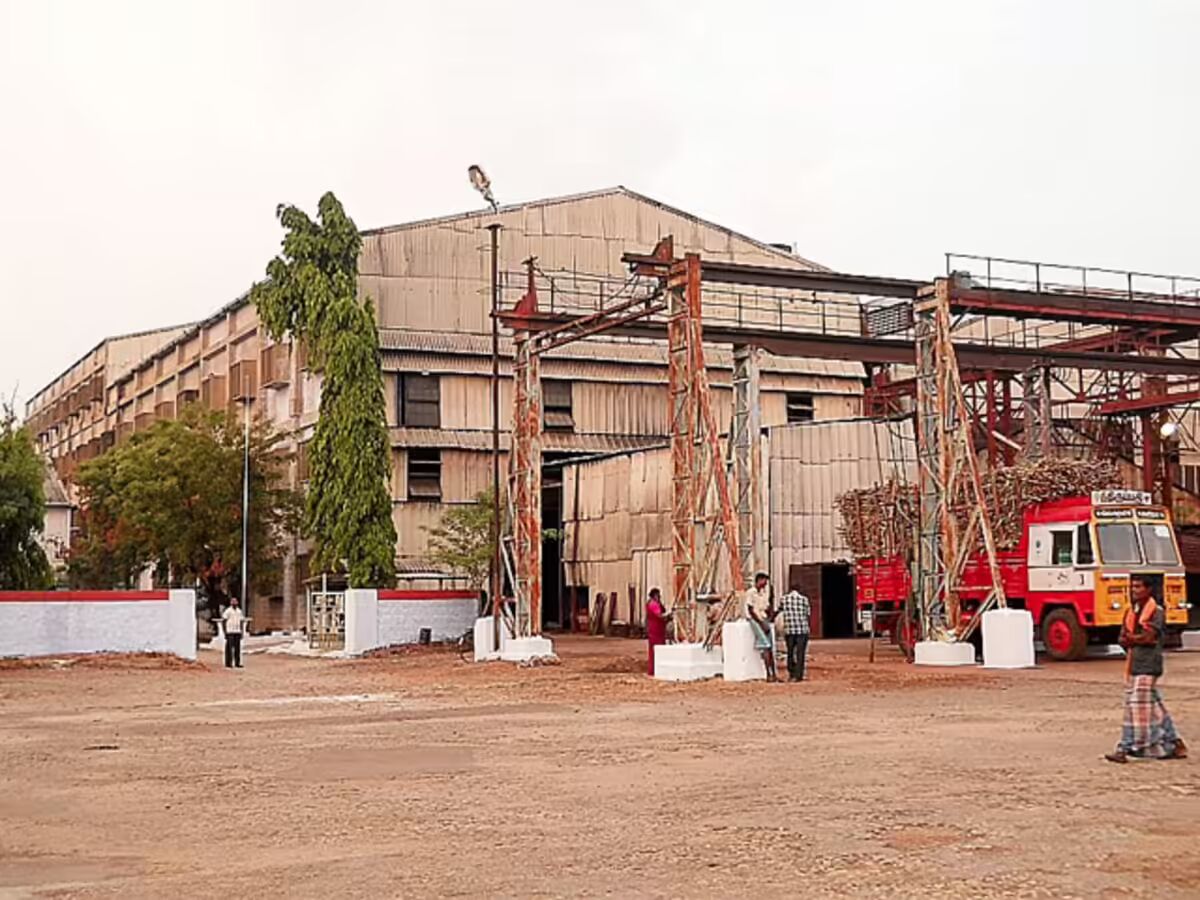
Patna sugar mill revival, Bihar agro industry, cooperative sugar mills, rural employment, NFCSF partnership, ethanol production, compressed biogas, agricultural value chains, Saat Nischay-3, agro-industrial growth, sustainable rural development
Patna, Bihar — In a strategic move to reinvigorate agro-industrial activity in northern Bihar, the state’s Co-operative Department has formalised a memorandum of understanding (MoU) with the National Federation of Co-operative Sugar Factories Ltd. (NFCSF) to revive two defunct sugar milling units and develop integrated sugarcane complexes in Sakri and Rayam.
The agreement, signed in Patna under the government’s Saat Nischay-3 “Samriddh Udyog-Sashakt Bihar” framework, is designed to strengthen local agricultural value chains and rural employment while enhancing market access for sugarcane producers. The initiative marks a concerted effort to address the long-standing closure of these mills — idle since the late 20th century — which had left large swathes of the Madhubani and Darbhanga districts without agribusiness infrastructure. The NFCSF, a national cooperative body with experience in sugar sector revival and operations, will first conduct feasibility assessments and prepare detailed project reports before detailed planning and construction can begin. Officials involved in the MoU signing highlighted that the planned sugar complexes are envisioned as multi-product hubs: besides sugar, they would incorporate electricity generation, ethanol production and compressed biogas (CBG) facilities.
This broad product mix aligns with evolving rural industrial strategies that aim to boost renewable energy supplies and create alternative revenue streams for farming communities. For policymakers in Patna, the revived mills could serve multiple functions. They represent not only a return to industrial activity in areas that have experienced persistent underinvestment but also a vehicle to stabilise sugarcane-market linkages and ensure fair price realisation for farmers who have traditionally struggled with fragmented supply chains. By organising producer cooperatives around these facilities, planners aim to foster collective bargaining power and reduce the dominance of intermediaries in agricultural markets. Economists tracking Bihar’s rural industrialisation note that such cooperative models can support inclusive growth if they are integrated with broader rural services — including credit access, agronomic extension services and logistics infrastructure. “Reviving closed mills is one thing; ensuring they are financially viable and socially equitable is another,” said a regional development expert.
The success of these investments may hinge on how effectively they can balance social returns with commercial sustainability. The renewed focus on sugar mills also has implications for energy transition in rural Bihar. Ethanol and biogas production — embedded in the project design — reflect national and state efforts to reduce carbon intensity in energy systems and promote bio-economy pathways that complement traditional agriculture. If implemented at scale, these elements could help diversify rural economic bases and reduce reliance on purely commodity-linked revenues. However, experts caution that MoUs in themselves are just the first step. Realising structural impact will require timely preparation of the feasibility reports and detailed project reports, transparent land transfer processes, and grinding capacity investments that reflect market realities. The coming months of field assessment by the NFCSF team — currently underway — will be critical in shaping the future rollout.
For thousands of sugarcane cultivators in Bihar’s northern plains and the wider cooperative sector, the venture represents a hopeful shift toward integrated rural industrialisation. How effectively these revived mills can catalyse inclusive economic opportunity and resilient agro-ecosystems will be a decisive test for the state’s development ambitions beyond urban centres like Patna.