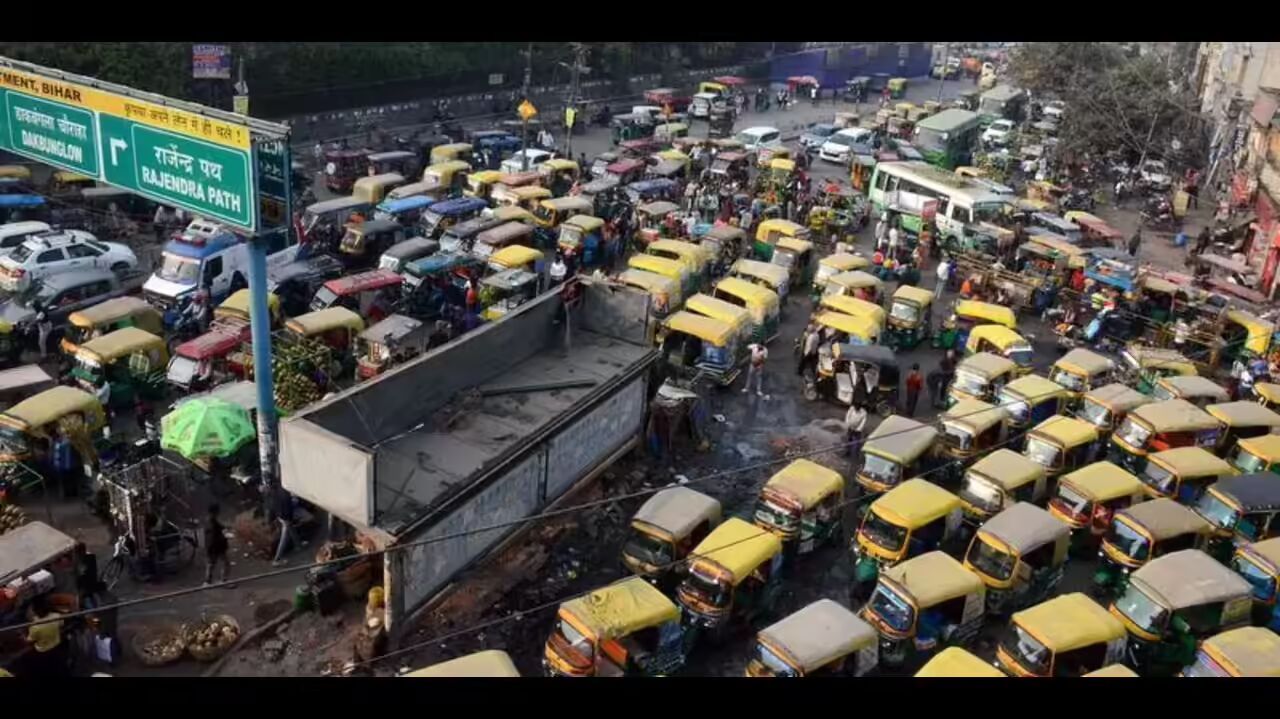
Patna, Bihar — The Patna authorities have approved a major expansion of Nehru Path, one of the city’s principal arterial thoroughfares, from the Rupaspur intersection to Saguna Mor, widening it to 14 lanes in response to mounting traffic volumes and urbanisation pressures.
This bold infrastructure move reflects the city’s efforts to modernise its transport network, improve mobility, and support economic growth across its urban footprint. Nehru Path—historically known as Bailey Road—is a critical urban axis that connects central Patna with southern suburbs and the Danapur region, carrying heavy commuter, freight, and public transit flows daily. The decision to substantially widen this corridor is aimed at addressing chronic congestion in peak hours, enhancing road safety, and better integrating peripheral neighbourhoods into the city’s transport grid. Urban planners note that road widening at this scale can potentially reduce travel times and operational costs for businesses, particularly freight operators and logistics services that rely on efficient road movement to link producers and consumers across eastern and northern India.
Improved connectivity along this stretch also supports broader regional integration with national transport routes leading towards the southern districts and adjacent states. However, expanding urban roads amid dense development poses planning and environmental challenges. Securing land for additional lanes often requires resettlement or adjustments to existing property uses, and it may disrupt local communities during construction. Civil engineers and city mobility experts caution that without parallel investments in public transport alternatives, excessive road expansion can lead to increased private vehicle use, higher emissions, and persistent congestion in the long term. Patna has recently moved to diversify its mobility portfolio. The city’s nascent metro network, including elevated stations on the Blue Line, has begun operations to offer a sustainable alternative to road traffic, aiming to reduce carbon emissions and support climate-aligned mobility goals.
However, the metro’s reach remains limited to specific corridors, making road upgrades like Nehru Path essential for the immediate connectivity demands of commuters and businesses. Economic analysts also underscore the latent demand for structured urban freight movement in Patna. As city households and businesses deepen digital commerce adoption and expand supply chains, roads such as the Nehru Path corridor double as logistics lifelines. Disruptions or delays in such infrastructure upgrades risk dampening commercial activity, from small enterprises to larger manufacturers that depend on fluid urban movement. From an inclusive development perspective, officials highlight the need to incorporate dedicated pedestrian pathways, bicycle lanes, and accessible crossings in the final design, to ensure that this widened corridor benefits all road users—not just motorised traffic. Such features are increasingly seen as vital to equitable city mobility, enabling safer travel for women, the elderly, and students.
Looking forward, the timely execution of the expanded Nehru Path will be a test of Patna’s capacity to balance rapid urban growth with sustainable, people-centric transport planning. Integrating this project with broader mobility initiatives—like feeder bus services, traffic management technologies, and non-motorised transport infrastructure—will be crucial to unlocking the full economic and social potential of this landmark upgrade.