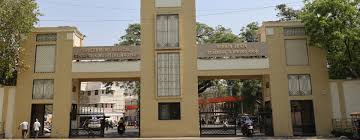
The Maharashtra government has cleared funding of approximately ₹122 crore for Government Medical Colleges across the Vidarbha region, accelerating long-pending upgrades in diagnostic infrastructure and clinical training. The investment, spread across multiple institutions in eastern Maharashtra, is expected to strengthen tertiary healthcare access in districts that have historically lagged behind western parts of the state.
Of the latest allocations, nearly ₹67 crore has been earmarked for institutions in Gadchiroli and Amravati, including a ₹30 crore provision for installing a 3-Tesla MRI system in Gadchiroli. The high-field imaging equipment is expected to significantly improve early detection of neurological, oncological and musculoskeletal conditions in a district where patients often travel to larger cities for advanced scans.A senior health department official said the enhanced imaging capacity will reduce referral pressure on metropolitan centres while improving response times for trauma and stroke cases. In regions with dispersed settlements and forested terrain, quicker diagnostics can influence survival outcomes and long-term rehabilitation costs.
Amravati’s allocation includes the establishment of a modern clinical skill laboratory designed to strengthen hands-on training for medical students and nursing staff. Urban health planners note that simulation-based training environments are increasingly seen as essential infrastructure, enabling safer patient care and better preparedness for emergencies without overburdening hospital wards.Earlier this month, administrative approvals of nearly ₹55 crore were also granted for advanced medical equipment procurement at Government Medical Colleges and Hospitals, along with the Government Dental College in Nagpur. These purchases aim to expand super-speciality services, particularly for critically ill patients requiring high-dependency monitoring and precision interventions.
Collectively, the funding push signals a regional healthcare rebalancing strategy. Vidarbha’s districts have long faced gaps in specialist availability, critical care beds and diagnostic technology. By strengthening Government Medical Colleges, policymakers appear to be using institutional campuses as anchors for broader healthcare ecosystems — supporting not only patient care but also medical education, employment and ancillary services.Healthcare economists argue that capital investment in public hospitals can have multiplier effects. Upgraded facilities tend to attract private diagnostic partnerships, housing demand for medical professionals and improved transport connectivity. However, experts caution that infrastructure upgrades must be accompanied by sustained operational funding, skilled staffing and maintenance budgets to avoid equipment underutilisation.
From an urban development lens, distributed healthcare investment can ease migration pressures toward mega cities by ensuring quality treatment closer to home. This aligns with climate-resilient planning principles that encourage decentralised service delivery and reduce long-distance patient travel.As the sanctioned projects move towards implementation, attention will shift to timelines, procurement transparency and workforce readiness. For Vidarbha’s Government Medical Colleges, the coming year could mark a structural shift — from referral-dependent campuses to more self-sufficient regional health hubs capable of serving both urban and rural populations.