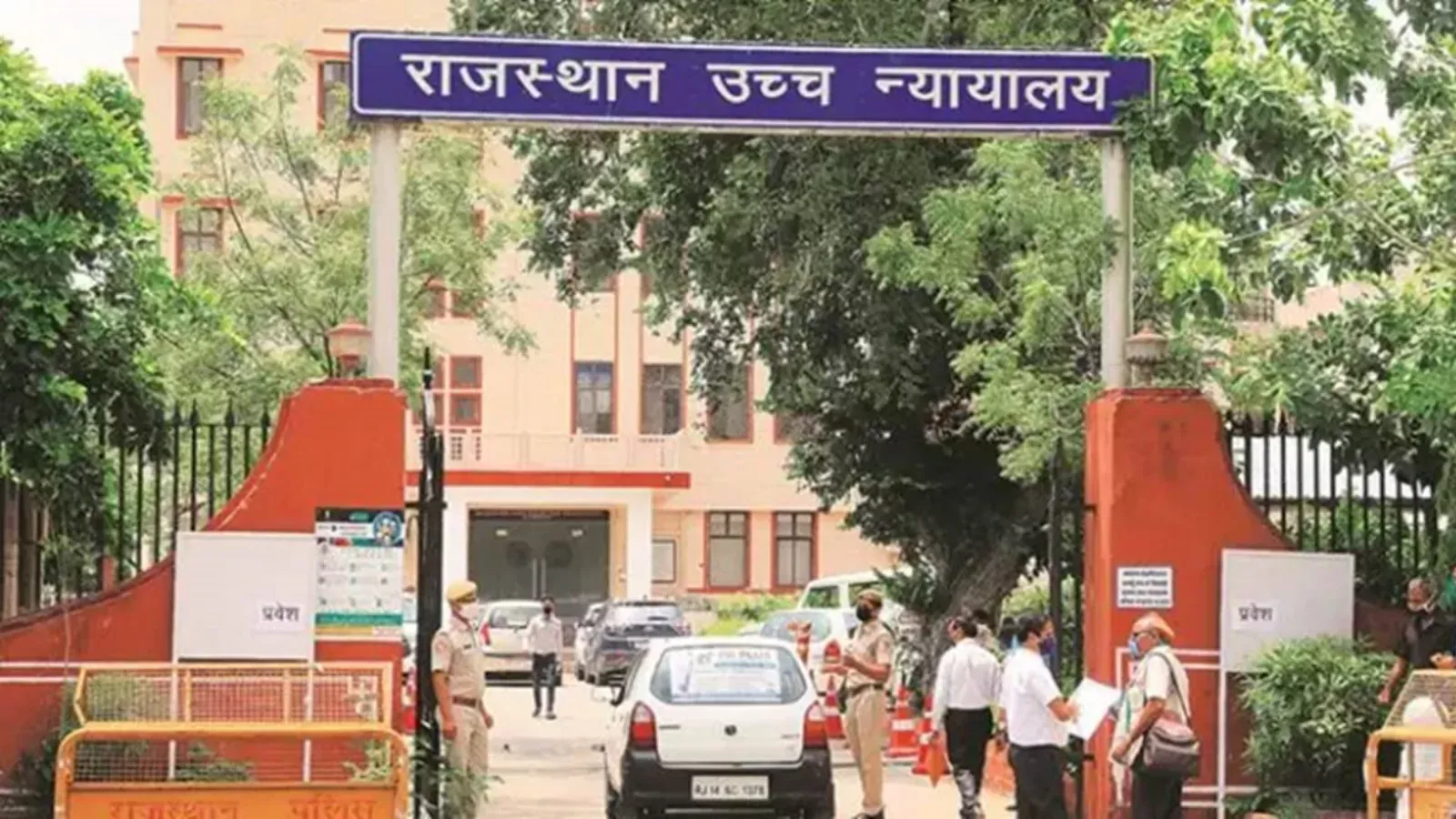
Jaipur — The Rajasthan High Court (Jaipur Bench) has issued a contempt notice to the Jaipur Development Authority (JDA) for alleged non-compliance with a judicial stay order relating to the sealing of a private marriage garden, underscoring ongoing challenges in urban land governance and administrative accountability in the state capital.
The proceedings highlight sensitivities around regulatory enforcement, judicial oversight and procedural fairness in urban development oversight. The dispute stems from an earlier decision of a division bench — comprising Justice Sudesh Bansal and Justice Anil Kumar Upman — which, on 8 January 2026, stayed the effect and operation of a sealing order on the marriage garden. The petitioner, who operates the venue, subsequently approached the JDA requesting that the premises be unsealed following the court’s directive. However, JDA’s apparent inaction for more than 20 days after the stay order prompted the filing of a civil contempt petition alleging wilful disobedience of the court’s instructions. In its notice, the High Court has formally called upon JDA to respond to the allegations of non-compliance. The contempt notice indicates judicial impatience with administrative inertia, particularly when a binding court order is involved. Judicial enforcement mechanisms such as contempt notices are rare and signal that the court views the matter as more than a routine dispute over land regulation.
For urban planners and property developers, this case exposes systemic friction between statutory authorities and judicial oversight in rapidly urbanising cities like Jaipur. Land use decisions — including sealing, rezoning and regulatory compliance — significantly influence real estate markets, property rights and investment confidence. When statutory bodies are perceived to delay or ignore judicial directives, it can create uncertainty among investors and erode trust in regulatory frameworks that are meant to provide clear and predictable outcomes. The underlying dispute also reflects broader issues around urban land governance in Indian cities, where development authorities often grapple with overlapping mandates, cumbersome procedures and enforcement back-logs. In cities experiencing fast-paced economic and demographic growth, such as Jaipur — where land values are rising and development pressures intensify — clear protocols for implementing both regulatory and judicial decisions are critical to balanced urban growth.
Legal experts suggest that this case could set a precedent for how development authorities manage compliance with court orders in land disputes. The contempt route is typically invoked only when there is evidence of deliberate and unjustified defiance of judicial instructions, rather than mere administrative delay. Should JDA fail to provide satisfactory reasons, the court may move to enforce compliance more directly or impose sanctions. The broader implications also touch on institutional accountability. Development authorities like JDA operate at the intersection of policy implementation and regulatory control over urban land use. Their decisions on sealing, de-sealing or permitting carry significant social and economic ramifications for property owners, neighbourhoods and investors. Effective governance mechanisms are necessary to maintain both procedural fairness and public confidence in urban systems.
As the case progresses, municipal planners, legal practitioners and property market stakeholders will be watching closely. Ensuring that judicial directives are honoured without excessive delay is key to a transparent and predictable urban regulatory environment — something that cities like Jaipur increasingly need as they expand and diversify their built infrastructure and housing markets.