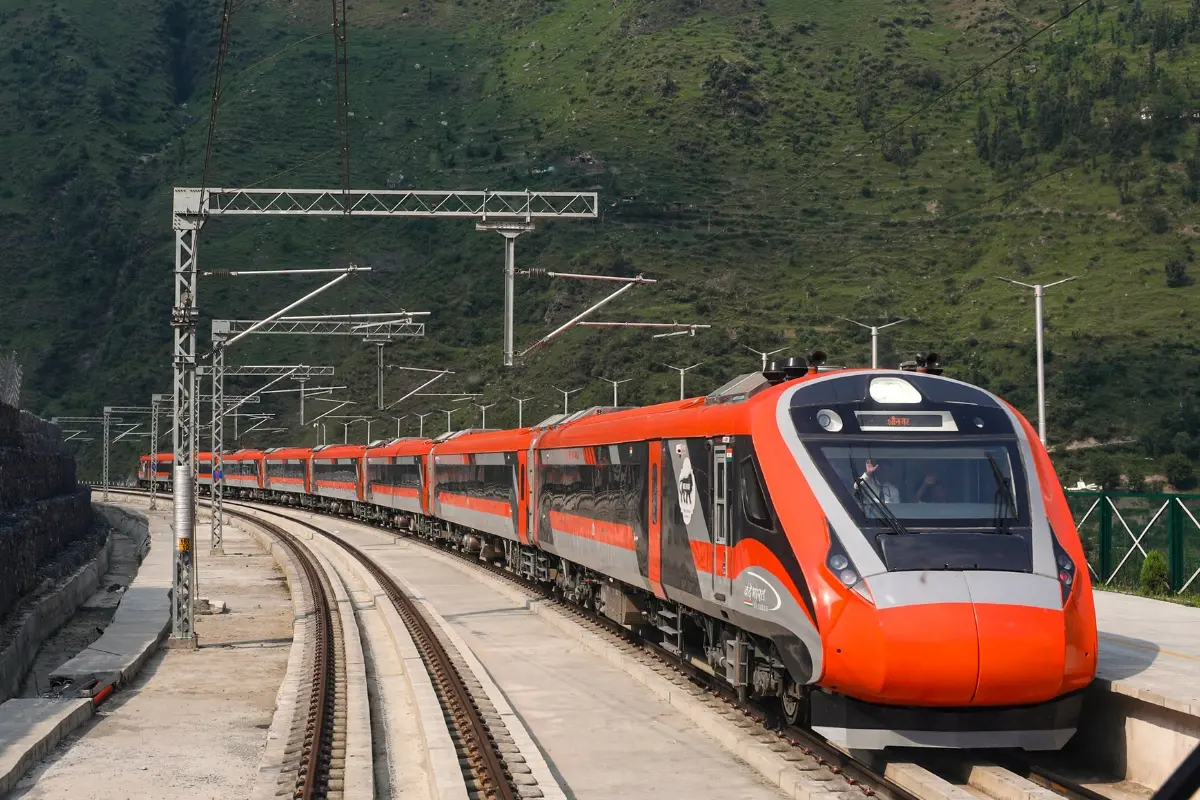
Goa’s proposed Vande Bharat rail link with Bengaluru is drawing scrutiny from commuters and transport planners, who are weighing whether the premium service will meaningfully enhance connectivity to the coastal state. While the proposal is under consideration by railway authorities, projected journey times of up to 13 hours have prompted debate over scheduling, affordability and overall practicality.
For Goa, tourism remains a central economic pillar, with a steady flow of visitors from Karnataka throughout the year. A high-speed daytime connection could potentially strengthen weekend and short-stay travel. However, preliminary estimates suggest that the Goa Vande Bharat service may offer only marginal time savings compared with existing express trains operating through the Western Ghats. Rail experts point out that the ghat section near Londa imposes speed constraints due to gradients and curvature. Without significant infrastructure upgrades, sustained high-speed travel is difficult to achieve. As a result, the anticipated travel time for the Goa Vande Bharat could extend beyond 11 hours, narrowing the advantage over overnight sleeper services that allow passengers to arrive early morning.
Scheduling is emerging as a decisive factor. Tourism operators in Goa note that arrival time often shapes visitor spending patterns. A late-evening arrival after a full day’s journey may reduce leisure time and hotel occupancy flexibility. Conversely, very early departures from Bengaluru could limit uptake among holiday travellers seeking convenience. Affordability also remains under discussion. Vande Bharat trains are priced higher than conventional services, reflecting upgraded seating, onboard amenities and faster turnaround times. For Goa-bound travellers, particularly students and seasonal workers, fare sensitivity is high. If the time differential is limited, passengers may continue choosing lower-cost alternatives or short-haul flights, especially during peak travel months.
Urban mobility analysts emphasise that improved rail connectivity to Goa could still play a positive environmental role. Strengthening electrified inter-city rail options reduces reliance on private vehicles and long-distance buses, which contribute to highway congestion and higher emissions along the Mumbai–Goa and Bengaluru–Goa corridors. Policy observers suggest that a calibrated approach potentially including a revised timetable or sleeper configuration could better align the Goa Vande Bharat service with actual travel behaviour. As the Railway Board reviews operational feasibility, the larger question for Goa is not simply about introducing a premium train, but about designing a service that integrates tourism demand, commuter comfort and sustainable mobility objectives. The coming months will determine whether the Goa Vande Bharat becomes a flagship connectivity upgrade or a missed opportunity shaped by timing and pricing decisions.
Goa Route Raises Vande Bharat Concerns