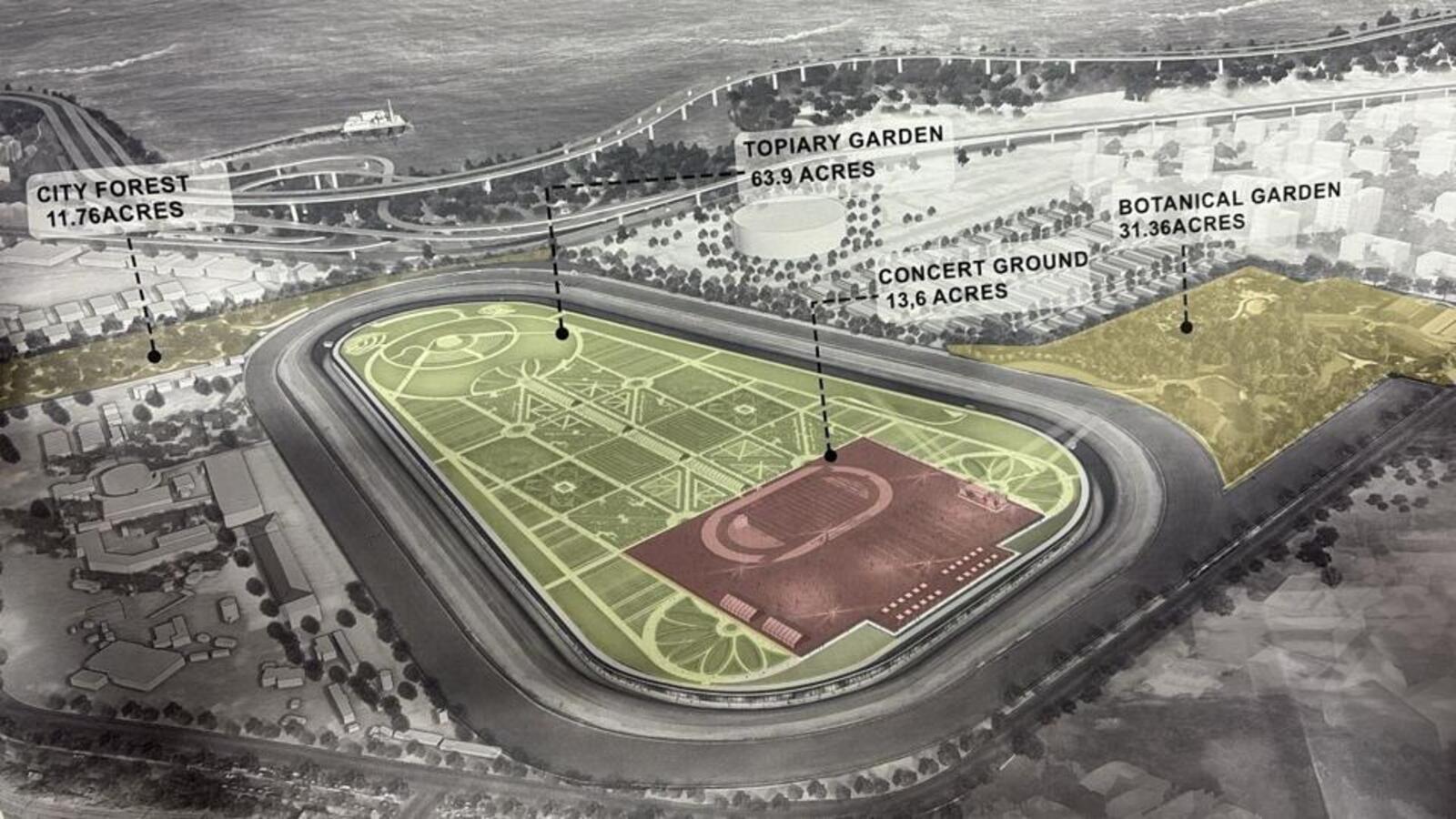
Plans for a large underground sports and parking facility beneath the Mahalaxmi Racecourse have entered a critical phase as designers outline a flood-management system intended to safeguard one of Mumbai’s most flood-prone precincts. The proposal centres on a continuous ravine-like drainage and water-treatment corridor encircling the underground structure, aimed at regulating stormwater during extreme rainfall events.
According to officials familiar with the project, the subterranean stadium and parking infrastructure form part of a broader racecourse redevelopment that also includes landscaped public gardens, a refurbished racing track and supporting facilities spread across more than 120 acres at ground level. Authorities maintain that the site’s open and green character will be largely preserved, even as new below-ground amenities are explored. The proposed ravine system is designed to function as a managed water catchment, responding to variations in ground level and rainfall intensity across the site. Urban planners involved in early consultations say the concept seeks to slow, store and gradually release runoff rather than divert it abruptly into the city’s overburdened drainage network. In theory, such an approach could reduce localised flooding while improving water quality through natural filtration processes.
However, the plan has sparked unease among sections of Mumbai’s design and planning community. The Mumbai Architects Collective, a body of architects and urban specialists, has cautioned that altering the subsurface of the racecourse could compromise its long-standing role as a natural flood buffer. The open grounds, they argue, currently absorb excess rainwater from surrounding neighbourhoods during heavy downpours and high tides, allowing it to percolate slowly into the soil. From a climate-resilience perspective, the concern is not the presence of new infrastructure alone but the cumulative impact of waterproof underground construction in a low-lying coastal zone. Experts note that as climate change intensifies rainfall patterns, cities like Mumbai must be particularly cautious about reducing permeable surfaces that act as informal reservoirs during peak monsoon periods.
Civic authorities, meanwhile, have emphasised that the redevelopment remains at a conceptual stage. Senior officials from the Brihanmumbai Municipal Corporation have stated that no final design has been approved and that hydrology, drainage performance and environmental impact assessments will be central to future evaluations. They have also indicated that alternative layouts or scaled-back interventions remain possible if studies show risks to flood safety. For residents and urban observers, the debate reflects a larger tension facing Mumbai’s development trajectory: how to introduce modern public amenities without weakening the ecological systems that quietly protect the city. As land values rise and underground construction becomes more attractive, the racecourse project is emerging as a test case for whether climate resilience can be embedded into high-value urban redevelopment rather than treated as an afterthought.
The next stage is expected to involve detailed technical studies and further public consultations, outcomes that could shape not just this project but future approaches to building beneath Mumbai’s vulnerable open spaces.
Mumbai Racecourse Designs Perimeter Drainage For Stadium