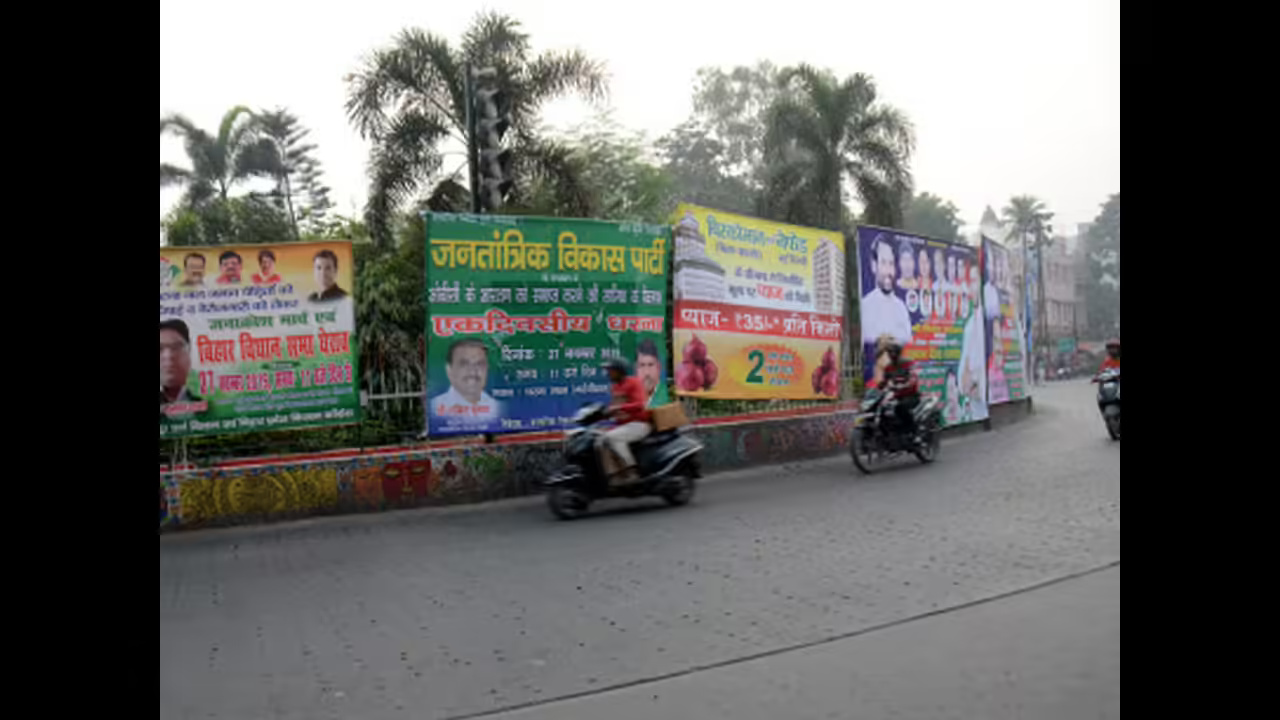
Patna Acts To Clear Unauthorised Outdoor Advertising
Patna — The Patna Municipal Corporation (PMC) has initiated a citywide campaign to dismantle illegal hoardings and outdoor advertising structures, positioning the move as part of broader efforts to enhance urban aesthetics, public safety, and regulatory compliance across the rapidly growing capital.
Civic officials say the clean-up drive supports safer street environments, preserves sightlines along key thoroughfares, and aligns with evolving standards for people-centred public spaces that balance commercial visibility with quality of life. The enforcement action, directed at unauthorised billboards, flex boards and promotional signage installed without statutory permissions, comes amid increasing concerns over visual clutter, traffic distraction and encroachment of public land. PMC teams, accompanied by enforcement officers, have been systematically identifying and removing structures that violate the city’s urban planning norms and advertising guidelines. Officials have framed the campaign as a necessary step toward regulated outdoor media space that respects both legal frameworks and urban design principles. Urban planners note that uncontrolled outdoor advertising can degrade a city’s visual character, compromise road safety and disproportionately impact pedestrians and vulnerable road users.
In dense metropolitan corridors — particularly near intersections, commercial districts and transit hubs — excessive and poorly placed hoardings contribute to sensory overload and obstruct critical sightlines. By removing illegal installations, Patna aims to reduce such hazards while creating clearer urban vistas that support mobility and walkability. The drive also intersects with public safety considerations. Municipal authorities have pointed to instances where temporary or poorly constructed hoardings have posed risks during high winds and monsoon conditions, endangering passers-by and damaging infrastructure. Clearing insecure structures, the PMC says, is part of a preventive approach that mitigates avoidable hazards and strengthens enforcement of building and advertising codes. According to city officials, the action includes outreach to property owners and advertisers, notifying them of compliance requirements and giving legitimate businesses pathways to regularise permitted signage.
“We are not opposing outdoor media per se, but we insist on orderly, regulated installation that aligns with the city’s planning and safety standards,” a civic spokesperson said, noting that authorised hoarding permits remain available within established guidelines. Regulated outdoor advertising has economic value, particularly for small businesses seeking visibility in bustling urban markets. Experts underscore that balanced policies can accommodate commercial needs while protecting the public realm — the shared spaces that define a city’s character. Patna’s approach, by emphasising enforcement paired with clear compliance options, aims to strike that balance. Citizen groups and resident associations have largely welcomed the initiative, saying that removing illegal hoardings improves the look and feel of neighbourhoods, particularly in heritage zones and key civic corridors.
Many residents equate uncluttered streetscapes with better urban experience and greater safety for pedestrians and cyclists. Yet, analysts caution that sustained impact depends on consistent monitoring and clear institutional coordination. Municipal enforcement must be backed by transparent permitting processes, updated bylaws and easy-to-navigate complaint systems so that legal advertising can coexist with orderly city design. Measures such as digitised permit tracking, GPS-mapped hoarding inventories and inter-agency communication channels can enhance the long-term regulatory regime. Urban planners also recommend integrated signage standards that consider scale, placement, content and environmental impact — especially in ecologically sensitive and high-footfall zones.
As Patna’s hoarding removal campaign unfolds, it highlights how urban governance interventions — even those focused on seemingly small elements like signage — can contribute to broader goals of safety, aesthetics and inclusive public space. By tightening regulatory norms and clarifying responsibilities, the city is reinforcing its commitment to sustainable urban management amidst rapid growth.