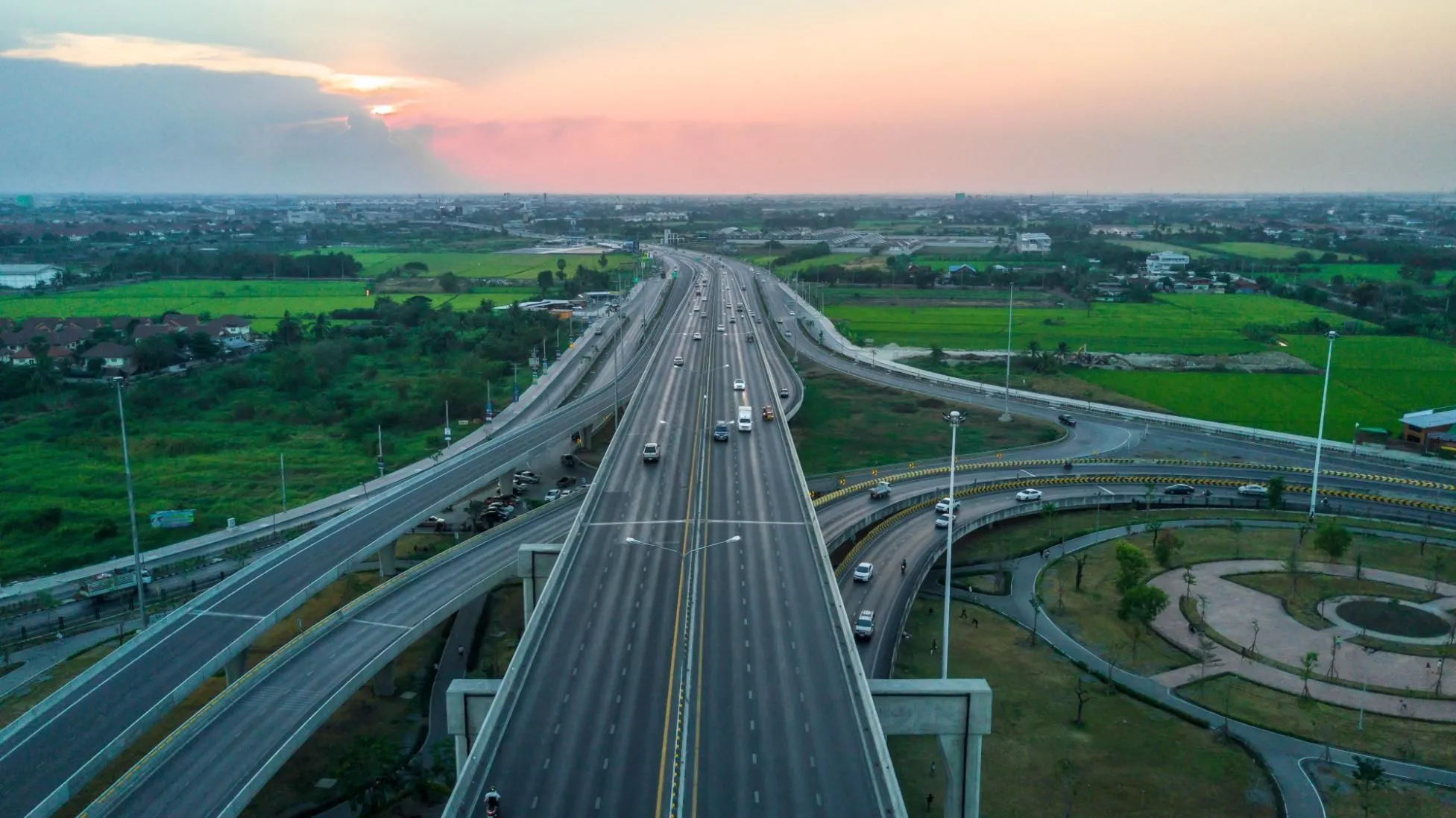
Maharashtra Clears ₹2353cr Loan For Nagpur Chandrapur E Way
The Maharashtra government has approved a ₹2,353 crore loan to facilitate land acquisition for the Nagpur-Chandrapur Expressway (E Way), a key infrastructure artery aimed at improving connectivity across eastern Maharashtra. The funds clear a major hurdle in long-delayed preparatory work and signal renewed momentum for a project expected to spur regional mobility and economic expansion while raising questions about equitable land procurement and environmental stewardship.
The loan, sanctioned under state-level financing mechanisms, will underwrite payments to landowners along the proposed expressway route, a necessary precursor to physical construction. Authorities estimate that nearly 2,500 hectares — spanning multiple tehsils — will be acquired for the 420-kilometre four-to-six lane corridor intended to slash travel times between Nagpur and Chandrapur. Acquiring this land has been one of the most persistent bottlenecks, with compensation negotiations, title disputes and resettlement concerns slowing earlier phases of project preparation.Infrastructure experts say the expressway — long envisaged as part of Maharashtra’s strategy to deepen east-west connectivity — could catalyse economic activity across industrial, agricultural and service sectors. For businesses, a high-capacity road link could reduce logistics costs, attract investment into under-served districts and expand labour market reach. Residents along the corridor are similarly hopeful that improved access will open up employment, education and healthcare opportunities that were previously constrained by slower road networks.
Yet the procurement process also raises pressing questions around fair compensation, rehabilitation and social inclusion. Land acquisition for large infrastructure projects in India has historically encountered legal challenges and public opposition when affected households and farmers feel inadequately compensated or poorly consulted. Urban and rural planning analysts stress that transparent valuation mechanisms and comprehensive resettlement packages are critical to prevent socioeconomic dislocation and ensure that long-term benefits of connectivity are shared equitably. Environmental considerations also feature prominently in commentary around the Nagpur-Chandrapur E Way, as the planned route traverses forested and agricultural landscapes, including ecologically sensitive zones that support local biodiversity. Conservation advocates argue that infrastructural expansion must be matched with rigorous environmental clearances, mitigation strategies for habitat fragmentation and investment in compensatory green infrastructure to align with climate resilience goals. Critics point to the need for careful ecosystem mapping and participatory hearings to ensure that development does not come at the cost of natural capital.
Political leaders from the region — including state legislators and local government representatives — have welcomed the loan approval as a long-awaited breakthrough, citing the expressway as a catalyst for regional parity and infrastructure modernisation. However, implementation will require careful coordination between the state, district authorities, and affected communities to balance speed with consent and safeguards.
What emerges is a recurring theme in Indian urban and regional infrastructure: mega-connectivity projects can unlock economic potential, but must be underpinned by inclusive land governance, environmental accountability and robust planning frameworks to ensure that benefits are sustained and shared.