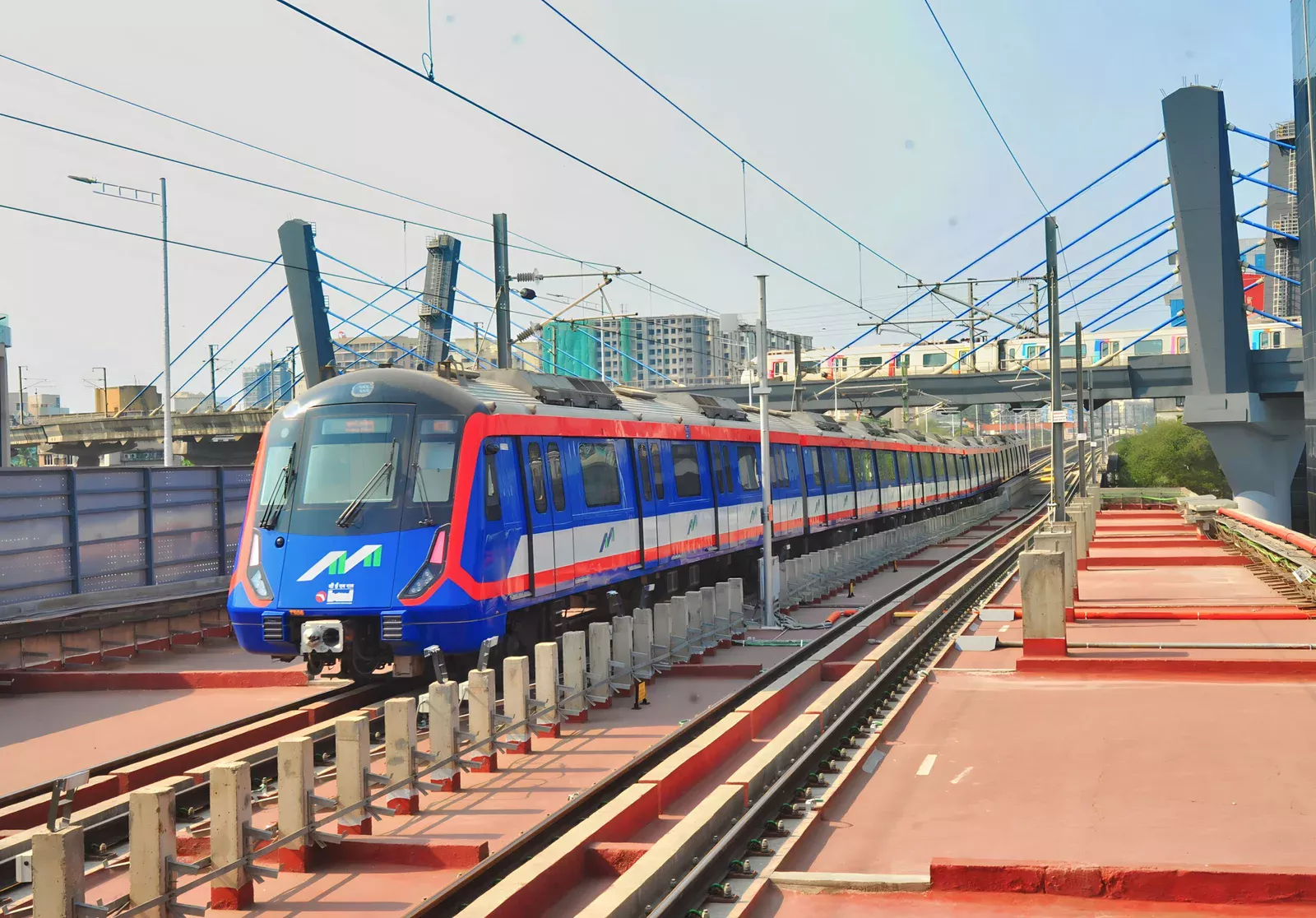
Mumbai Metro Line 14 Faces Tender Shortfall And Debt Plan
Plans to expand the rapid transit network with Metro Line 14 between Kanjurmarg and Badlapur have shifted decisively after a lack of private sector interest in tenders prompted the state government to consider direct borrowing to fund the project. The corridor — envisioned as a roughly 38-kilometre link with 15 stations connecting key suburban hubs — has now moved from the planned public-private partnership (PPP) model into a state-led delivery pathway, highlighting both sustained ambition and underlying financing challenges for mega-infrastructure in the Mumbai Metropolitan Region.
Originally structured to attract private developers under PPP arrangements, the Metro Line 14 initiative failed to elicit adequate bids despite repeated tendering efforts, officials said. With private capital and expertise proving elusive, the Maharashtra government is now preparing to secure loans — potentially from national financing institutions — to ensure the metro corridor’s construction proceeds without further delay.The line is designed to relieve congestion along heavily trafficked suburban stretches and expand the footprint of rapid transit into eastern peripheries, including Mahape, Kanjurmarg and Badlapur. By stitching together these nodes, planners expect enhanced commuter connectivity and more sustainable mobility options for residents whose travel patterns have traditionally been dominated by road vehicles and local rail services.
Transport economists view the shift in financing as symptomatic of a broader national trend: infrastructure projects with high capital requirements are increasingly finding traditional PPP structures less attractive to investors in the absence of sufficiently de-risked revenue streams. Metro systems, in particular, often contend with long gestation periods and ridership-linked cash flows that can deter purely private investment unless balanced by state guarantees or blended financing. Analysts note that Maharashtra’s move to directly underwrite the project through loans signals both a policy commitment to mass transit expansion and the need for pragmatic financing solutions where markets falter.A senior urban planner said that while PPP models can unlock efficiency and innovation, “public transport infrastructure fundamentally underpins social mobility and urban equity — and when private financing is not forthcoming, governments must be prepared to step in.” This approach, the planner argued, can safeguard network continuity even if it places more fiscal responsibility on the state treasury.
The decision also aligns with Maharashtra’s broader mobilization of transport capital across the Mumbai Metropolitan Region, where multiple metro lines, elevated corridors and expressway links are underway. By integrating Metro Line 14 with ongoing projects such as Line 12A (Kalyan–Shilphata) and other suburban rail expansions, the region aims to build a multi-layered rapid transit grid capable of reducing road congestion and lowering emissions while supporting economic activity across the city-region.However, moving to a loan-funded delivery model carries its own risks. Debt servicing will need to be balanced against other budgetary priorities, and project cost control will be critical to avoid overruns that could stretch government finances. Planners stress that transparent procurement, diligent cost estimates and phased project governance will be essential to ensure the line progresses efficiently and delivers anticipated benefits without undue fiscal strain.
As Maharashtra advances the revised funding strategy, Metro Line 14 will stand as a test case in balancing public capital deployment with wider urban transport goals — and in demonstrating whether government-led financing can bridge gaps where PPP efforts have stalled.