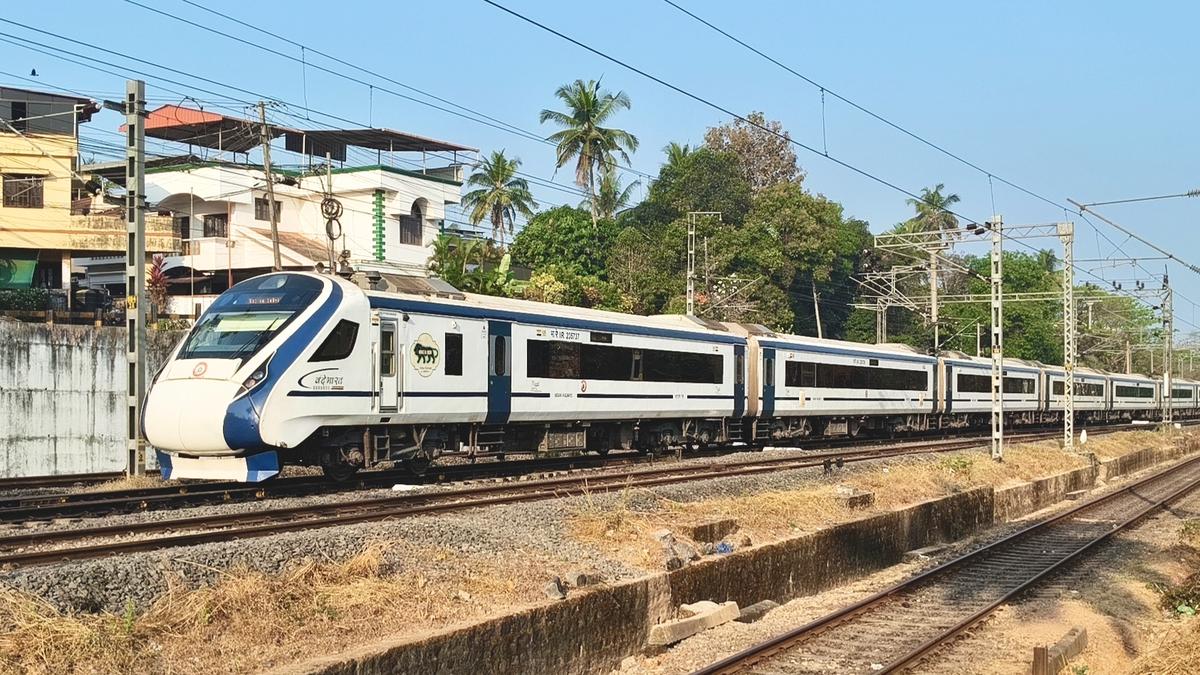
Indian Railways has signalled early interest in a high‑speed passenger service linking Bengaluru with Goa, as three railway zones have placed a joint proposal before the Railway Board for consideration. If approved, the service could represent a strategic step in improving intercity connectivity while highlighting the challenges of deploying premium rail assets on geographically demanding routes. Officials from South Western Railway, Southern Railway and Konkan Railway Corporation have pitched a Vande Bharat service running six days a week between Bengaluru’s Yeshwantpur station and Goa’s Madgaon terminal. Under the proposal, the train would depart early morning and aim to complete the journey within daytime hours a substantial improvement over current express services that often exceed 15 hours on the same corridor.
The plan seeks to leverage semi‑high speed sets to reduce travel time, but operational realities may limit speed gains, particularly across Western Ghats terrain. Preliminary assessments indicate the average speed could be below 50 km/h, with tighter constraints in ghat sections where gradients and curves demand slower running. For a train capable of exceeding 160 km/h, such figures underscore the infrastructural limitations facing premium services on hilly stretches. Rail planners suggest that introducing such a daily service could both stimulate economic linkages between Karnataka and Goa and provide a public transport alternative to carbon‑intensive road travel. “Faster intercity rail fosters inclusive mobility and supports sustainable tourism and commerce,” a senior transport official commented, noting that corridor enhancement often complements broader regional development goals.
However, running a Vande Bharat over such distances would require two dedicated rakes operating in tandem. This increases the complexity of roll‑out given constraints on maintenance facilities. Yeshwantpur, while operationally central, lacks sufficient service bays to handle additional premium rakes, dampening prospects for deploying the train from Bengaluru’s main hub. South Western Railway has floated adjustments such as later departure times to address some of these challenges, which the Railway Board has asked the zones to consider. For commuters and businesses, the timetable will be a key indicator of whether the service can realistically serve daily travellers alongside seasonal tourists heading to coastal destinations.
Industry experts note that any enhancement in rail connectivity between Bengaluru and Goa must be paired with infrastructure investments be it track realignment, signalling upgrades or targeted capacity enhancements to justify premium rolling stock. “Electrification and gradient‑friendly sections support not just speed improvement but also lower lifecycle emissions,” urban transport planners observe, aligning with sustainable mobility targets. As the proposal awaits scrutiny, urban and regional stakeholders will be watching closely. Approval could pave the way for faster, more climate‑aligned travel between two economic nodes. But realising this vision will require aligning technical feasibility with broader transport equity and environmental resilience goals.