


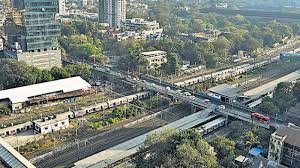
Mumbai’s transport authorities have advanced the completion timeline for the city’s first double-decker road over bridge at Elphinstone, aiming to ease a critical bottleneck in central Mumbai and prevent further delays to the Sewri–Worli Connector. The upgraded structure will replace the 1913-era bridge and is now expected to be delivered in phases through 2026, subject to coordination with railway authorities.
The new 132-metre bridge is being executed by Maharashtra Rail Infrastructure Development Corporation (MRIDC), following directives from Mumbai Metropolitan Region Development Authority to compress construction schedules. Officials familiar with the review process say the lower deck is being prioritised to maintain east–west traffic continuity, while the upper deck will complete the grade separation required for seamless connector access. The existing Elphinstone Road Over Bridge, built during the colonial period, is being dismantled in carefully timed night blocks over active Western and Central Railway corridors. Heavy cranes and precision cutting equipment are being deployed in three-hour windows when train services are suspended. Engineers note that work above live railway tracks requires extensive safety protocols, contributing to scheduling complexities. The project is integral to the larger Sewri Worli Connector corridor, which is expected to redistribute vehicular flow between south and central Mumbai. Urban mobility experts say timely delivery is essential to avoid cascading congestion across adjoining arterial routes, particularly in Lower Parel, Dadar and Prabhadevi.
However, institutional coordination has emerged as a challenge. Sources indicate that approval timelines, block allocations and cost-sharing mechanisms between MRIDC and railway authorities have required repeated negotiation. A dispute over way-leave and related charges for work on railway land remains under discussion, potentially influencing overall project expenditure. Beyond engineering and finance, the redevelopment has a human dimension. Several families in Prabhadevi West face relocation as bridge piers and approach ramps are constructed. Rehabilitation units have been allotted through public housing channels, though residents have raised concerns regarding additional payments for larger replacement homes. Urban policy specialists emphasise that infrastructure acceleration must be matched with transparent, equitable resettlement frameworks to maintain public trust. The double-decker configuration reflects a broader shift in Mumbai’s infrastructure strategy stacking mobility layers vertically to optimise scarce urban land. By separating traffic streams across two decks, planners aim to increase throughput without expanding the road footprint. If executed efficiently, the design could serve as a template for future rail-over-rail and road-over-rail interventions across the metropolitan region.
With demolition progressing and pier work expected to intensify in coming months, the project stands at a pivotal stage. Its timely completion will not only influence traffic patterns but also signal how effectively Mumbai can synchronise transport upgrades, railway coordination and community rehabilitation in a dense, climate-vulnerable urban core.
Also Read: Mumbai Suraj Estate deepens redevelopment play
Mumbai Elphinstone bridge rebuild accelerates
