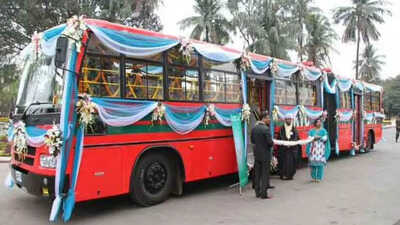
Road connectivity between eastern India and Bangladesh is set for restoration as the Maitri bus service linking Agartala and Kolkata via Dhaka prepares to restart operations from February 24. The revival follows an extended suspension triggered by political uncertainty in Bangladesh. For cities on both sides of the border, the reopening signals more than the return of a transport link; it marks a renewed phase of regional mobility, trade flow and urban interdependence.
Officials in Tripura’s transport department confirmed that operational clearances have been completed after trial runs along the international corridor. The cross-border route will operate on designated days from Agartala and Kolkata, reconnecting passengers who had been relying on longer and costlier alternatives for nearly 18 months. The Maitri bus service plays a strategic role in eastern India’s transport ecosystem. Agartala, geographically closer to Dhaka than to Kolkata, depends heavily on cross-border transit to reduce travel time and logistics costs. When operational, the road journey through Bangladesh shortens distances significantly compared to domestic routes that pass through the Siliguri Corridor.
Urban planners say the resumption is likely to have multiplier effects. “Cross-border public transport reduces carbon intensity compared to fragmented travel modes,” a regional infrastructure analyst noted, adding that structured bus connectivity supports lower-emission mobility compared to private vehicle dependence or multi-leg air travel. For Kolkata, the corridor strengthens its position as a gateway city in the Bay of Bengal region. Improved connectivity can stimulate tourism, small-scale trade, medical travel and education exchanges. In Agartala, easier access to metropolitan markets may benefit entrepreneurs, construction suppliers and service-sector businesses that rely on inter-city movement. The restoration also comes at a time when eastern India is recalibrating infrastructure priorities around multimodal transport, border haats, and integrated check posts. Experts argue that predictable cross-border bus services can ease pressure on informal transit networks while improving safety and documentation compliance.
From a real estate perspective, better connectivity tends to enhance land values near bus terminals and transport nodes. However, urban economists caution that planning must anticipate increased passenger volumes. Upgraded terminals, sanitation facilities and climate-resilient infrastructure will be necessary to avoid congestion and environmental strain. The Maitri bus service has historically served as a people-to-people bridge, connecting families divided by borders and facilitating affordable mobility. Its return indicates improving administrative coordination between transport authorities in both countries. As eastern India pushes for resilient and inclusive growth, stable cross-border mobility could become a template for regional cooperation. The coming months will test whether the Maitri bus service can sustain reliable operations and integrate with broader efforts to modernise border infrastructure and promote low-carbon intercity travel.