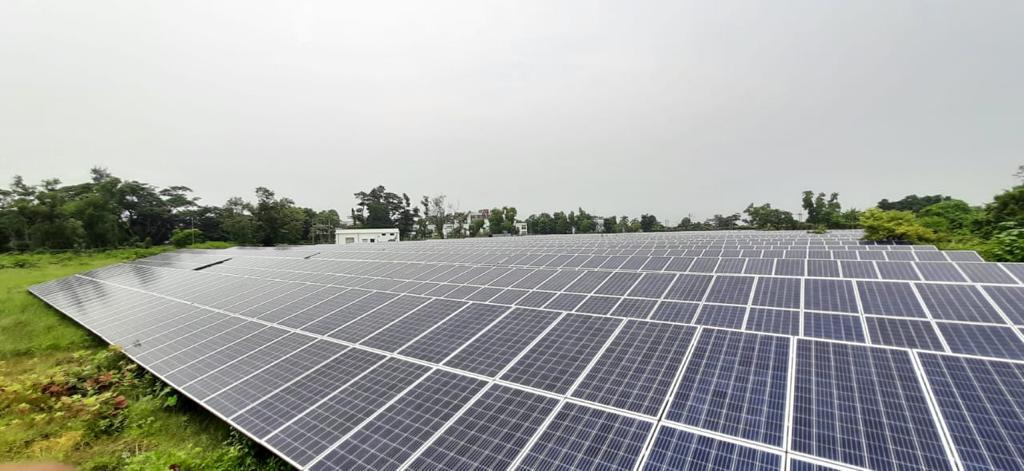
India’s oldest riverine port authority has initiated a major clean energy push, inviting bids to develop a 5 MW ground-mounted solar facility within its Haldia Dock Complex. The proposed installation, spread across nearly 14 acres in the industrial zone of Hatiberia, signals a shift in how port-led infrastructure is aligning with long-term decarbonisation goals while leveraging underutilised land assets.
The Syama Prasad Mookerjee Port authority is offering the land on a 30-year lease through a competitive tender-cum-auction process. Only bidders clearing a technical and commercial evaluation will qualify for the price-based e-auction. Port officials say the structure is designed to ensure both financial robustness and project execution capability, reflecting increasing scrutiny around infrastructure-led renewable investments. The Haldia solar project is expected to initially supply up to 3.24 million units of electricity annually to meet the port’s internal demand. Post-2030, the off-take is projected to more than double, potentially reaching seven million units a year. By securing long-term green power within its own premises, the port aims to reduce grid dependence, stabilise energy costs, and cut carbon emissions associated with cargo handling and logistics operations.
Urban planners note that ports and industrial estates are emerging as significant sites for renewable energy deployment because they combine high electricity consumption with large tracts of contiguous land. Integrating solar generation into such heavy-use zones helps cities lower emissions without competing for scarce urban land. Under the current framework, any power generated beyond the port’s requirement can be sold externally, though the responsibility of executing power purchase agreements will rest with the developer. Industry analysts view this flexibility as critical for project viability, particularly as renewable tariffs fluctuate and state-level open-access policies evolve. The bidding timeline has been compressed into a tight window, with queries due later this month and technical bids scheduled for opening in March. Participation requires digital certification and electronic submission through the MSTC portal, underscoring the increasing digitisation of public asset leasing and infrastructure procurement.
The financial thresholds are significant. A non-refundable document fee applies, alongside a substantial earnest money deposit. Developers opting for annual rent payments will also need to furnish a security deposit equivalent to two years’ lease value. Such safeguards are intended to deter speculative participation and ensure serious long-term investors. For Kolkata and the wider eastern corridor, the Haldia solar project represents more than incremental capacity addition. It illustrates how legacy industrial infrastructure can pivot towards climate-aligned growth without halting economic activity. As ports face pressure to decarbonise supply chains and comply with emerging environmental standards, captive renewable generation is likely to become a strategic asset rather than a peripheral investment. If executed on schedule, the project could serve as a template for other public-sector industrial estates seeking to balance revenue generation, energy security, and climate responsibility in India’s fast-evolving urban economy.