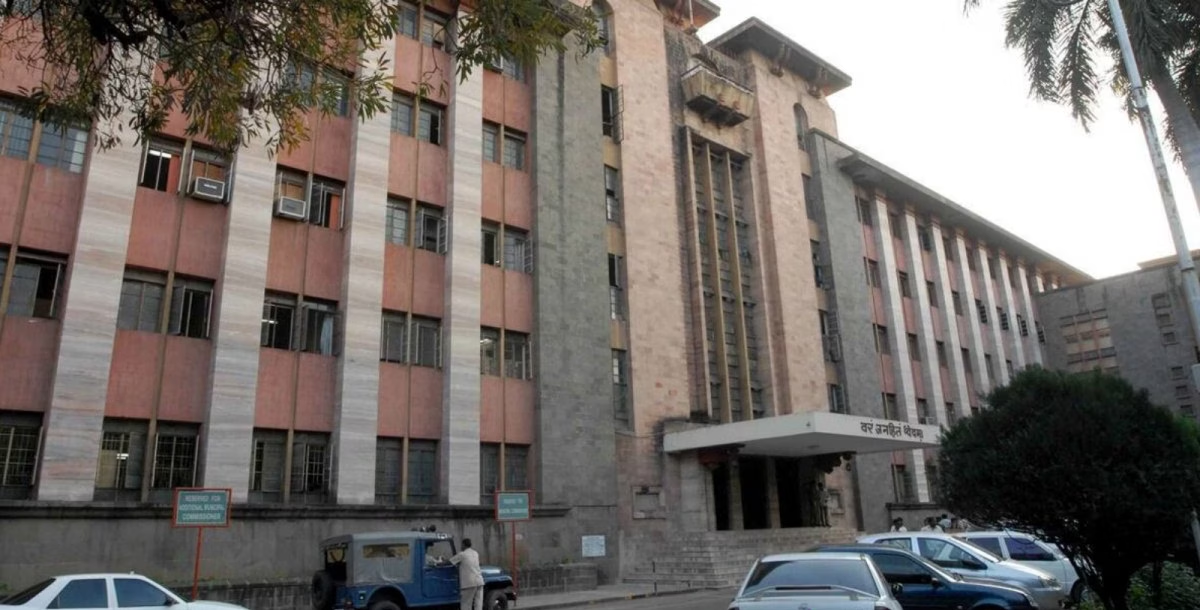
Pune’s municipal administration has introduced the Swachhta Parv Awards, a citywide cleanliness competition aimed at strengthening citizen participation in waste management and public hygiene. The initiative comes as the city grapples with visible waste build-up in several neighbourhoods, underscoring the growing challenge of maintaining sanitation standards in a rapidly expanding urban environment.
The Swachhta Parv Awards programme seeks to bring institutions, residential communities and commercial establishments into a structured evaluation framework. Hotels, housing societies, hospitals, schools, markets, government offices and all ward offices are eligible to enrol. Registrations are scheduled across March and April, during which participants will receive guidance on compliance benchmarks and assessment criteria. Civic officials say the effort reflects a shift towards behavioural change alongside administrative enforcement. While Pune has invested heavily in solid waste infrastructure, including collection networks and processing facilities, gaps persist in segregation at source and public awareness. Urban planners argue that without consistent community engagement, infrastructure alone cannot deliver sustained improvements in sanitation.
Under the Swachhta Parv Awards, inspections will be carried out between May and September by designated panels. Additional independent committees will review scores to ensure neutrality, with final results based on aggregated assessments. The awards are planned to coincide with Gandhi Jayanti in October, symbolically linking civic responsibility with public health. Waste management experts view competitive models as a way to encourage compliance among high waste-generating sectors. Hotels and marketplaces, for instance, account for significant organic and packaging waste. If managed properly, segregation and composting at these sources can reduce landfill dependency and methane emissions, contributing to broader climate resilience goals.
The programme also has implications for real estate and property management. Housing societies that institutionalise segregation, decentralised composting and clean common areas may see improved liveability ratings and stronger community cohesion. Analysts note that sanitation performance increasingly influences tenant preference and property values in urban India. However, specialists caution that awards-based frameworks must be supported by transparent metrics and sustained monitoring.
Short-term clean-up efforts without systemic waste reduction strategies risk becoming symbolic rather than transformative. Pune’s Swachhta Parv Awards signal an attempt to align civic governance with participatory urban management. As the city continues to grow, the long-term effectiveness of such initiatives will depend on whether they embed daily behavioural change, strengthen waste processing capacity and reduce environmental stress across neighbourhoods.
Pune Civic Body Launches Swachhta Parv Awards