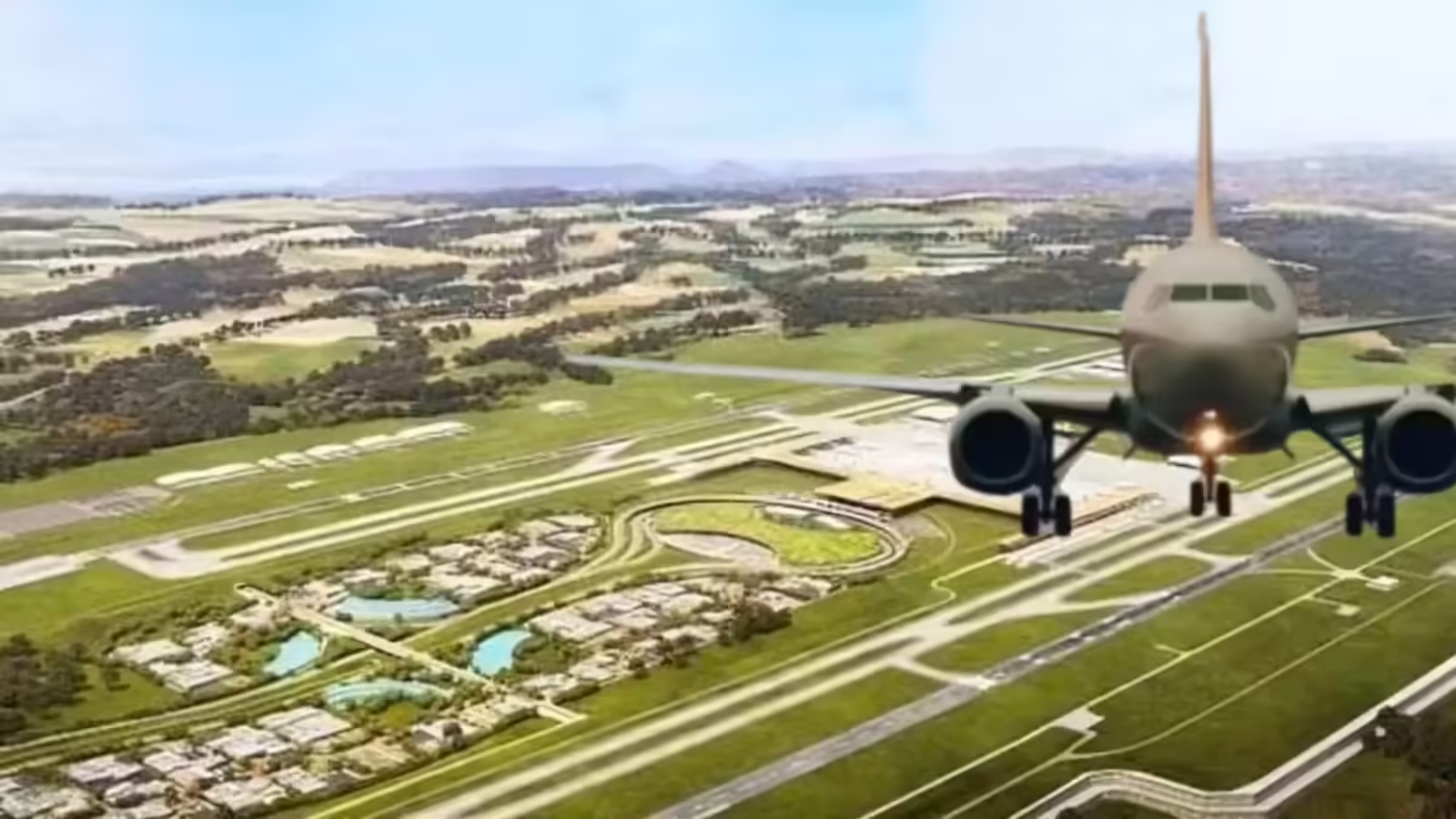
Pune’s elected representatives have renewed calls for financial backing of the long-pending Purandar airport project and other regional infrastructure works, placing them high on the agenda ahead of the Maharashtra state budget next week. The demands, raised during recent district-level planning discussions, underline the growing pressure on the state government to balance welfare commitments with capital-intensive urban expansion.
At the centre of the submissions is the proposed Purandar airport project, envisioned as a second international aviation gateway to ease congestion at Lohegaon and support Pune’s expanding industrial and services economy. Lawmakers argue that accelerating land acquisition, environmental clearances and connectivity planning is critical if the region is to sustain investment momentum in logistics, manufacturing and technology sectors. The Purandar airport project has long been framed as a catalyst for decentralised growth in the district’s southern belt. Urban economists note that airports often reshape real estate patterns, drive warehousing demand and trigger road and rail upgrades. However, they also caution that such large-scale projects require robust environmental safeguards, especially in ecologically sensitive and agrarian zones.
Alongside aviation infrastructure, MLAs have sought funding to upgrade facilities around the Bhimashankar temple precinct, citing the need for improved access, sanitation and visitor management ahead of major pilgrimage cycles. Heritage planners say redevelopment in sacred landscapes must integrate biodiversity protection and water management to avoid long-term ecological strain.
Inter-city mobility projects including the Pune ring road and a proposed high-speed rail link to Nashik were also highlighted as priorities. Transport analysts point out that without ring road connectivity and mass transit expansion, incremental road widening within the city may offer only temporary congestion relief. Previous state budgets had earmarked significant allocations for Metro expansion corridors and elevated road links, but fiscal headroom remains constrained.
Officials involved in budget preparations indicate that flagship welfare schemes could limit fresh capital allocations this year. A senior bureaucrat described the challenge as one of sequencing: completing ongoing infrastructure works while managing revenue pressures. For Pune, the stakes are high. The metropolitan region continues to absorb migrants, startups and manufacturing units, intensifying demand for resilient transport, water and energy systems. Infrastructure gaps not only slow economic output but also exacerbate air pollution and commute-related emissions. Whether the upcoming state budget advances the Purandar airport project and allied mobility schemes will signal how Maharashtra intends to steer growth in one of its most dynamic urban regions. The broader test will be aligning large infrastructure ambitions with fiscal prudence and climate-conscious planning.
Pune Purandar Airport Push Before Budget