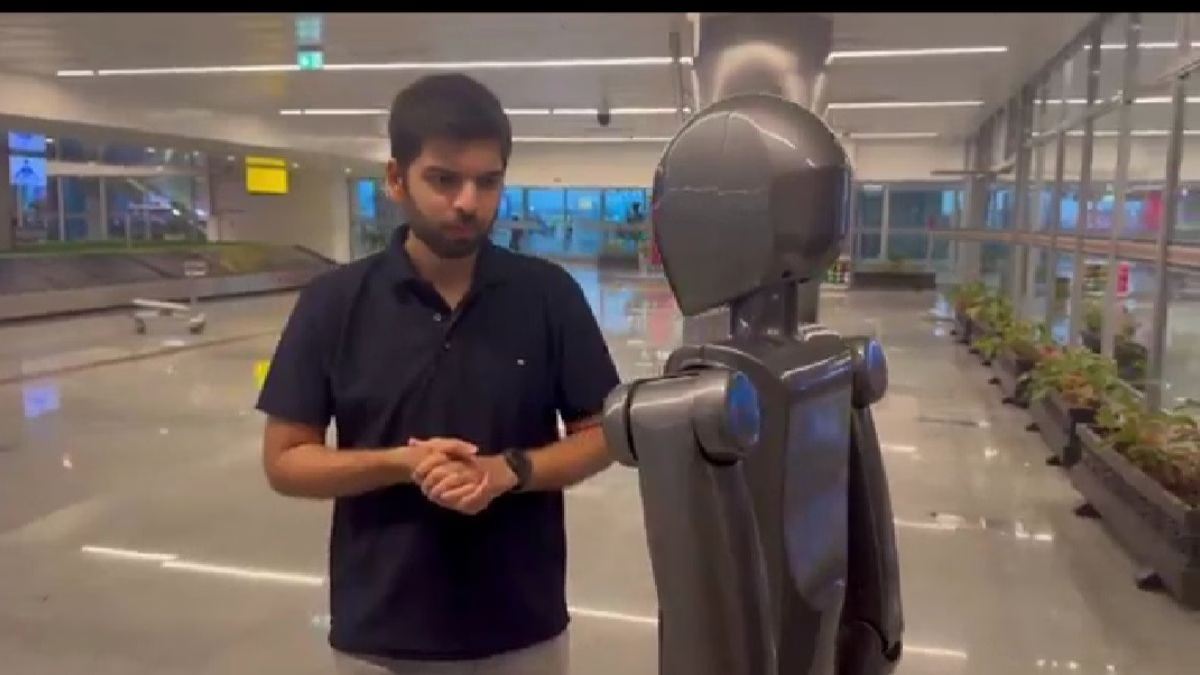
Pune Airport has begun testing an AI powered airport robot within its passenger terminal, marking one of the first structured attempts by a mid-sized Indian airport to integrate humanoid automation into daily operations. The pilot, led by the Airports Authority of India, is being assessed for reliability, passenger engagement and operational value before any long-term adoption.
The AI powered airport robot has been designed to respond to spoken queries, guide travellers through terminal facilities and provide contextual information about boarding procedures, dining options and ground transport. Airport officials indicated that the trial will evaluate not only technical performance but also how comfortably passengers interact with a machine-led interface in a high-footfall environment. For India’s rapidly expanding aviation network, such experimentation signals a broader shift towards digitally augmented infrastructure. Passenger traffic across non-metro airports has grown steadily in recent years, intensifying pressure on staff and physical help desks. A humanoid system capable of multilingual engagement could reduce response time, free frontline personnel for critical tasks and improve accessibility for elderly or first-time flyers.
Beyond terminal logistics, the system has been configured with city-level data, enabling arriving travellers to access information on transport connectivity, accommodation and cultural landmarks. Urban planners note that airports increasingly function as gateways to regional economies. Providing structured, real-time civic information aligns with efforts to integrate aviation hubs more closely with tourism, hospitality and local mobility networks. Industry analysts say such pilots also reflect the Airports Authority of India’s gradual move towards technology-driven efficiency. From biometric boarding systems to energy-efficient terminal upgrades, digital tools are being positioned as enablers of leaner, lower-carbon operations. While a humanoid assistant does not directly reduce emissions, experts argue that intelligent systems can support smoother passenger flows, reduce congestion and improve resource allocation factors that indirectly influence energy consumption within terminals.
However, officials emphasise that the deployment remains experimental. Performance metrics will include system stability, data accuracy and user feedback. Technical refinements are expected before any permanent integration. As Indian cities pursue smarter, climate-resilient infrastructure, the Pune trial underscores how even secondary airports are becoming laboratories for urban innovation. Whether the AI powered airport robot evolves into a permanent fixture will depend on measurable gains in efficiency, inclusivity and passenger trust — benchmarks that increasingly define responsible infrastructure growth in a digitally connected economy.
Pune Airport Tests AI Powered Humanoid Assistant