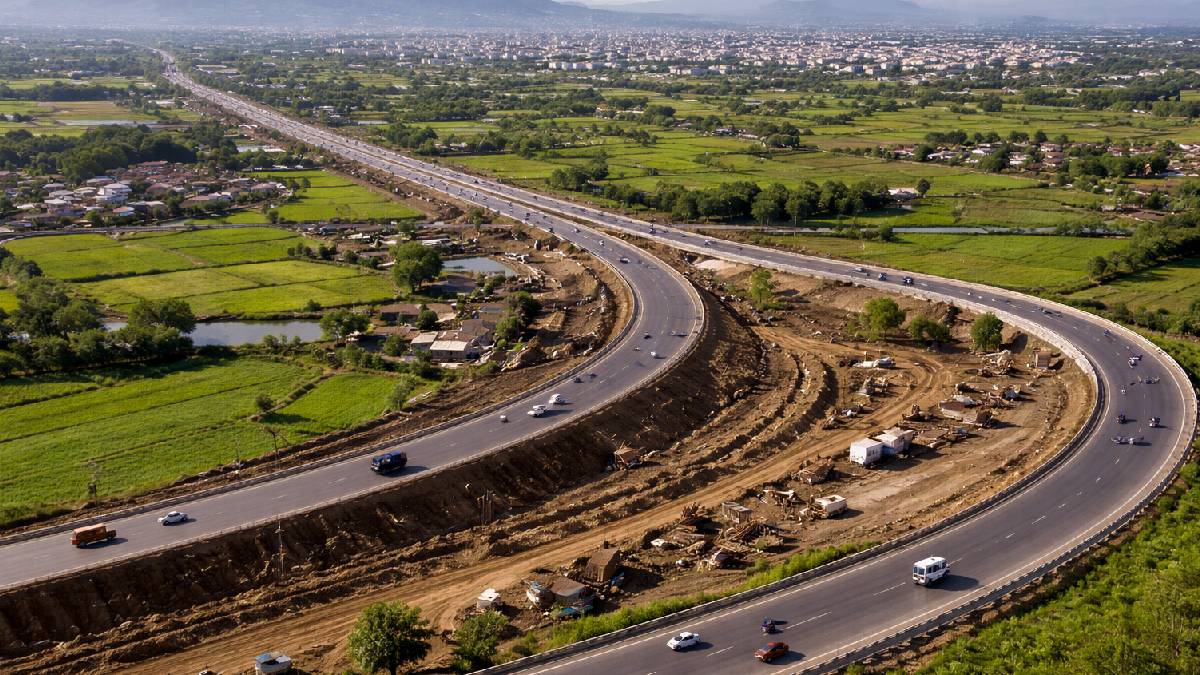
As part of an escalating infrastructure push ahead of the Simhastha Kumbh Mela 2027, state authorities have accelerated key transport projects, including the expansion of Nashik Airport and preparatory work on a 66-kilometre outer ring road designed to ease congestion when millions of devotees arrive in the region. These developments, backed by significant capital allocations and logistical planning, highlight Maharashtra’s effort to balance short-term event readiness with long-term mobility and economic resilience.
Earlier this month, the state government cleared nearly ₹640 crore for a comprehensive upgrade of Nashik’s Ozar Airport terminal and related facilities to handle a sharper surge in passenger volumes expected during the multi-year religious event beginning in late 2026 and running through mid-2028. The project includes a new integrated terminal with expanded check-in infrastructure, increased aircraft parking bays and modern passenger amenities — collectively tripling the airport’s capacity from around 300 to 1,000 passengers per hour. Both state and aviation authorities are targeting completion by early 2027 to coincide with key pilgrimage peaks.The airport modernisation is strategically paired with surface transport enhancements. A nearly ₹7,922 crore 66.15-km outer ring road is being developed around Nashik city by the Maharashtra State Infrastructure Development Corporation (MSIDC) to divert through-traffic away from central arteries and reduce pressure on urban corridors that already struggle with weekend and festival-related traffic spikes. The ring road is expected to support traffic flows not only during the Kumbh period but as a long-term relief valve for daily commuters and freight movement.
Planners say that integrated upgrades to air and road networks are essential for accommodating the expected five-plus crore visitors in 2027, more than double attendance seen in the previous Nashik Kumbh in 2015. Bottlenecks on key routes have historically undermined pilgrim experience and strained local infrastructure — a pattern authorities are keen to avoid this cycle.However, the scale of work presents social and environmental trade-offs. Some stretches of the outer ring road project require extensive land acquisition, prompting negotiations with local landowners and farmer groups over fair compensation and land use. Municipal authorities have also faced protests over tree removals and widening works on key urban connectors, where balancing green cover conservation with transport capacity enhancement remains contentious.Infrastructure specialists observing the Nashik build-out note that pairing airport capacity expansion with ring road and highway upgrades reflects a multi-modal planning philosophy that integrates long-distance connectivity, local mobility, and crowd management. Such alignment strengthens the region’s ability to manage not just periodic surges like the Kumbh, but rising everyday travel demand linked to Nashik’s expanding industrial base and emerging urban clusters.
Yet execution risks persist. Tight timelines, complex land negotiations, and the need to synchronise state, central and local agency actions mean that project delivery must remain nimble and transparent. For Nashik, the coming 18 months will be a litmus test of how effectively mega-event infrastructure can serve public mobility goals while embedding equity and environmental resilience into the urban fabric.