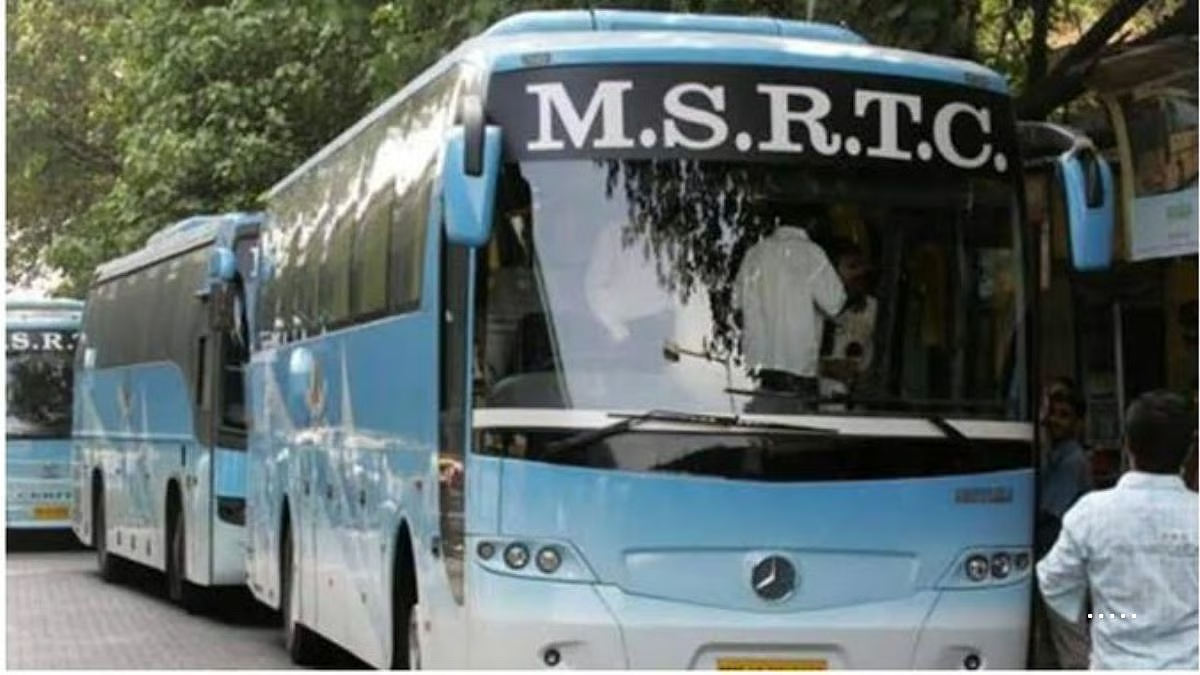
Maharashtra MSRTC Smart Card Fees Draw Public Pushback
A new proposal to introduce mandatory smart cards with a ₹50 issuance fee for passengers of the Maharashtra State Road Transport Corporation (MSRTC) has met mounting resistance from commuters and citizen groups, highlighting tensions between digital fare modernisation and transport equity in public mobility systems.
The MSRTC initiative, aimed at replacing cash boarding with a reloadable smart card earlier piloted on select routes, seeks to streamline ticketing, reduce boarding times and enhance revenue certainty. Officials say the transition aligns with broader digitalisation trends in public transport, potentially enabling integrated travel data, demand-responsive scheduling and better financial accounting for the corporation. However, the proposed fee component — levied despite existing government subsidies for women and senior citizens — has sparked backlash, particularly among low-income commuters who rely on buses as their primary mode of daily travel.A cross-section of passengers in and around Sambhajinagar, a fast-growing urban centre within Maharashtra’s interior districts, expressed frustration that an additional cost may outweigh the convenience benefits. For many daily riders, even modest fees can compound the overall cost burden of travel in a state where private vehicle operating costs remain high and alternative public transport options are limited outside major metro corridors.
Transport analysts note that smart card rollouts can yield operational efficiencies and reduce leakage in fare collection, but they also emphasise the importance of equitable rollout strategies. “Digital fare systems must be inclusive by design,” said one urban mobility specialist. “Upfront charges risk excluding the very riders most dependent on public transport.”The resistance has prompted local MSRTC officials to consider revisiting the fee structure. Discussions are underway to potentially waive the smart card fee for low-income groups, students and economically vulnerable populations, although a final policy position has yet to be formalised. Advocates argue that fee waivers or refundable deposits could ease adoption without compromising revenue goals.Maharashtra’s broader transport strategy emphasises digital integration — including real-time tracking, unified payment interfaces and interoperable cards across multiple modes such as buses and metro rail. Successful examples in other Indian cities demonstrate how smart ticketing can improve service predictability and reduce boarding delays. Yet critics caution that technological upgrades must be paired with robust social safeguards, particularly where infrastructure investment intersects with cost-sensitive ridership segments.
In Sambhajinagar and similar secondary cities, the stakes are multi-layered. An accessible, affordable public transport network supports labour mobility, connects peri-urban communities with employment hubs and reduces pressure on informal transport services prone to irregular schedules. Meanwhile, cost barriers that deter adoption may push riders toward less safe or less regulated mobility options, diluting wider goals of sustainable and inclusive urban mobility.Public hearings and stakeholder consultations are now being organised across Maharashtra’s district transport offices to fine-tune the smart card policy. Civil society groups, commuter unions and transport planners have called for an impact assessment that examines the proposal’s effects on ridership, fiscal sustainability and social equity.
As MSRTC navigates this policy crossroad, the outcome will influence not just fare technology adoption but also perceptions of how public transport modernisation should balance efficiency with equitable access — a core consideration in Maharashtra’s urban mobility transformation.