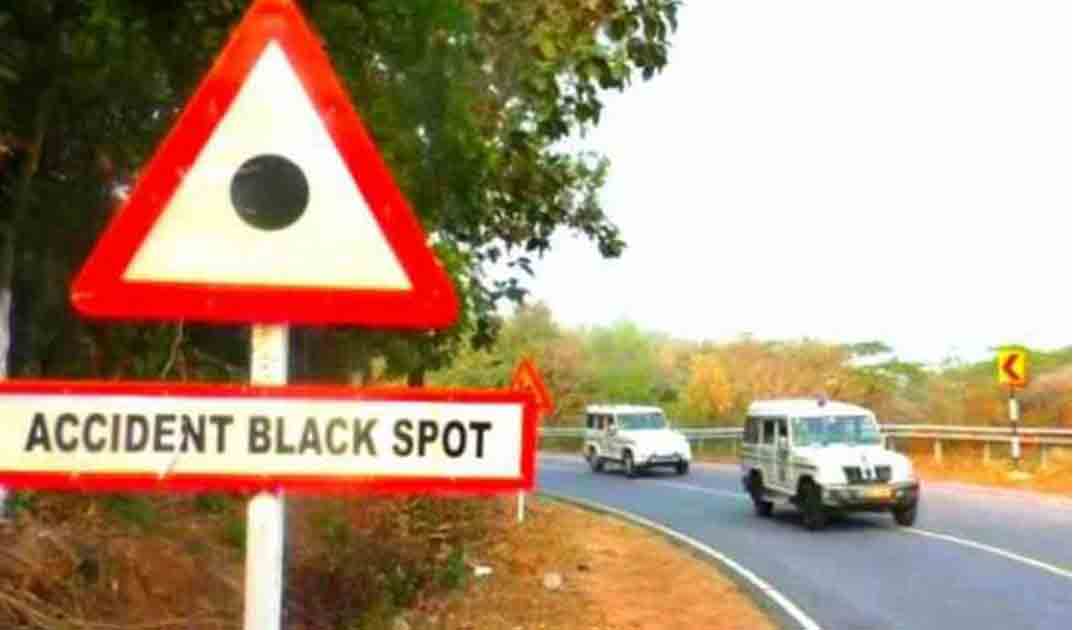
Maharashtra Sambhajinagar RTO Targets Black Spot Safety
In a concerted effort to reduce road trauma and enhance traffic safety, the Regional Transport Office (RTO), Sambhajinagar has commenced systematic work to mitigate 100 identified black spot locations across the district’s road network. Officials describe the initiative as a blend of engineering, enforcement and education measures, aimed at lowering crash frequencies and aligning road use with safer mobility goals for residents, freight carriers and daily commuters.
Black spots — road stretches with a disproportionately high incidence of accidents over time — have long hindered progress toward safer streets in many Indian cities. In Sambhajinagar, recent local data revealed patterns of repeated crashes at key junctions and curves, prompting the RTO to prioritise these micro-zones ahead of broader transport planning discussions. The intervention comes amid escalating concern over traffic fatalities and serious injuries in Maharashtra’s secondary cities, where expanding vehicular volumes often outpace safety infrastructure upgrades.Under the current programme, district engineers and transport officials are auditing recorded collision sites to deploy targeted remedies. These include improved road signage, reflective delineators, rumble strips and upgraded signalisation at busy intersections. In areas where geometry is linked to risk — such as sharp bends and merging points — recommendations include localised realignment and shoulder widening where feasible within existing rights-of-way.
A senior transport planner involved in the project noted that simply increasing enforcement is insufficient without complementary engineering treatments. “Black spots persist because physical design constraints and human behaviour converge,” the planner emphasised. “Our response must combine intuitive road design with clear visual cues that guide responsible driving.”The Sambhajinagar initiative also dovetails with wider Maharashtra road safety policy frameworks, which advocate for data-driven infrastructure improvements and multi-agency coordination. Stakeholders say that safer roads yield economic as well as human benefits: by reducing collision-related delays, vehicle damage and emergency response costs, improved road safety can boost productivity and lower indirect fiscal burdens on health systems.
Critically, the programme incorporates an education and outreach component, aimed at local communities and frequent road users. Awareness campaigns in nearby villages and commuter hubs intend to reinforce speed moderation, use of seat belts and helmets, and respectful sharing of road space among motorists, cyclists and pedestrians. Advocates stress that network redesign alone cannot counter pervasive risk without corresponding shifts in travel behaviour.Maharashtra’s state transport officials have also flagged the role of technology in enhancing monitoring and response. Plans to install mobile speed cameras, automatic number plate recognition (ANPR) devices and digital reporting platforms will allow the RTO to refine its interventions and measure outcomes more precisely over time.
Nevertheless, execution challenges remain. Financial constraints, utility relocation needs and land availability issues can delay physical modifications, particularly at sites where expansion beyond current carriageway limits is required. Moreover, integration with policing priorities — including consistent enforcement of traffic laws — will be necessary to sustain any reduction in crashes.As work unfolds across the 100 identified black spots, the Sambhajinagar RTO’s approach reflects a broader shift in Maharashtra’s urban transport strategy: treating road safety not as an afterthought to mobility but as a core objective of responsible infrastructure planning. If successful, this model could be adapted in other secondary cities facing similar road safety burdens, helping to create people-centred, equitable and resilient transport environments across the state.