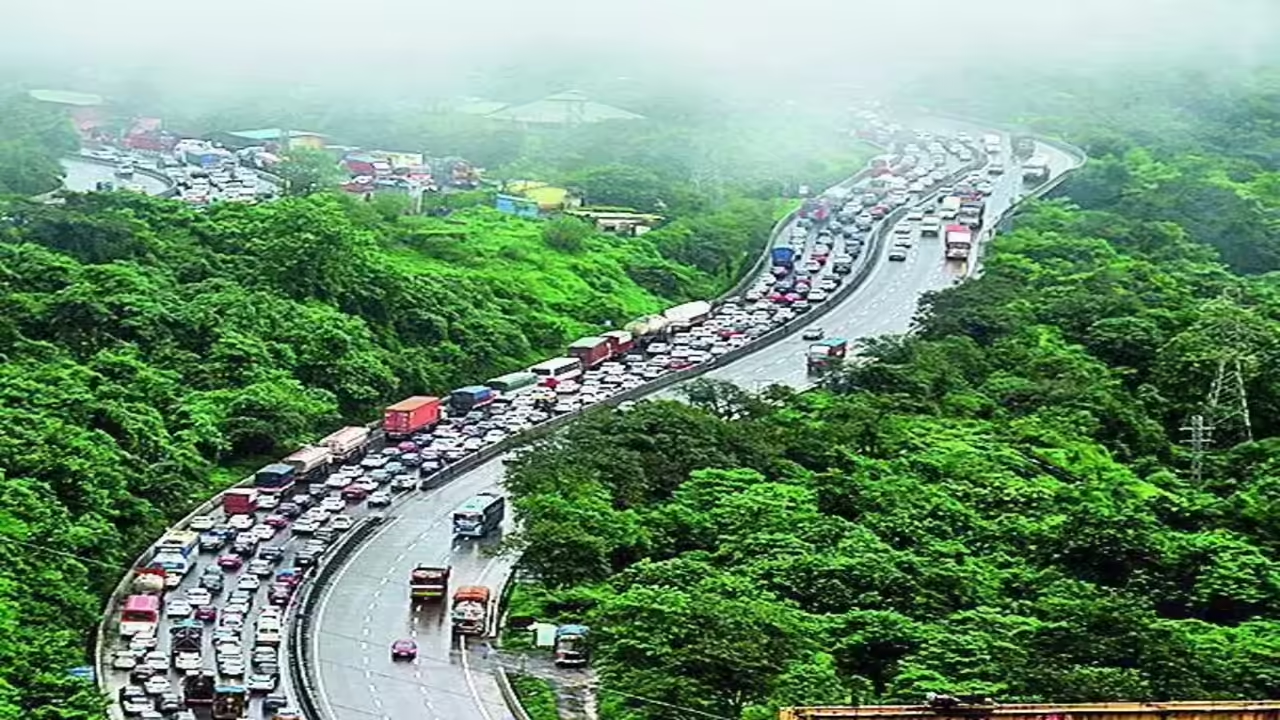
Severe congestion gripped the Pune-bound stretch of the Mumbai Pune Expressway through the Borghat section on Thursday morning, prompting authorities to impose staggered traffic blocks to restore movement along one of western India’s most critical economic corridors. The bottleneck extended for several kilometres between Datta Wadi and Dasturi in the ghat section, with vehicles crawling for hours during peak travel time.
Highway patrol teams temporarily halted traffic on the opposite carriageway at intervals, diverting lanes to ease the pressure on the Pune-bound side. By early afternoon, traffic flow had gradually stabilised. Officials attributed the intervention to an unexpected pile-up of vehicles on the incline, a stretch historically vulnerable to slow-moving heavy vehicles, brake failures and weather-related visibility constraints. A senior highway officer confirmed that coordinated lane management and on-ground deployment of personnel were required to prevent further escalation.
The disruption comes at a time when authorities are emphasising road safety awareness across the state. Yet the episode underscores structural vulnerabilities in the Mumbai Pune Expressway, which handles a high volume of passenger cars, inter-city buses and freight traffic connecting Mumbai’s port economy with Pune’s industrial and technology clusters. Transport economists note that even short-term gridlock on this corridor has measurable economic implications. Delays affect supply chains, increase fuel consumption and raise logistics costs for industries operating between Mumbai Metropolitan Region and the Pune industrial belt. For daily commuters and weekend travellers, prolonged standstills translate into lost productivity and elevated stress.
Urban mobility experts argue that such recurring congestion points highlight the limits of capacity expansion alone. While infrastructure upgrades and the proposed missing link project aim to improve gradient and reduce travel time, operational strategies such as dynamic lane management, real-time traffic analytics and stricter heavy vehicle regulation remain equally critical. Environmental planners add that stop-start traffic on ghat inclines significantly increases vehicular emissions, undermining broader climate resilience goals for Maharashtra’s urban regions. Efficient traffic dispersal, coupled with enhanced public transport alternatives between the two cities, is viewed as essential to reducing long-term pressure on the expressway.
The incident also brings attention to emergency response preparedness in mountainous terrain. Quick coordination between patrol teams and traffic control units helped prevent spillover congestion on adjoining stretches, but experts suggest that predictive traffic modelling could further minimise disruption during peak movement periods. As inter-city travel between Mumbai and Pune continues to grow alongside economic integration, maintaining uninterrupted flow on the Mumbai Pune Expressway will remain central to regional competitiveness. Thursday’s congestion serves as a reminder that operational agility, not just infrastructure scale, will define the reliability of this vital transport artery.
Mumbai Pune Expressway Sees Peak Hour Gridlock