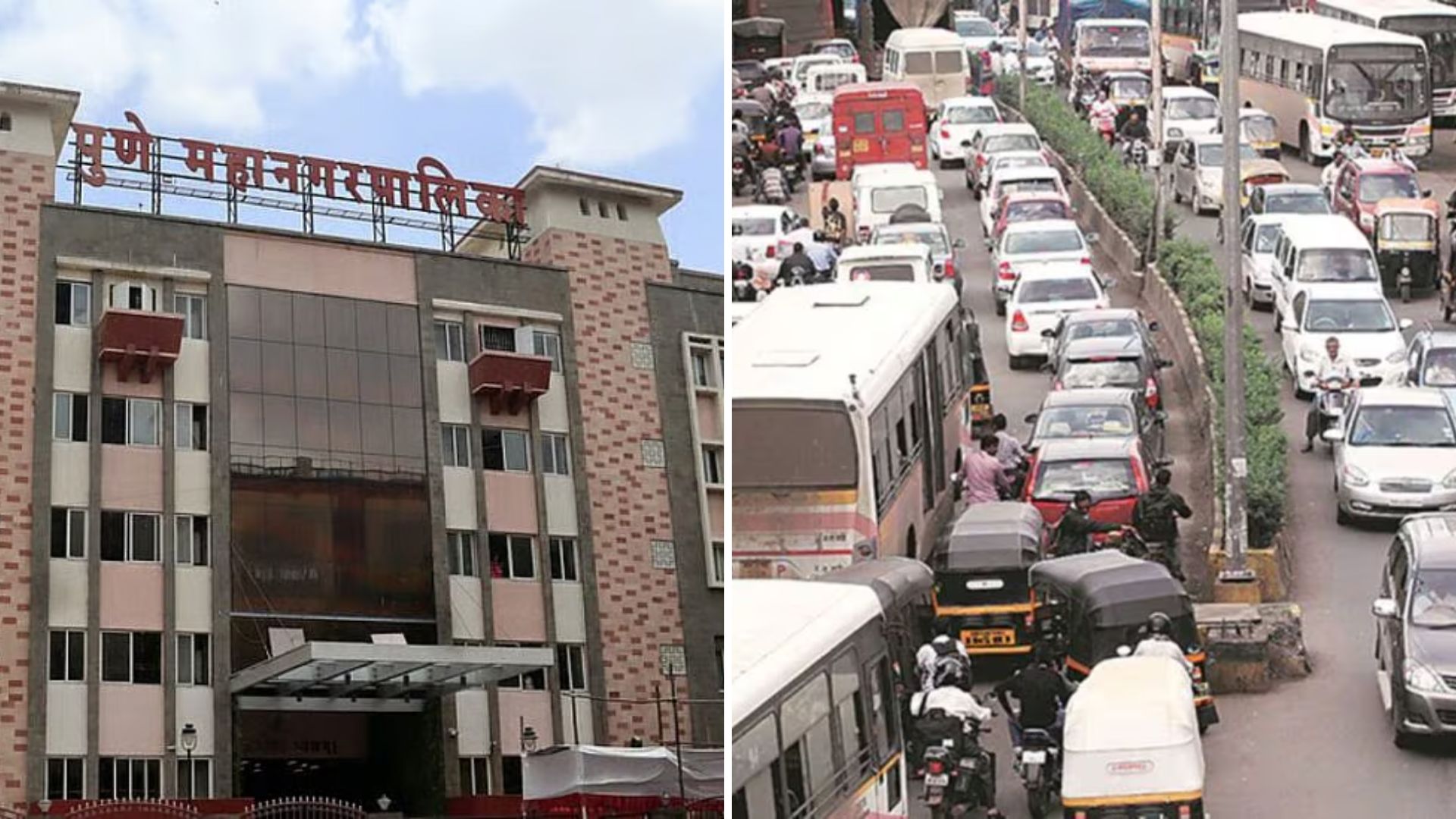
Pune’s municipal administration has outlined a three-tier strategy to address mounting congestion, signalling a shift towards low-cost, coordination-driven reforms aimed at delivering visible improvements in traffic management by the end of 2026. At a recent inter-departmental workshop, civic officials detailed a roadmap structured around immediate, medium-term and long-term actions. The initial focus will be on quick interventions requiring limited capital expenditure but high administrative coordination.
The move comes as Pune grapples with worsening commute times amid rapid expansion of its IT, manufacturing and Global Capability Centre ecosystems. Senior officials acknowledged that infrastructure growth has struggled to keep pace with the city’s economic momentum. While large-scale projects such as the metro network, proposed ring road and key highway links are expected to reshape regional mobility over the next five years, administrators emphasised that interim relief must come from operational reforms rather than mega investments.
Data shared at the meeting suggests that nearly half of daily vehicular movement within Pune originates beyond municipal limits, with traffic from adjoining rural and peri-urban areas funnelling through city corridors. This interdependence has intensified pressure on arterial roads and junctions, underscoring the need for metropolitan-scale planning.
The short-term component of the Pune traffic management plan centres on measures such as targeted road widening at choke points, improved street lighting coordination with the state power utility, rationalisation of feeder infrastructure, and removal of unauthorised hoardings and encroachments that reduce carriageway width. Ward-level road audits are also being prioritised to identify micro bottlenecks affecting neighbourhood mobility. Urban planners argue that such incremental corrections can yield disproportionate gains. “Traffic efficiency is often lost at small friction points poorly aligned signals, blocked footpaths, illegal parking. Addressing these can improve flow without major capital deployment,” said a transport policy expert familiar with the discussions.
Technology adoption is another pillar of the Pune traffic management plan. Officials indicated that digital monitoring, data analytics and real-time coordination with traffic police will guide signal optimisation and enforcement. Civic leaders stressed the importance of citizen participation, particularly in reporting encroachments and complying with lane discipline. Medium-term actions will align with ongoing transport infrastructure projects, ensuring integration between new corridors and existing road networks. Long-term measures aim to synchronise land-use planning with mobility infrastructure, a step considered essential for climate-resilient and inclusive urban growth.
Business stakeholders note that predictable commute times are critical for maintaining Pune’s competitiveness as an investment destination. Congestion not only affects productivity but also increases emissions and undermines public health outcomes. The administration has set an internal target of delivering measurable improvements within a year. Whether the Pune traffic management plan can translate coordination into sustained on-ground change will depend on consistent enforcement, institutional alignment and transparent monitoring factors increasingly central to building people-first urban transport systems.
Pune Three Phase Traffic Plan Unveiled