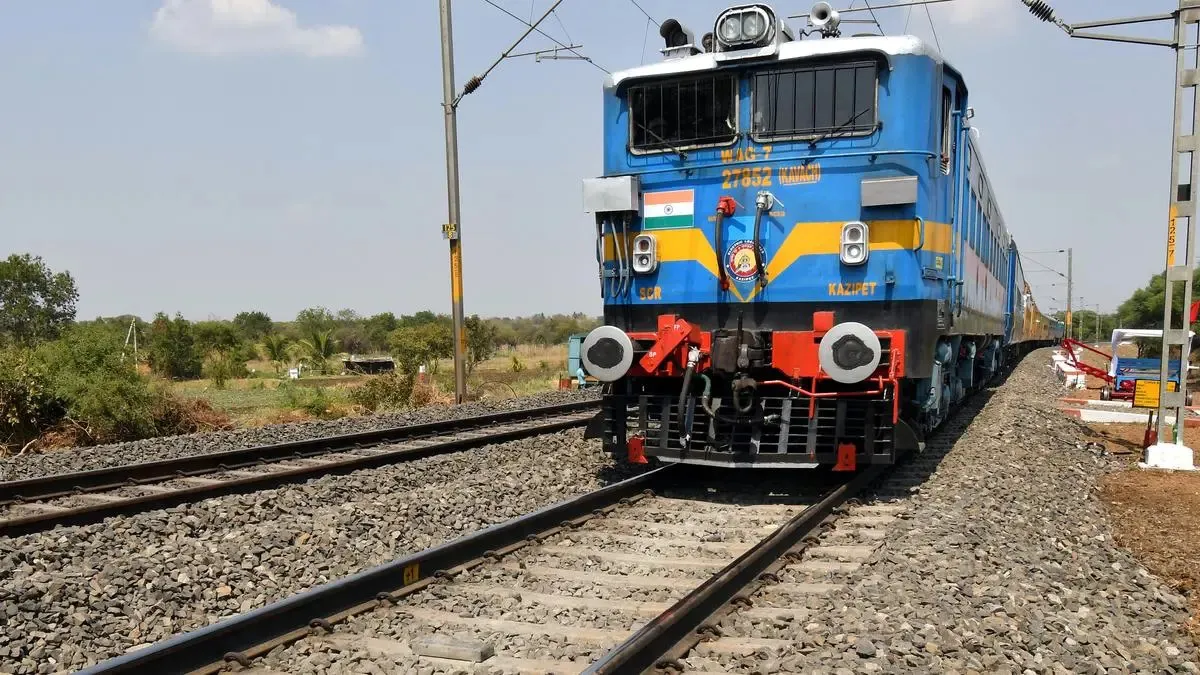
Pune’s rail network is undergoing a significant technological upgrade as Central Railway intensifies the rollout of an indigenous Automatic Train Protection system across key corridors. The expansion of the Kavach safety system marks a decisive shift towards collision prevention, real-time monitoring and safer high-density operations on one of Maharashtra’s busiest rail divisions.
The Pune Division, which oversees roughly 700 km of route length, has recently undertaken extensive trials of the Kavach safety system across nearly 300 km of track. Stretches connecting Pune with Kolhapur and sections linking Daund to Manmad were part of the latest testing phase. Railway officials indicate that the trials are aimed at validating fail-safe mechanisms, braking automation and interoperability before full operational deployment. The Kavach safety system, developed domestically, functions as an electronic shield for trains. It can automatically apply brakes if a locomotive passes a signal at danger or if another train is detected on the same track within unsafe proximity. By reducing dependence on manual signalling alone, it introduces an added layer of redundancy in an environment where suburban growth and freight demand are steadily increasing.
Stations such as Padhegaon, Belapur and Rahuri have completed the second phase of installation works, while additional sections between Daund and Yeola remain under execution. To support the technology backbone, telecom infrastructure is being expanded, including the erection of dedicated communication towers. Officials confirmed that over 50 towers have already been installed, forming part of a larger grid designed to ensure uninterrupted data transmission between locomotives, stations and control rooms. Onboard integration is also gathering pace. The Pune Diesel and Electric Loco Shed recently equipped multiple high-speed passenger locomotives with the Kavach safety system within a compressed timeline. Following inspection and validation, these engines have returned to service, signalling operational readiness for broader adoption.
Urban mobility planners note that rail safety upgrades are critical for rapidly urbanising regions like western Maharashtra, where passenger volumes and freight movement are both rising. As metropolitan regions expand, dependable rail corridors reduce road congestion, cut emissions and enable more equitable access to jobs and services. Automated protection systems are increasingly seen as foundational to building climate-resilient transport networks capable of handling higher frequencies without compromising safety.
Industry observers also highlight the economic implications. Indigenous technology deployment reduces import dependence and creates domestic manufacturing and maintenance ecosystems. Over time, such systems could support higher train speeds and denser scheduling, improving asset utilisation across the network.
With further installations scheduled, the coming months will test how quickly the Kavach safety system can transition from pilot corridors to division-wide coverage. For Pune and its surrounding growth centres, the outcome could redefine both operational reliability and long-term transport sustainability.
Pune Railway Safety System Expansion Accelerates