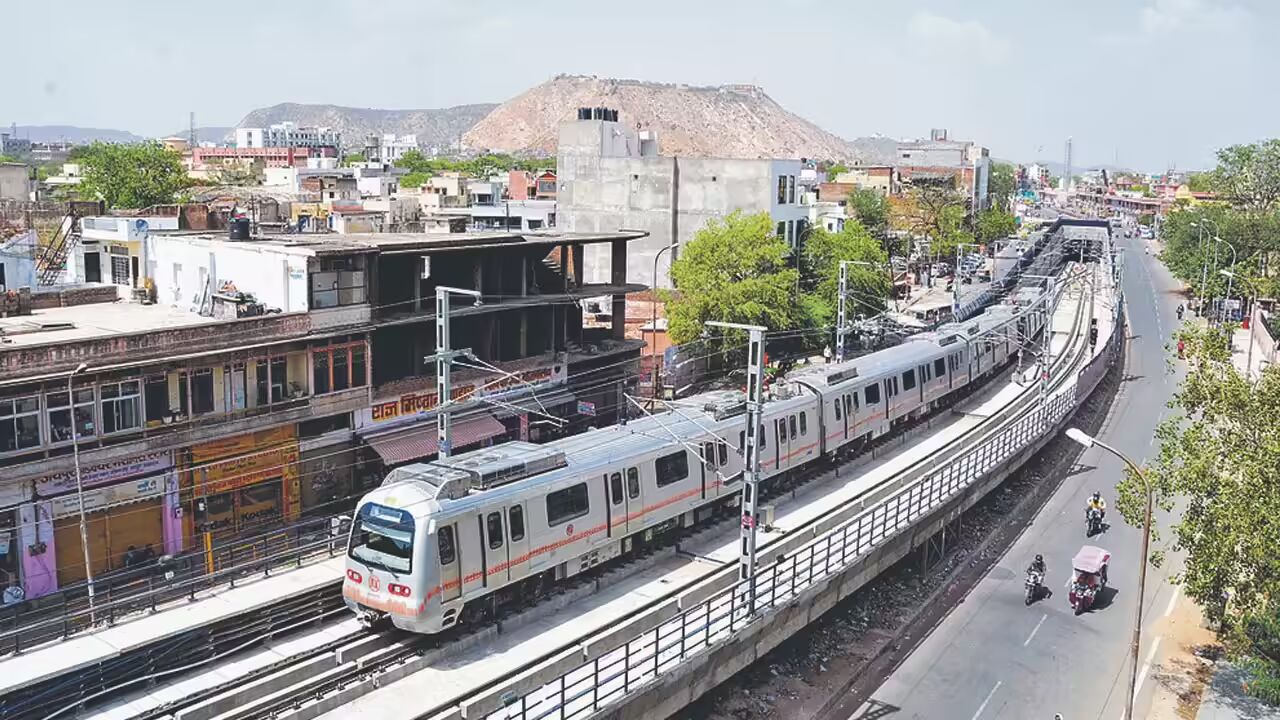
Jaipur’s Tonk Road Metro Corridor Moves Ahead With PM Launch
The long-anticipated Tonk Road metro corridor in Jaipur is poised to transition from planning to execution after a formal launch by the prime minister, marking a new phase in the city’s urban transit expansion.
Officials say that civil work on the corridor will commence in the days following the ceremonial inauguration, reflecting a push to address mobility challenges and integrate rapid transit into Jaipur’s growth framework. Tonk Road — one of the city’s primary north-south axes — has experienced mounting traffic congestion as residential densities and commercial activity along the corridor have increased over the past decade. Journeys that once flowed freely are now slowed during peak hours by mixed traffic, informal parking and last-mile demand from peripheral sectors. Introducing a metro corridor along this spine aims to provide a high-capacity alternative that can reduce reliance on private vehicles, lower travel times and improve emissions performance in a region grappling with seasonal air quality concerns.
The state transport department and Jaipur Metro Rail Corporation have completed detailed design and tendering for the project’s initial segments, integrating multimodal interchange points, elevated guideways and strategically located stations that connect residential neighbourhoods with key employment and education hubs. Authorities have emphasised that safety standards, drainage integration and utility relocation will be prioritised in early works to minimise disruptions and align the project with modern engineering benchmarks. Urban planning experts note that the Tonk Road corridor serves as both a mobility spine and an economic corridor, linking established sectors with emerging transit-oriented developments. A metro along this route has the potential to reshape spatial dynamics in Jaipur by supporting compact land use, encouraging walkable access to stations, and catalysing investment in adjacent mixed-use projects. Such transformations are seen as central to reducing traffic load on radial roads and reinforcing more sustainable travel patterns.
For commuters, the introduction of high-capacity rail offers relief from chronic congestion, particularly during rush hours when buses and shared rides compete with freight and private cars for limited road space. By absorbing a portion of peak demand, the metro can improve average travel speeds and enhance predictability — factors that contribute not only to commuter satisfaction but also to business productivity and quality of life. However, unlocking these gains depends on seamless integration with other transport services, including feeder bus routes, dedicated cycle lanes and pedestrian access networks. Planners argue that multimodal connectivity is critical to realising the full potential of metro infrastructure, as effective last-mile options can significantly broaden the corridor’s catchment and elevate public transport usage.
Environmental analysts also highlight the Tonk Road metro’s role in mitigating urban pollution. Long stretches of diesel exhaust and particulate emissions from road traffic have been linked to poor air quality episodes in Jaipur, especially during winter inversion conditions. Shifting even a fraction of the commuter load from road to electrified metro can lower aggregate emissions and align with broader climate resilience goals for the city. Despite the optimism, challenges remain. Land acquisition, utility relocation and contract management are common sources of delay in large-scale infrastructure works. Securing sustained funding flows, ensuring quality control during construction and calibrating project timelines with local traffic management will be essential to avoid cost overruns and schedule slippage.
For municipal leaders and urban policymakers, the commencement of work on the Tonk Road metro corridor represents a milestone in Jaipur’s transit evolution — one that reflects a strategic commitment to building equitable, efficient, and environmentally responsive urban mobility systems. How effectively this project is delivered in the coming years will serve as a bellwether for future rapid transit expansions in India’s growing cities.