Jaipur Water Security Strengthened With Expanded Treatment Infrastructure
The Rajasthan government has reiterated its focus on securing Jaipur’s drinking water supply through long-term infrastructure investments and corrective project interventions, responding to civic concerns over capacity and future demand as the city grows.
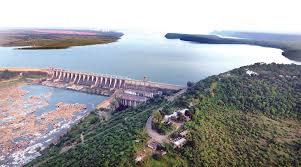
In remarks to the state assembly, the Public Health Engineering Department (PHED) minister outlined ongoing efforts centred on the Bisalpur-Jaipur Drinking Water Project (Stage-II Phase-1), a cornerstone initiative designed to expand water treatment and distribution capacity for the Pink City. Under the current phase of the project, the state issued a ₹173.16 crore work order in March 2020, with components that include replacing intake pumps, constructing a new 216 MLD treatment plant at Surajpura, and building two 30 MLD clear-water reservoirs with associated pump houses. These upgrades aim to ensure Jaipur’s water infrastructure keeps pace with demographic and economic expansion, reducing stress on existing systems that have struggled during periods of high demand. However, commissioning challenges have exposed execution and performance issues. During trial runs, the Surajpura plant did not achieve its full designed capacity, prompting authorities to issue corrective notices to the contractor and commission an independent technical review led by the Malaviya National Institute of Technology in Jaipur.
The minister emphasised that necessary remedial actions will be undertaken without imposing additional financial burden on the state government, and work is continuing with the contract extended until March 31, 2026 to complete the intervention. For Jaipur’s rapidly urbanising population — where demand for potable water rises alongside residential and commercial expansion — reliable supply infrastructure is essential not just for daily living but for public health, industrial activity and urban equity. Planners note that a city’s drinking water security underpins broader economic resilience and can influence everything from investment decisions to liveability rankings for residents and businesses. The Bisalpur-Jaipur initiative also links into wider state efforts to enhance water management. Rajasthan has previously approved large drinking water projects under the Jal Jeevan Mission, including major supply works intended to extend potable water access across rural and peri-urban districts, reflecting a multi-layered strategy to tackle systemic shortages.
Yet critics and community advocates argue that execution delays and performance gaps must be addressed more proactively. Meeting technical benchmarks, enforcing quality standards and aligning contractor accountability with delivery timelines are seen as vital to ensuring that ambitious planning translates into tangible service improvements on the ground. Without such rigor, infrastructure investments risk under-delivering relative to rapid urban growth in Jaipur. Moreover, in a state where water scarcity remains a perennial challenge — reinforced by declining groundwater levels and seasonal variability — integrating surface and subsurface water strategies alongside treatment expansions will be critical. Policymakers are also urged to align supply initiatives with conservation measures, watershed management and demand-side interventions to enhance long-term sustainability.
For Jaipur’s residents, particularly those in fast-developing suburbs and new industrial corridors, the success of these measures will directly affect access to safe drinking water — a core marker of urban quality of life. As the city continues to expand, ensuring uninterrupted, equitable water supply will remain central to urban planning and public service delivery in Rajasthan’s capital region.