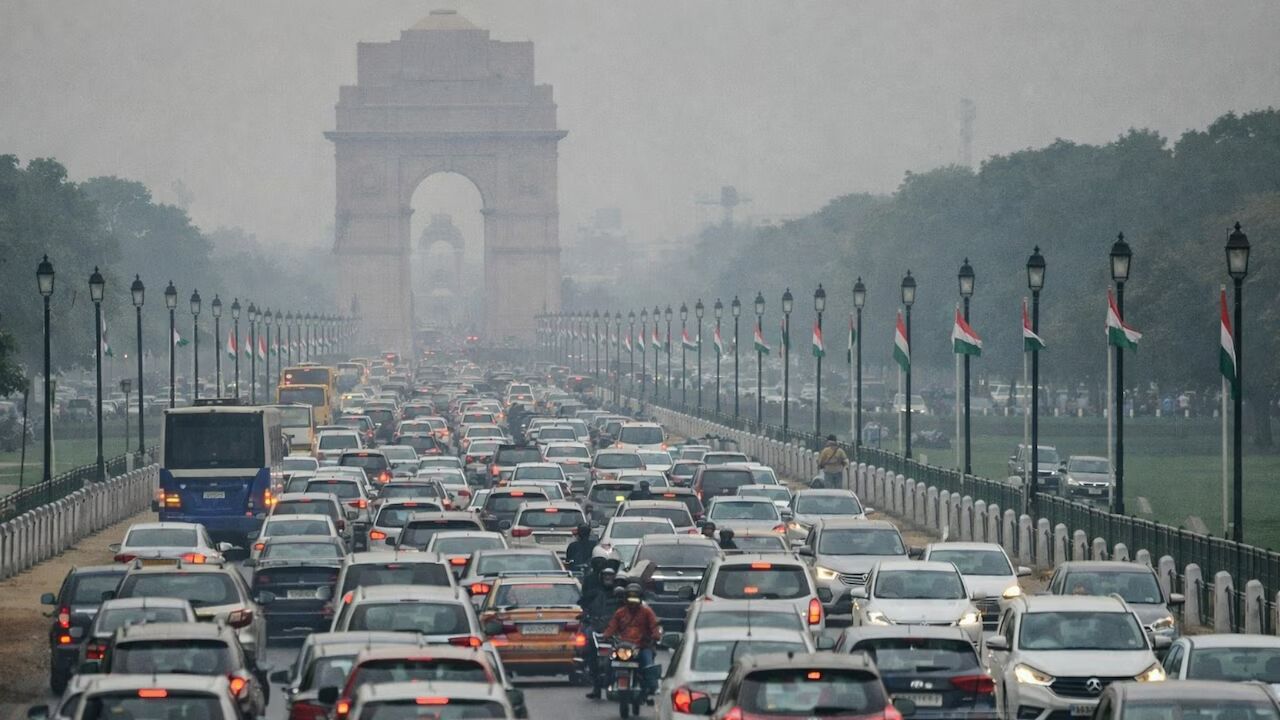
Traffic Diversions Return In Delhi With Summit-Linked Route Restrictions
As Delhi prepares for another day of heightened security and high-profile engagements, civic authorities have put in place a series of traffic curbs and diversions that are expected to disrupt travel across key corridors, prompting commuters to plan alternative routes.
The measures, aimed at managing vehicular movement and ensuring smooth execution of official events, reflect the complex balancing act between urban mobility and public safety in India’s capital region. Under the updated traffic management plan released by the Delhi Traffic Police, several arterial roads and major junctions — particularly around central ceremonial zones and venues hosting international delegates — will see partial closures or lane restrictions during peak hours. These include stretches near India Gate, the Secretariat area and connecting highways that feed into the event precincts. Authorities have stressed that controls will be both dynamic and targeted, adjusting to real-time conditions and security requirements. Daily commuters and logistics operators have reported longer travel times on affected routes, with congestion building up earlier than typical peak-hour norms. Ride-hail services, buses and freight vehicles have also been advised to avoid certain stretches where diversions are in effect, as bottlenecks and slow-moving queues are expected to persist through much of the day.
Officials recommend using peripheral expressways, ring roads and alternative linkages to mitigate delays, particularly for cross-city movement. Traffic advisories issued by municipal agencies urge motorists to stay informed through official channels and to prioritise metro and other public transport options where feasible. In a city already grappling with high vehicle volumes, even temporary restrictions on major corridors can ripple outward, shifting congestion onto secondary feeder roads and creating unanticipated delays in residential and business districts. Urban transport analysts note that the recurring pattern of event-related controls highlights enduring infrastructure stress points within the Delhi National Capital Region (NCR). While large-scale gatherings and summits are periodic, the underlying challenges of mixed traffic flows, limited signal synchronisation and constrained road space remain persistent. Traffic management strategies — though necessary for safety — can inadvertently amplify daily mobility friction if not paired with adaptive signal systems and real-time traffic information dissemination.
Civic authorities have emphasised that the current measures are precautionary and contextual, designed to protect both dignitaries and citizens. Police officials have coordinated with municipal traffic controllers to establish alternate routes with clear signage, while traffic marshals and digital signboards have been deployed across key intersections to reroute vehicles efficiently. Nonetheless, compliance and patience from commuters will be essential to manage the flow without exacerbating congestion. For residents and businesses that rely on predictable travel times — including delivery services, emergency vehicles and daily commuters — such disruptions underscore the need for more resilient and diversified urban mobility frameworks. Integrated multimodal planning, enhanced public transport capacity and smarter use of ITS (Intelligent Transport Systems) could reduce reliance on private vehicles and improve overall adaptability when temporary diversions are necessary.
Looking ahead, city planners and transport officials may use data from the current control measures to refine future strategies, balancing civic activity demands with daily traffic flow. In the interim, strategic route planning, early departures and flexible scheduling remain the most practical tools for commuters navigating Delhi’s roads during this period of heightened activity.