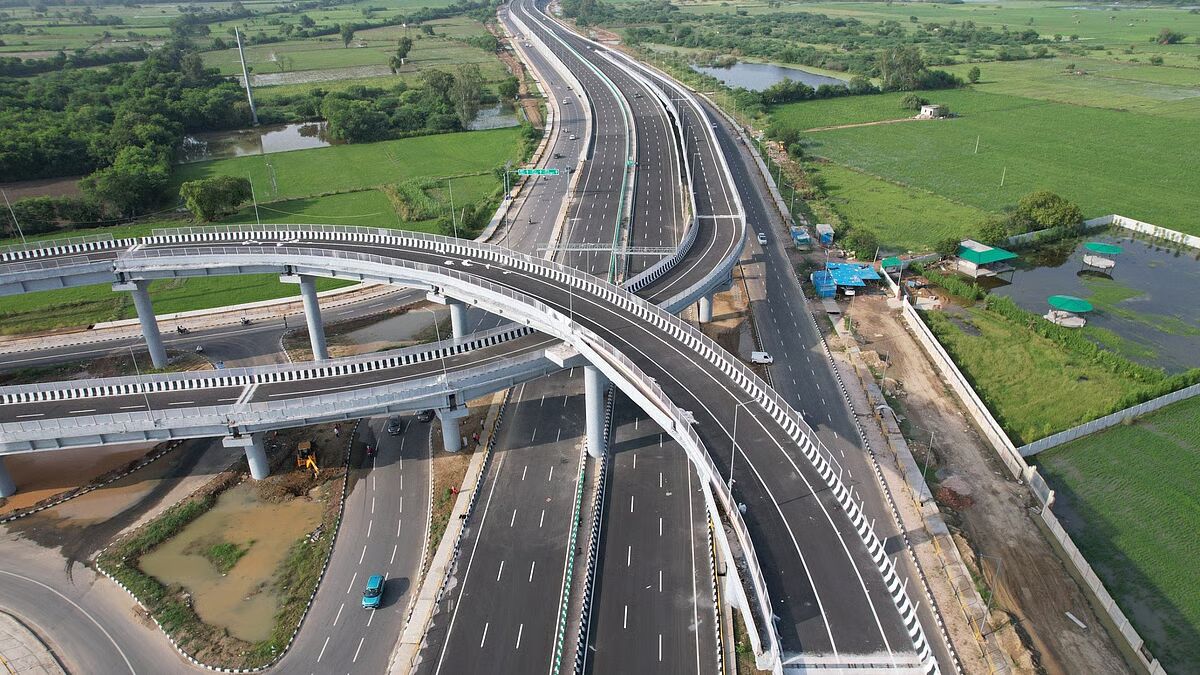
594 Km Ganga Expressway Poised To Boost Lucknow Connectivity
The 594-kilometre Ganga Expressway in Lucknow and across Uttar Pradesh is expected to open for vehicular movement by late March, marking a significant expansion in the state’s transport infrastructure that could reshape regional connectivity and mobility patterns in northern India.
When commissioned, this greenfield expressway — stretching from Meerut in the west to Prayagraj in the east — will offer a high-capacity alternative to existing routes while delivering strategic benefits for urban nodes such as Lucknow en route. Designed to drastically reduce travel times across the densely trafficked east-west corridor, the expressway is anticipated to improve efficiency for both passenger vehicles and heavy freight carriers. Urban and transport planners point out that improved connectivity with Lucknow — itself a major economic and administrative hub — can strengthen labour mobility, facilitate more predictable logistics and unlock peri-urban growth opportunities around key interchanges. For Lucknow residents and businesses, the expressway’s operationalisation arrives at a moment when traffic congestion on conventional highways often impedes seamless travel across the region.
By redistributing long-distance traffic away from secondary toll roads and state highways, the new corridor could alleviate pressure on the city’s arterial links, support more reliable travel schedules and enhance access to broader regional markets. The expressway will feature integrated safety systems, service plazas and major interchanges that connect with local road networks serving Lucknow and adjoining districts. Such linkages are expected to encourage additional private and public investment in sectors like logistics parks, warehouses and mixed-use developments, anchored on the efficient movement of goods and people between Lucknow and other industrial clusters. Transport economists note that high-capacity corridors often act as catalysts for economic transformation by lowering transport costs and improving access to urban opportunity centres. In Lucknow, this could translate into expanded labour catchments for the city’s growing services and manufacturing sectors, enabling quicker commutes from satellite towns and supporting a more distributed urban growth pattern.
Yet officials and planners caution that the expressway’s realisation is but one part of a broader mobility strategy. Last-mile connectivity improvements, feeder road quality and multimodal integration with public transport systems will also be necessary to ensure that the corridor’s benefits are fully felt at the community level. Without these complementary enhancements, early gains in travel time may remain concentrated among long-distance traffic rather than everyday intra-city mobility. Environmental considerations have also been factored into the project’s design. Planners assert that mitigation measures — such as green buffers, noise barriers and stormwater management systems — are being incorporated to balance infrastructure needs with ecological concerns, particularly across sensitive stretches that intersect agricultural and peri-urban landscapes.
As Uttar Pradesh pushes to integrate the Ganga Expressway into its broader transport network, the expected late-March launch represents a key milestone in delivering resilient, high-capacity travel options. For Lucknow’s residents and regional stakeholders, the corridor promises improved connectivity, enhanced economic linkages and a forward step in the state’s infrastructure-led development agenda.