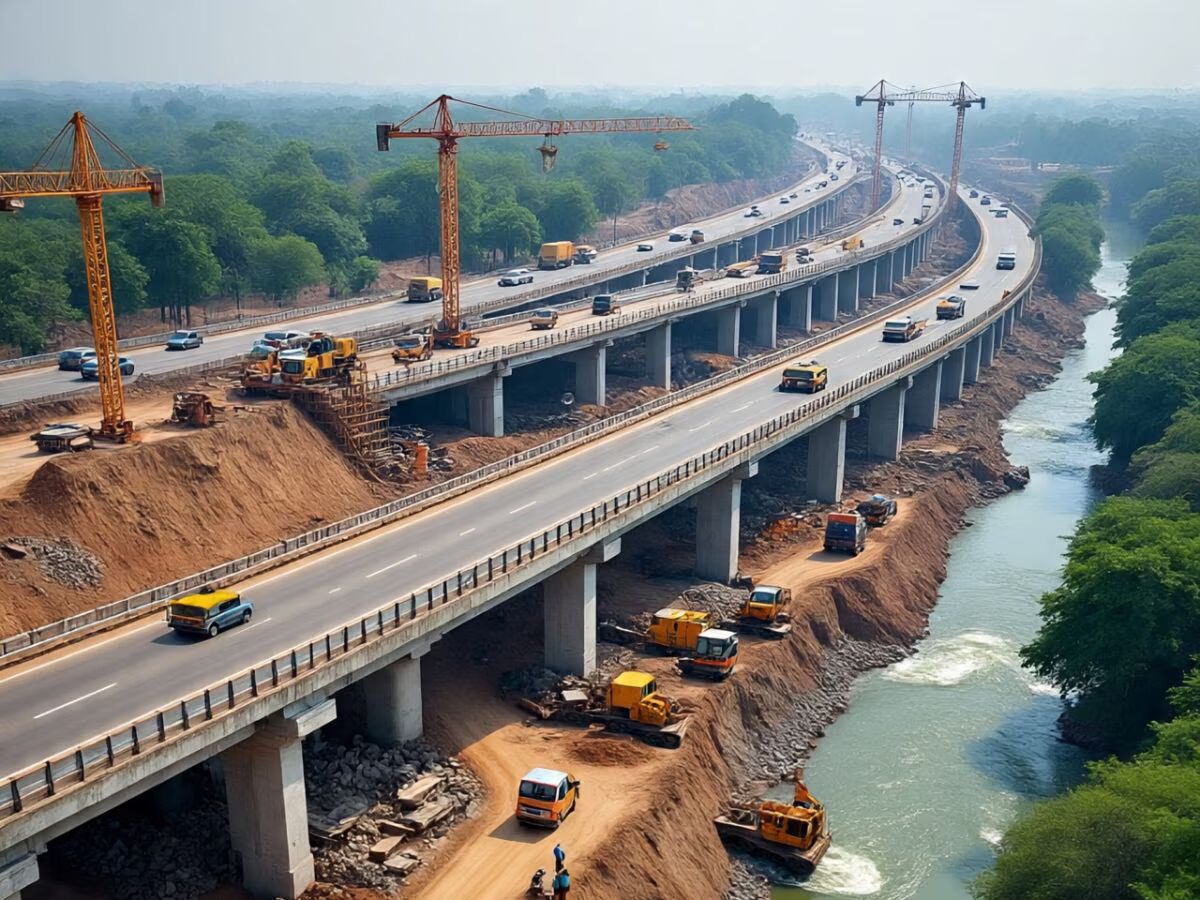
Rs 140 Crore Sanctioned For Key Kanpur-Lucknow Bridge Network
The Government of Uttar Pradesh has earmarked ₹140 crore to construct five new bridges along the strategic Kanpur–Lucknow corridor, a move aimed at easing traffic congestion, strengthening regional connectivity and supporting long-term urban and economic growth across one of the state’s most vital transport corridors.
The announcement marks a pivotal step in road and river infrastructure planning, recognising that durable bridge networks are essential for mobility, freight efficiency and climate-resilient transport systems in India’s most populous state. The funding, approved during recent state budget allocations, will be used to develop five distinct bridge structures at key chokepoints between Kanpur and Lucknow, improving connectivity along National Highways and supplementary link roads that serve both urban and rural populations. These bridges are slated to ease bottlenecks created by waterways, railway crossings and seasonal flooding issues, which otherwise interrupt seamless travel and impose economic costs through delays and increased vehicle operating expenses. Kanpur and Lucknow are two of Uttar Pradesh’s largest cities, linked by a dense network of industrial, logistics and commuter traffic. The corridor supports heavy movement of goods — from manufacturing outputs to agricultural produce — and daily inter-city commuters, making infrastructural enhancements along the route a priority for both state planners and business communities.
The additional bridges are expected to reduce pressure on existing river crossings and improve route redundancy, reducing travel times and enhancing transport reliability. Urban transport analysts note that bridging gaps in regional mobility infrastructure can deliver measurable economic benefits, particularly in fast-growing urban regions where population densities and vehicle volumes are rising. By facilitating smoother inter-urban journeys, the new bridges could help attract investment, support supply chain resilience and enhance labour market access between Kanpur, Lucknow and surrounding industrial townships. Reliable connectivity also supports emerging sectors such as e-commerce logistics and time-sensitive freight movements that are increasingly vital in modern urban economies. Beyond economic gains, the projects also reflect integrated infrastructure planning that acknowledges seasonal climate variability and flood pressures. Bridges designed with adequate clearance and drainage capacity can reduce vulnerability to monsoon impacts, limiting transport disruption and protecting critical supply chains.
As climate models forecast increasingly erratic rainfall patterns in north India, infrastructure that combines capacity with resilience becomes a cornerstone of sustainable regional development. However, analysts caution that funding alone does not guarantee timely completion. Effective project execution will hinge on strong contract management, quality assurance, land acquisition coordination and community engagement to ensure minimal disruption during construction. Delays in similar infrastructure initiatives have often stemmed from bureaucratic hurdles, design revisions and coordination failures between multiple government agencies. The social dimension of infrastructure deployment is also significant. Expanded bridge networks can alter local mobility patterns, necessitating complementary investments in last-mile connectivity, pedestrian access and feeder road upgrades to ensure that surrounding communities can fully benefit from enhanced transport links.
Inclusive planning that integrates non-motorised mobility and public transport access can magnify the benefits of major bridge investments. For policymakers, the ₹140 crore allocation emphasises a strategic commitment to strengthening north-south connectivity within Uttar Pradesh. As Kanpur and Lucknow continue to grow as economic and administrative hubs, resilient transport infrastructure will be key to ensuring that mobility constraints do not hamper regional competitiveness, urban quality of life or access to employment opportunities.