Maharashtra Expands Village Of Books To Every District
The Maharashtra government has approved a formal policy to expand the Village of Books initiative across the state, embedding literary spaces within rural tourism and cultural infrastructure networks. State officials say the programme, pioneered in Bhilar village near Mahabaleshwar, now moves from pilot to permanent deployment — a shift with implications for inclusive cultural access, rural economies and sustainable destination development. This marks a strategic attempt to widen civic literacy and community-driven cultural tourism beyond urban centres.
Under the revised framework, district authorities will identify prospective sites based on their status as recognised tourism attractions, pilgrimage locales or historic homes of noted Marathi poets and thinkers. Selected villages will host curated reading galleries — informal public spaces designated for book access and exchange. Each site qualifies for a seed grant and recurring maintenance funding, reinforcing the concept’s viability in smaller towns and hinterland districts.Local committees and district collectors are now central to implementation, a departure from the previous ad-hoc permissions model. This decentralised mechanism intends to increase grassroots participation while linking literary engagement with existing tourism flows, such as heritage trails and nature‐based circuits. Industry observers characterise the move as a hybrid cultural-economic strategy that positions reading spaces as amenities to support longer visitor stays and enhance village profiles.
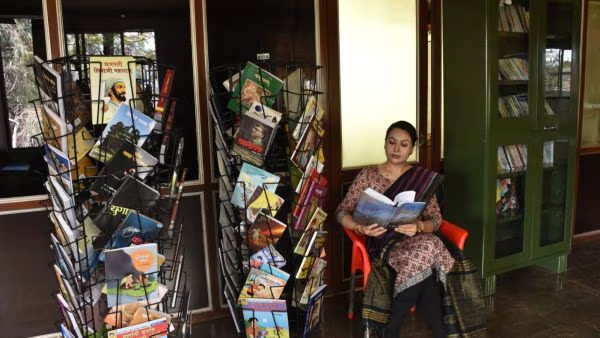
The Village Of Books model was first trialled in Bhilar, where dozens of homes and community buildings were repurposed into themed book repositories, with colourful signs guiding visitors through genres and author categories. The concept drew inspiration from Britain’s Hay-on-Wye, a globally recognised literary town, but was tailored to Marathi cultural contexts, yielding tens of thousands of volumes spanning regional and national languages.Advocates emphasise that the expansion intersects with broader goals for equitable cultural infrastructure, as rural districts often lack formal libraries and accessible reading venues. Urban planners and rural development experts say this policy could complement educational outcomes, stimulate local micro-enterprise opportunities and add socio-economic value to regions outside major cities. A senior cultural official noted the initiative could help build community identity and youth engagement in areas where brick-and-mortar libraries are rare.
However, success hinges on sustained community stewardship and integration with other rural development priorities, such as transport connectivity, vocational training and digital access. Critics caution that fixed grants alone won’t ensure long-term vitality unless complemented by literacy programmes and partnerships with schools, nonprofits and local arts groups. Urban planners also highlight the need to measure social impact beyond tourism footfall.As rollout begins, what’s clear is that Maharashtra’s cultural policy is embracing a more decentralised and people-centric paradigm — one that seeks to knit reading into the very fabric of rural life. Monitoring outcomes at the district level will be key to determining whether this literary investment translates into broader civic and economic returns.