


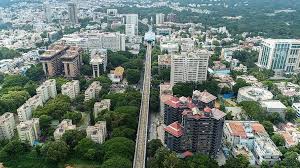
Bengaluru’s housing market continues to post strong sales in early 2026, but the pace of transactions is exposing a widening affordability gap for middle-income households. Apartments in established technology corridors are being absorbed quickly, even as median-salaried families struggle to bridge the gap between income growth and rising property values.
Market analysts tracking registrations and developer launches say demand remains fundamentally driven by employment expansion in the city’s technology and services sectors. Micro-markets such as Whitefield, Electronic City and Sarjapur Road continue to record steady bookings due to proximity to office campuses, metro connectivity and established social infrastructure. Developers report that premium projects near major IT parks are witnessing consistent traction, particularly from senior professionals with annual incomes upwards of Rs 30 lakh. This segment includes technology leads, global capability centre executives and startup founders who have monetised stock options. Industry estimates suggest non-resident Indians account for a notable share of high-ticket purchases, viewing Bengaluru as competitively priced relative to global cities. However, the Bengaluru housing market presents a divided picture. While affluent buyers are driving new launches, middle-class households are increasingly priced out of central employment zones. Property consultants indicate that apartment values in select micro-markets have risen sharply since 2020, in some cases by more than 70 per cent, outpacing salary growth for mid-level employees.
A senior housing economist explains the distinction between speculative overheating and structural affordability stress. “A bubble is typically marked by falling demand at elevated prices. Bengaluru is still seeing healthy absorption. The issue here is distribution who can afford to buy,” he said. For median-income earners, the arithmetic is tightening. Higher base prices translate into larger down payments and longer loan tenures. Many families are postponing ownership, remaining in rental accommodation or exploring emerging suburbs farther from the urban core. This outward shift has implications for commute times, transport demand and pressure on peripheral infrastructure. Rental markets in core IT corridors remain firm, reflecting continued inward migration and job growth. Yet planners caution that sustained divergence between income and property inflation could alter the city’s spatial patterns. If central neighbourhoods become accessible only to upper-income groups, socio-economic segregation may intensify. Infrastructure upgrades including metro extensions and arterial road improvements have supported the current upcycle in the Bengaluru housing market. The next phase of growth, however, may depend on whether supply can diversify to include genuinely affordable and mid-income formats alongside premium inventory.
For now, Bengaluru’s property cycle appears anchored in employment momentum rather than speculative excess. But the sustainability of the boom will increasingly hinge on how inclusively the city can house its expanding workforce.
Also Read: Bengaluru property boom strains homebuyers
Bengaluru property boom strains homebuyers
