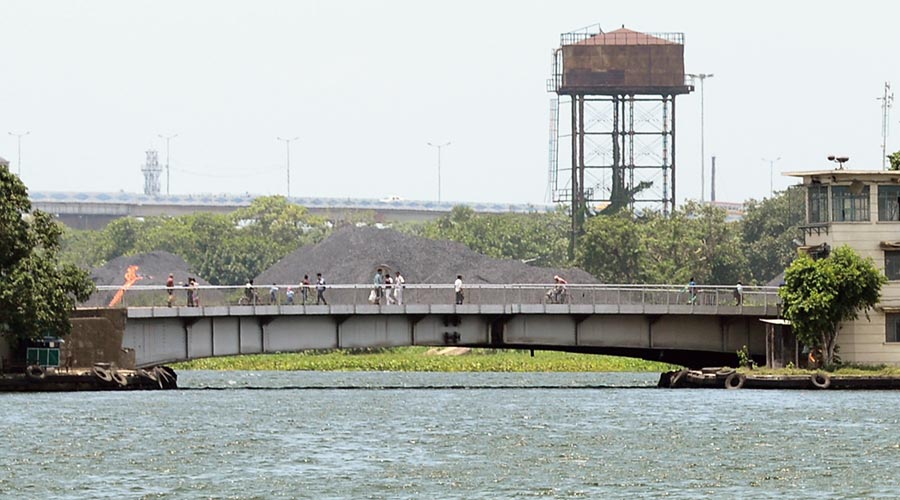
Kolkata To Modernise Historic Folding Bridge Asset
In Kolkata’s docklands, a 60‑year‑old mechanical landmark that has for decades linked industrial precincts across the Hooghly River is being readied for a comprehensive technological overhaul. The city’s unique double‑leaf rolling bridge, crucial for both port activity and urban traffic, is undergoing a ₹117 crore modernisation to bolster safety, efficiency and resilience in one of India’s busiest maritime gateways.
The structure, which dynamically lifts to allow vessels into the dock system while carrying goods traffic on its span, is more than an engineering relic. For generations it has underpinned connectivity between urban neighbourhoods and industrial zones, supporting both economic throughput and daily commutes. Upgrading this bespoke infrastructure reflects Kolkata’s broader challenge of maintaining legacy assets while adapting to 21st‑century demands. The port authority has commissioned the refurbishment through an infrastructure development partner with specialised engineering input to replace ageing electro‑mechanical components and reinforce load‑bearing members. Work will also improve control systems that have historically been prone to breakdowns and slow operations, causing delays for road users and ships alike. Senior officials say the investment aims to reduce downtime, enhance operational predictability and align the heritage asset with contemporary reliability standards.
For Kolkata’s residents and businesses, the bridge project carries both symbolic and practical importance. Urban planners describe the bascule bridge as a connective spine in the city’s industrial geography. “Retrofitting this type of movable bridge is technically demanding but indispensable for sustaining port‑city links,” notes an infrastructure analyst. The mechanical lift mechanism, long a point of local identity, will be preserved while critical systems are renewed to handle heavier traffic and harsher environmental stresses. The project also intersects with national coastal development strategies. A portion of funding is drawn from a government programme aimed at strengthening port infrastructure to support economic growth and supply chain resilience. Experts say such targeted investment in enduring infrastructure demonstrates a commitment to maintaining vital logistics networks even as cities pursue greener and smarter mobility models.
Beyond mechanics, the bridge’s renewal raises questions about sustainable urban connectivity. Traffic delays around the docks often ripple into adjacent neighbourhoods, affecting commute times, air quality and economic activity. Upgraded reliability could ease congestion and reduce idling emissions, complementing broader climate goals for the urban transport sector. Observers caution, however, that infrastructure alone cannot solve systemic congestion; integrated planning for freight movements, public transit and last‑mile connectivity remains essential. As work progresses toward its slated completion date in 2027, stakeholders are watching closely to see how heritage infrastructure can be recast as a modern utility without losing its defining character. For Kolkata, the bridge’s rebirth is both an engineering milestone and a test case in balancing legacy assets with future‑ready performance.