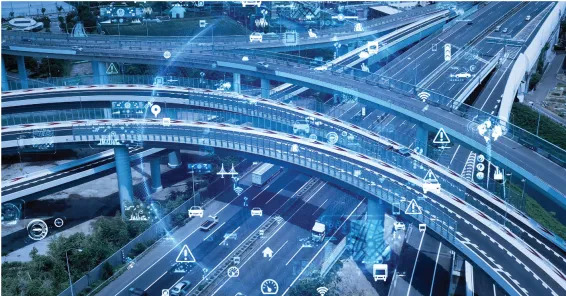
Chennai’s municipal administration is moving towards data-driven urban planning with the launch of a Digital Twin pilot, covering a 5-square-kilometre central corridor including Nungambakkam, College Road, Greams Road, and Anna Salai. The initiative aims to create a virtual replica of the city area, integrating real-time infrastructure and environmental data to enhance decision-making for mobility, flood resilience, and civic services.
The project will combine information from the city’s Integrated Command and Control Centre, sensor networks, and GIS mapping into a 3D and 4D simulation platform powered by artificial intelligence. Officials say the system will facilitate better monitoring of flood risks, traffic congestion, and emergency situations, enabling departments to coordinate responses using consolidated, high-resolution data. As part of the pilot, a LiDAR survey will cover roughly 1,000 kilometres of arterial and interior bus routes, including an initial mapping along Khader Nawaz Khan Road. This exercise is expected to generate precise digital maps, support traffic management, and inform road maintenance planning. The survey, conducted by the municipal GIS Cell, is budgeted at approximately ₹5 crore, highlighting the city’s investment in high-resolution spatial data.
In parallel, surveillance infrastructure is being expanded with cameras at 100 stormwater drain points to bolster flood monitoring, with an estimated outlay of ₹2 crore. Urban planners note that such integration of environmental monitoring with real-time mapping can significantly improve the city’s resilience to extreme weather events, a growing concern in coastal urban centres. Experts suggest that Digital Twin platforms can transform municipal governance by allowing predictive scenario planning. For example, traffic flow simulations and flood risk modelling can inform road design, drainage upgrades, and emergency response strategies before issues escalate. Such tools also provide valuable insights for sustainable urban growth, helping ensure equitable access to mobility and public infrastructure.
Economically, the project positions Chennai to optimise resource allocation and reduce operational inefficiencies in urban management. Analysts indicate that high-fidelity digital models can also support private sector investments, including real estate and infrastructure development, by providing accurate data on transport connectivity and flood vulnerability. If implemented successfully, the Digital Twin initiative could serve as a blueprint for integrating AI-driven planning into India’s urban ecosystems, balancing growth with climate resilience and citizen-centric infrastructure. Municipal authorities plan to expand the platform gradually, with future phases expected to cover additional city sectors and integrate more data streams for holistic urban management.