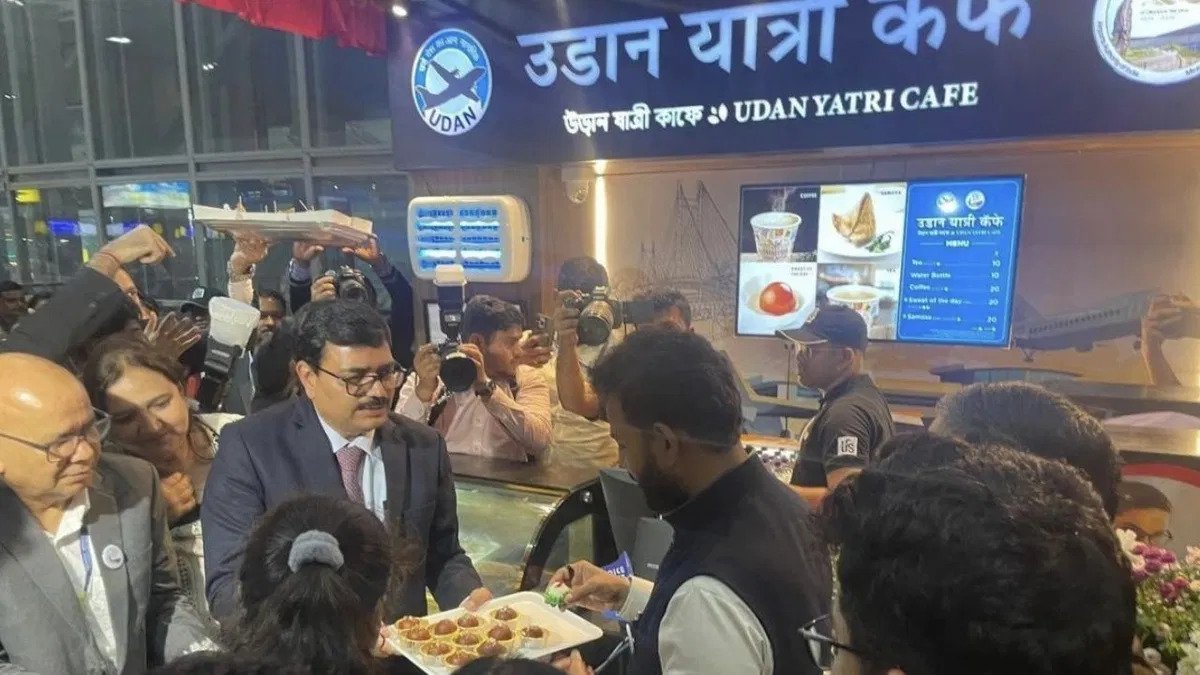
A public interest petition before the Calcutta High Court has raised questions about how India’s subsidised airport refreshment programme is being implemented, arguing that affordable outlets must be accessible to passengers after security checks at Kolkata airport. The matter, scheduled for hearing next month, could influence how airports across India balance commercial revenues with passenger welfare as traffic surges.
The litigation seeks directions to aviation authorities to ensure that at least one Udan Yatri Café operates within the post-security departure area, in addition to existing counters outside screening zones. At present, several airports reportedly house these low-cost food outlets only in pre-security sections, limiting access for ticketed travellers who have already cleared security and cannot exit without missing flights. The Udan Yatri Café initiative was introduced to address long-standing complaints over steep food and beverage prices inside airport terminals. With air passenger numbers crossing 20 crore in the first half of the current financial year, according to official data, the affordability of basic refreshments such as tea, coffee and drinking water has become a recurring consumer issue.
Urban mobility experts note that airports increasingly function as quasi-public spaces rather than exclusive transport hubs. “When passenger dwell time inside secure areas can exceed an hour, restricting affordable food options to landside counters undermines the social intent of the scheme,” said an aviation policy analyst familiar with the matter. The core argument presented to the court is that the welfare objective of Udan Yatri Café is diluted if passengers cannot access subsidised prices where they actually spend time waiting to board. The petition also calls for standardised operational guidelines across airports, including the availability of simple, unsweetened beverage options for passengers with dietary restrictions. While premium retail concessions remain a significant non-aeronautical revenue stream for airport operators, analysts say the presence of at least one regulated, low-cost outlet per terminal is unlikely to materially affect concession income but could significantly enhance public perception.
Airports Authority officials have previously indicated that pilot outlets witnessed strong uptake in their initial months, signalling pent-up demand for lower-priced alternatives. With more regional travellers entering the aviation network under the broader UDAN scheme, inclusive pricing policies are emerging as an urban equity issue rather than a marginal consumer grievance. The case also touches on a broader governance question: how public infrastructure can remain commercially viable while serving a diverse and price-sensitive population. As Indian airports expand capacity and invest in climate-resilient and energy-efficient terminals, planners are being urged to integrate social accessibility alongside design and sustainability benchmarks. The High Court’s eventual direction could set a precedent for how Udan Yatri Café outlets are positioned nationwide, shaping the balance between commercial airport ecosystems and passenger-first public service delivery.