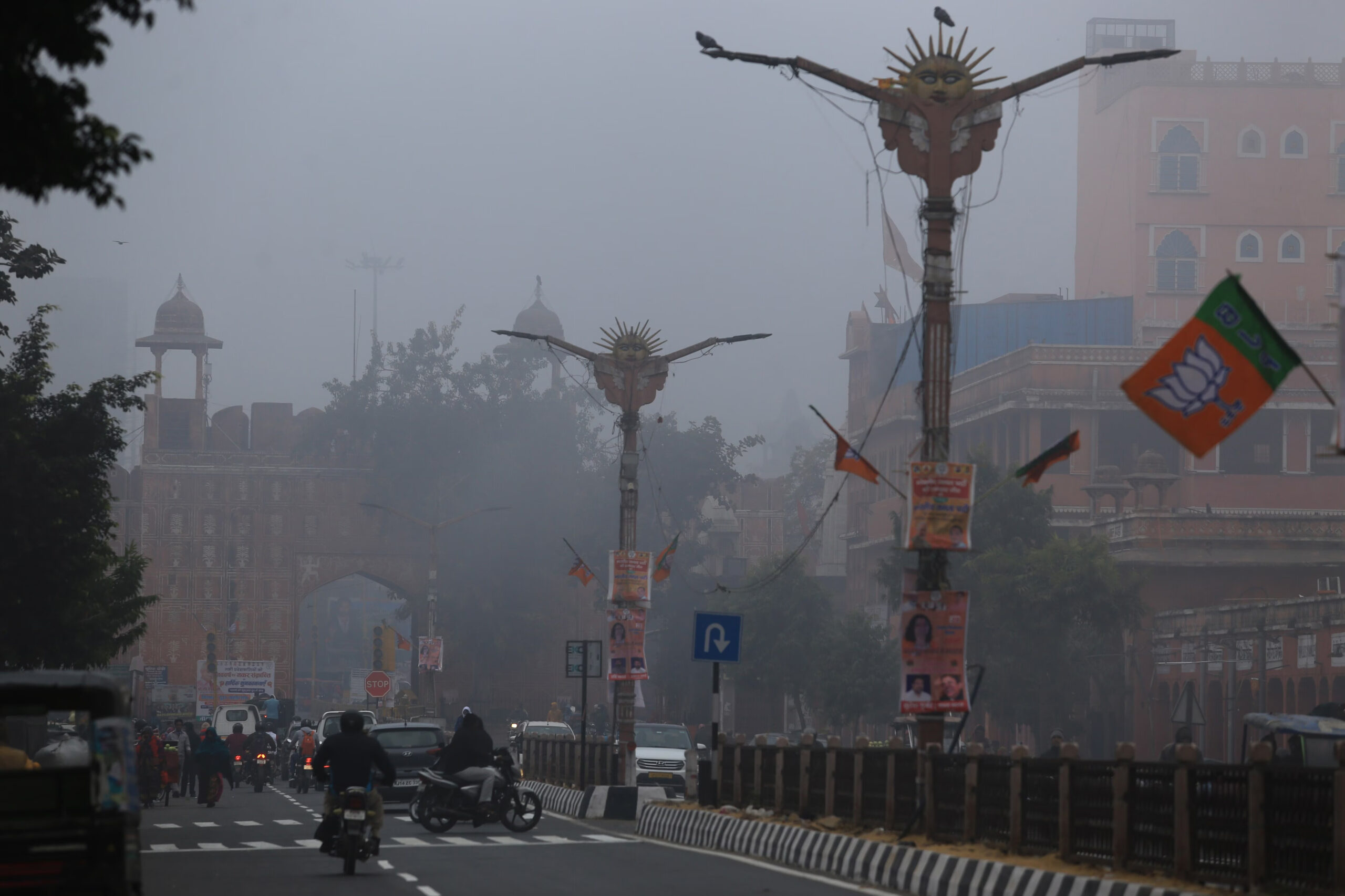
Jaipur witnessed sudden rainfall, marking a sharp shift in weather conditions as a Western disturbance swept across parts of Rajasthan.
The unseasonal showers brought temporary relief from prevailing dry conditions but also raised concerns over thunderstorms, gusty winds and the possibility of isolated hail activity. Rainfall lashed several parts of the Pink City under heavily overcast skies, accompanied by a noticeable dip in temperature. Residents reported intermittent spells of moderate rain that disrupted traffic movement and outdoor activities during peak hours. The abrupt weather change altered the city’s routine, with commuters navigating waterlogged stretches and slower vehicular movement in key corridors.
The development aligns with forecasts issued by the India Meteorological Department (IMD), which had indicated the influence of a Western disturbance over north-western India. These weather systems typically originate in the Mediterranean region and travel eastward, bringing cloud cover, rainfall and occasional hailstorms to northern and western parts of the country during late winter and early spring. Though the rainfall provided short-term respite from dry conditions, it also exposed familiar urban challenges. Water accumulation was reported in low-lying areas, traffic flow slowed considerably in several zones, and temporary power fluctuations affected some localities. Urban planners note that even moderate, short-duration rainfall can strain drainage networks in rapidly expanding cities like Jaipur, where infrastructure upgrades often struggle to keep pace with growth.
The showers led to a slight drop in daytime temperatures, creating a cooler and more humid atmosphere across the city. Weather officials expect partly cloudy conditions to persist over the next 24 to 48 hours, with the possibility of light to moderate rainfall in isolated pockets before the system weakens. Meteorologists have cautioned that Western disturbances during this period can produce sudden, high-intensity events, including lightning and strong winds, urging residents to remain alert. Experts observe that while such off-season rain events are not uncommon, their timing and intensity appear increasingly erratic. Although individual incidents cannot be directly attributed to long-term climate change, shifting seasonal patterns highlight the need for improved early warning systems and stronger urban resilience planning.
For Jaipur, a city balancing heritage conservation with rapid expansion, adapting to unpredictable rainfall patterns will be crucial in ensuring sustainable growth and safeguarding public infrastructure in the years ahead.