


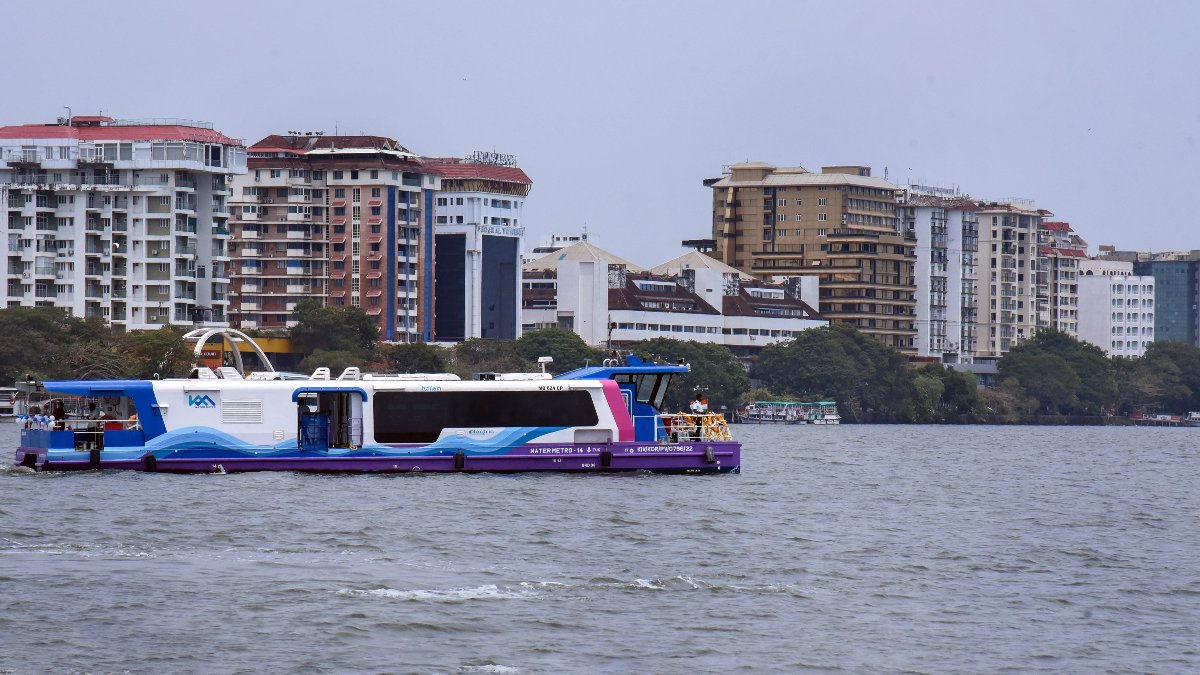
Kochi Metro Rail Limited has indicated that the proposed Kochi Water Metro Thoppumpady Edakochi corridor is likely to become operational by 2027, while short-term dredging measures are being planned in Mattancherry to address navigation challenges caused by low tides. The twin developments underline the operational and ecological complexities of scaling up water-based public transport in a tidal city.
Officials confirmed that preparatory works for extending services between Thoppumpady and Edakochi are progressing, with the route forming part of the broader Kochi Water Metro network designed to integrate island communities with the mainland urban core. The corridor is expected to improve daily connectivity for residents who currently rely on congested road links.Urban mobility experts note that the Kochi Water Metro Thoppumpady Edakochi expansion could ease pressure on arterial routes leading to the city centre and port areas. By offering a reliable alternative across backwater stretches, the service may reduce travel time and vehicular emissions in densely populated coastal wards.
However, operational continuity remains sensitive to tidal variations. In Mattancherry, low tide conditions have disrupted boat services, exposing the vulnerability of shallow channels. To mitigate this, desilting works are scheduled within the next two to three months. Engineers say removing accumulated silt will restore navigable depth and ensure consistent vessel movement throughout tidal cycles.Environmental planners emphasise that dredging in estuarine ecosystems requires careful execution. Kochi’s waterways support fishing communities, mangrove ecosystems and stormwater drainage. Experts recommend that desilting operations be accompanied by sediment management plans and environmental monitoring to avoid long-term ecological damage.
The Kochi Water Metro Thoppumpady Edakochi corridor forms part of a larger ambition to reposition inland waterways as mainstream urban transit infrastructure. Electric-hybrid vessels, modern terminals and digital ticketing systems are central to this model. Transport analysts argue that sustained reliability will determine public trust in water-based commuting.Real estate observers add that improved water connectivity can influence development patterns along the waterfront. Enhanced access may encourage mixed-use growth in Edakochi and neighbouring zones, though planners caution against unregulated construction in low-lying, flood-prone areas.
From a climate resilience standpoint, strengthening navigability while safeguarding tidal ecosystems is critical. Kochi’s experience could offer lessons for other coastal cities exploring blue transport networks.As desilting works begin and expansion timelines firm up, the success of the Kochi Water Metro Thoppumpady Edakochi link will hinge on balancing engineering precision, environmental stewardship and commuter convenience in a city defined by its waterways.
Also Read:Kolkata Eden Realty unveils 5000 crore plan
Kochi Water Metro Thoppumpady Edakochi Link
