Indore River Cleanup Plan Gains Construction Momentum
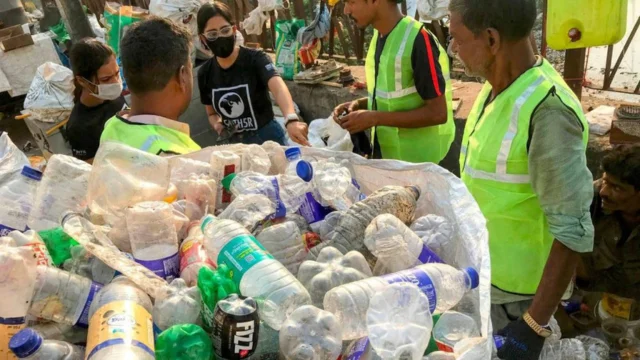
The Nashik Municipal Corporation (NMC) has scaled up a city-wide plastic waste collection initiative across 200 schools in a bid to strengthen grassroots engagement on environmental stewardship and waste management. The programme, anchored in educational institutions, aims to embed sustainable practices among young citizens and align citizen behaviour with the city’s broader goals of waste reduction and pollution control.
The expanded effort builds on a pilot phase in a smaller cohort of municipal schools, where students collected plastic waste from households and neighbourhoods, signalling strong community participation. Encouraged by early results, civic planners have now integrated additional private and aided schools, reflecting a pivot from pilot experimentation to city-wide implementation.Beyond collection metrics, the initiative reflects Nashik’s strategic response to mounting urban waste challenges. Like many rapidly growing cities, Nashik grapples with plastic pollution that strains existing waste-management systems and degrades public spaces, water bodies and peri-urban landscapes. Urban planners observe that single-use plastics — from packaging materials to disposable bags — continue to enter municipal waste streams at high volumes, demanding more proactive engagement and behavioural change.
By embedding organised collection activities within school environments, the NMC is leveraging the educational system as a platform for early-age responsibility on environmental issues. Education authorities have framed the initiative not merely as a seasonal exercise but as a formative component of civic learning, underscoring how sustainable habits and waste segregation practices can be nurtured among students and transmitted to families.The programme’s timing is significant. Nashik is preparing for an influx of visitors linked to major cultural and religious gatherings in the coming year, elevating pressure on waste management infrastructure. A preparatory drive targeting plastic reduction underscores how urban authorities are attempting to pre-empt solid waste surges that typically accompany large events.
Industry experts highlight that integrating youth engagement into environmental policy serves multiple strategic functions. It accelerates social acceptance of regulations — such as bans on certain categories of plastics — while also building a constituency for long-term sustainability goals. Municipal representatives have signalled that collected plastic will be routed to authorised recycling channels, which can reduce contamination in mixed waste streams and support circular economy objectives.However, the initiative is only one piece of a broader challenge. Nashik’s waste sector, like many Indian cities, contends with inconsistent source segregation, variable civic participation, and limited recycling infrastructure capacity. Urban planners argue that school-based drives must be complemented by robust municipal enforcement of segregation rules, public awareness campaigns, and strengthened recycling markets to transform collection into measurable waste diversion outcomes.
Looking ahead, the NMC plans to expand the programme beyond the current cohort, aiming for universal school participation and deeper integration with household waste patterns. The long-term vision is to cultivate a generation of citizens equipped with the knowledge and habits needed to reduce plastic waste, support cleaner neighbourhoods and contribute to a more sustainable urban future.