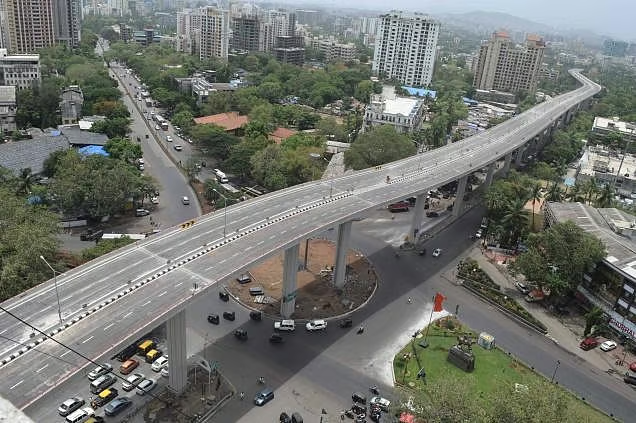
A long-awaited bottleneck on the Mumbai-Nashik Highway has eased with the opening of the new Saket flyover for vehicular traffic, marking a significant milestone in regional transport infrastructure in Maharashtra’s rapidly urbanising corridor. The bridge, completed and cleared for use after structural load testing, seeks to mitigate chronic congestion where rural and urban trade flows intersect — a long-standing challenge for commuters and logistics operators traversing the key north-bound arterial route from Mumbai.
The Saket flyover, constructed to modern highway standards and designed to accommodate both heavy and light vehicles, replaces an ageing two-lane structure that regularly slowed traffic during peak hours. The Maharashtra State Road Development Corporation (MSRDC) completed rigorous load testing earlier this week before opening the flyover to public use, a step infrastructure planners describe as critical to ensuring long-term durability under high freight and commuter demand.For years, residents and transport authorities have cited the stretch near Saket and Kalwa as a major choke-point where the Mumbai-Nashik Highway narrowed, forcing multi-directional flows through congested urban junctions. The result: frequent delays for daily commuters and slower freight movement between India’s financial capital and key northern markets. Urban planners note that easing this pinch point not only improves day-to-day travel times but also enhances the reliability of supply chains that underpin regional commerce.
The timing of the flyover’s opening dovetails with broader infrastructure upgrades along Maharashtra’s major highways, including ongoing works to widen the Mumbai-Nashik stretch into an eight-lane corridor further north. These combined investments reflect a growing recognition of integrated transport networks as foundation stones for equitable economic growth — especially important in corridors linking dense megacity regions with emerging urban centres.Transportation economists point out that such infrastructure improvements can yield significant benefits beyond travel time savings. Improved road capacity can lower vehicle operating costs, expand access to jobs in industrial and suburban clusters, and reduce emissions associated with idling traffic — aligning with regional goals for more climate-resilient transport corridors. However, effective outcomes depend on complementary planning, such as safe pedestrian access, well-signposted traffic management, and routine maintenance to protect asset longevity.
Local logistics firms and commuters alike have welcomed the move, noting early signs of smoother flow on the once-clogged stretch between Majiwada and Vadpe. Still, challenges remain where the elevated sections feed into narrower road segments; roundabouts and signal-controlled sections continue to create minor throttling points that could be addressed in future waves of infrastructural refinement.Urban planners emphasise that singular projects like this flyover must be integrated into wider multimodal and climate-adapted mobility strategies to generate sustained benefits. Enhancing public transport links, increasing last-mile connectivity to freight hubs, and preserving vulnerable ecosystems near creek crossings are among the next priorities for Maharashtra’s urban infrastructure agenda.
Overall, the operationalisation of the Saket flyover represents tangible progress in easing highway congestion, supporting trade flows and improving daily commutes — a fundamental stride toward smarter, more resilient transport infrastructure in one of India’s most dynamic regional corridors.