


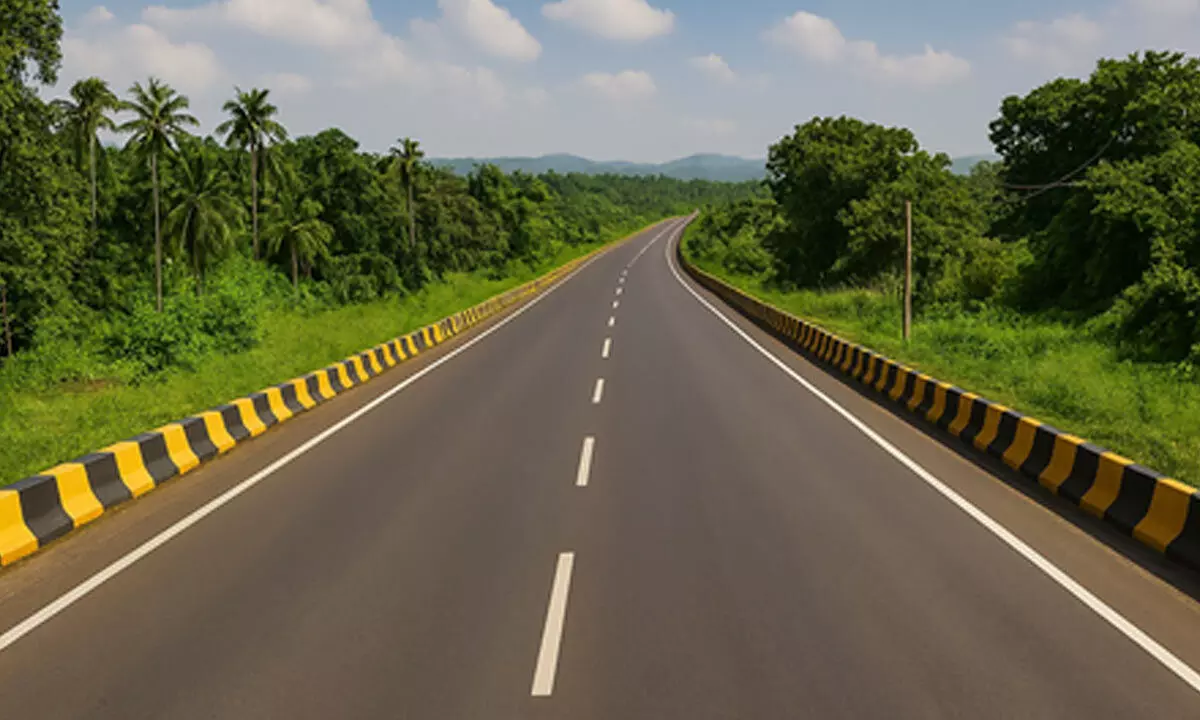
The National Highways Authority of India has advanced its asset recycling programme by approving the transfer of two operational highway stretches to National Highways Infra Trust in a deal valued at ₹6,220.90 crore. The move reinforces the authority’s NHAI asset monetisation strategy aimed at unlocking capital for fresh road development without increasing fiscal pressure.
The transaction involves 310.35 km of national highways across Maharashtra and Andhra Pradesh. These include a 255.97 km portion of NH-53 connecting Amravati, Chikhali and Tarsod, and a 54.38 km stretch of NH-16 between Gundugolanu and Chinna-Avutapalli. Both corridors are already operational and generate steady toll revenues, making them suitable for transfer into an Infrastructure Investment Trust structure.Under the InvIT framework, revenue-generating public infrastructure assets are placed in a trust backed by institutional investors. The upfront proceeds raised are then redeployed by the authority into new greenfield projects, corridor expansions and capacity upgrades. Officials indicated that cumulative monetisation through the trust now approaches ₹50,000 crore, reflecting growing investor appetite for stable transport assets.
Infrastructure economists view NHAI asset monetisation as a structural shift in India’s highway financing model. Instead of relying exclusively on budgetary allocations or conventional debt, the authority is recycling mature assets to sustain expansion. This approach aligns with the broader National Monetisation Pipeline, designed to mobilise private capital for public infrastructure.The NH-53 segment in Maharashtra serves as a critical link for agricultural and industrial freight movement, while NH-16 in Andhra Pradesh forms part of a strategic coastal transport artery. Maintaining service quality on these corridors is vital for regional logistics efficiency, urban supply chains and peri-urban economic activity.
Analysts caution, however, that monetisation success depends on traffic stability, transparent tolling frameworks and consistent maintenance standards. Institutional investors typically assess long-term revenue predictability and regulatory clarity before committing capital. For road users, service quality and safety improvements remain key benchmarks of the model’s effectiveness.From a sustainability perspective, highway operations increasingly face climate risks, including flooding, heat stress and extreme weather disruptions. Experts argue that reinvested funds should prioritise resilient design standards, improved drainage systems and lower-carbon construction practices to future-proof the expanding network.
The InvIT mechanism also broadens participation in infrastructure ownership, with pension funds and domestic financial institutions emerging as significant stakeholders. Such participation deepens India’s infrastructure capital markets while distributing risk beyond the public exchequer.As NHAI asset monetisation gathers pace, the authority’s challenge will be to balance financial optimisation with public accountability. For India’s rapidly urbanising regions, efficient and well-maintained highways remain essential to economic growth, housing development and regional integration. How effectively monetised proceeds translate into new, resilient corridors will shape the next phase of national connectivity.
Also Read:MMRDA Orders Metro Safety Audit After Fatal Collapse
NHAI Asset Monetisation Gains Momentum
