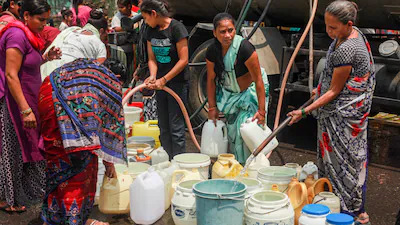
Pune’s water distribution system faces uncertainty after the state’s water resources department issued a 15-day ultimatum to the municipal corporation to clear ₹932.88 crore in outstanding payments. The warning raises the prospect of supply curbs to a city of over four million people, with implications for households, industry and real estate markets already navigating tighter resource conditions.
At the centre of the dispute is the Pune water supply arrangement that depends largely on releases from the Khadakwasla Dam reservoir system. Officials in the state department have indicated that further releases may be reconsidered if arrears remain unpaid beyond the deadline. While a partial payment of nearly ₹20 crore was recently made, the bulk of dues remain unresolved. The timing is significant. Civic sources confirm that a substantial portion of the city’s annual water allocation has already been utilised, leaving limited flexibility should upstream releases be restricted. Urban planners warn that any disruption in Pune water supply would affect not only drinking water access but also commercial establishments, small manufacturing clusters and construction sites that depend on assured daily volumes.
From a fiscal standpoint, the episode underscores mounting pressure on urban local bodies across India. Pune Municipal Corporation’s outstanding liabilities reflect deeper structural issues: rising operational costs, delayed tariff revisions and growing demand from expanding peri-urban areas. Infrastructure economists note that unless user charges align with service delivery costs, utilities struggle to maintain both financial sustainability and infrastructure upgrades. The potential fallout extends to the built environment. Real estate developers tracking project timelines say prolonged uncertainty around water access could slow approvals or occupancy in certain zones. Housing societies and commercial complexes increasingly invest in borewells, tankers and recycling plants, but such measures are costly and environmentally unsustainable if adopted at scale.
Water security experts argue that the present standoff offers a broader lesson in climate resilience. With erratic monsoons and rising temperatures intensifying stress on reservoirs, cities like Pune must accelerate wastewater recycling, leakage reduction and demand-side management. Financial discipline within municipal systems, they say, is as critical as engineering solutions. State officials are understood to be in communication with civic authorities to avoid abrupt disruption. However, the episode highlights how financial governance and hydrological management are tightly interlinked in fast-growing urban regions. For residents, the coming fortnight will be decisive. Whether through negotiated settlement, phased repayment, or state intervention, the outcome will test Pune’s capacity to balance fiscal responsibility with equitable access to a basic urban service one that underpins public health, economic productivity and long-term sustainability.