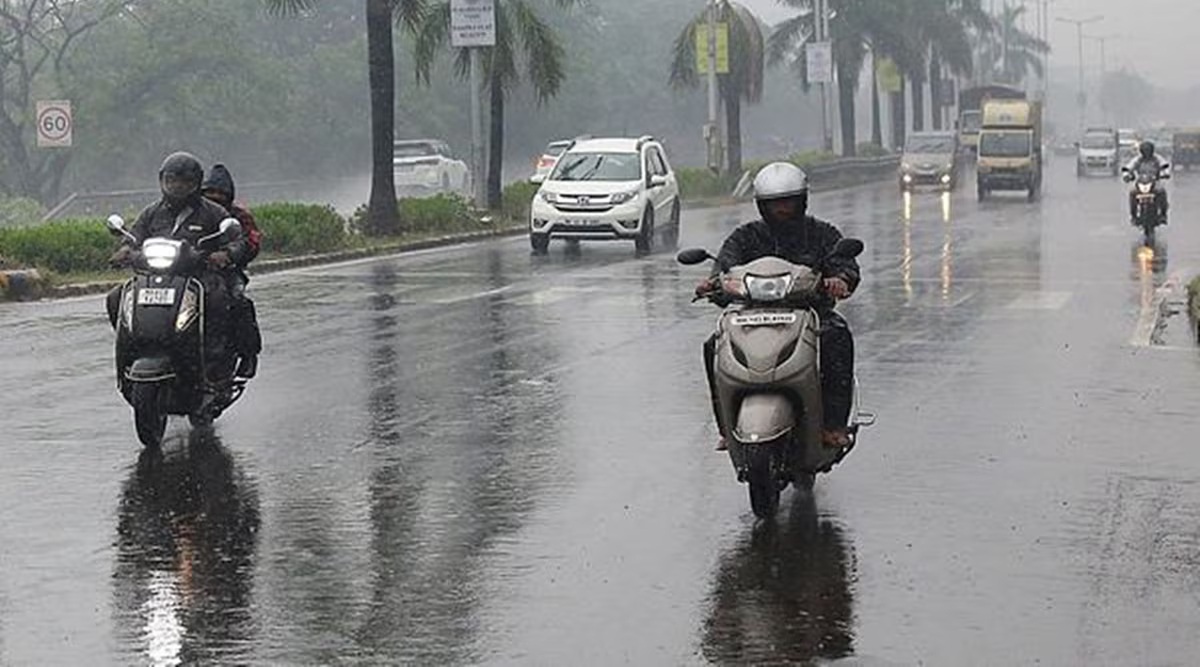
A spell of unseasonal rain across eastern Gujarat has unsettled farmers and disrupted early summer weather expectations, with light showers and lightning reported overnight in parts of Panchmahal and Dahod districts. The unexpected precipitation arrives during a sensitive transition between winter retreat and summer onset, raising concerns over standing rabi crops and highlighting the growing volatility of regional weather patterns.
Localised rainfall was recorded in pockets of Panchmahal, including Godhra and adjoining rural belts, after two days of overcast conditions. Similar atmospheric instability extended to Dahod district, where scattered showers accompanied by lightning were observed across several villages. Dense cloud formation was also reported in the Ambaji region of north Gujarat, leading to a temporary drop in daytime temperatures. For cultivators of wheat and other winter crops, the unseasonal rain has heightened anxieties. Agricultural experts note that even short bursts of rain during the grain-filling stage can affect yield quality, particularly if followed by humidity or fungal activity. Farmers in eastern Gujarat depend heavily on predictable late-winter conditions to prepare for harvest and subsequent soil management cycles. Disruptions at this stage can have ripple effects on farm incomes and local rural economies. The India Meteorological Department had indicated a gradual rise of 2–3°C in minimum and maximum temperatures over the next 48 hours, suggesting above-normal February heat conditions.
Instead, cloud cover and scattered showers temporarily moderated daytime highs, which had recently reached around 32°C in several districts. Urban planners and climate researchers say such deviations underscore the increasing unpredictability of seasonal transitions in western India. “Short, intense and spatially uneven rainfall events are becoming more common,” a climate analyst tracking western Indian weather systems said. While these events may not amount to large cumulative rainfall, their timing can be economically disruptive. From an urban governance perspective, intermittent weather shifts during transitional months also test drainage readiness, peri-urban agriculture supply chains and electricity demand forecasting. Although no major urban flooding was reported, experts argue that even minor unseasonal rain episodes should inform city-level climate adaptation strategies.
Gujarat’s eastern districts form a crucial agrarian buffer for both local consumption and urban markets. Variability in output can affect price stability in wholesale mandis and influence supply to rapidly expanding urban centres. As cities grow and peri-urban farming zones shrink, resilience in agricultural belts becomes increasingly intertwined with urban food security. Meteorologists expect clearer conditions to return if prevailing temperature trends resume. However, the latest unseasonal rain event adds to mounting evidence that climate variability is reshaping traditional weather expectations. For policymakers, the episode reinforces the need for early warning systems, crop insurance awareness and climate-responsive infrastructure in both rural and urban contexts as Gujarat navigates its evolving seasonal landscape.