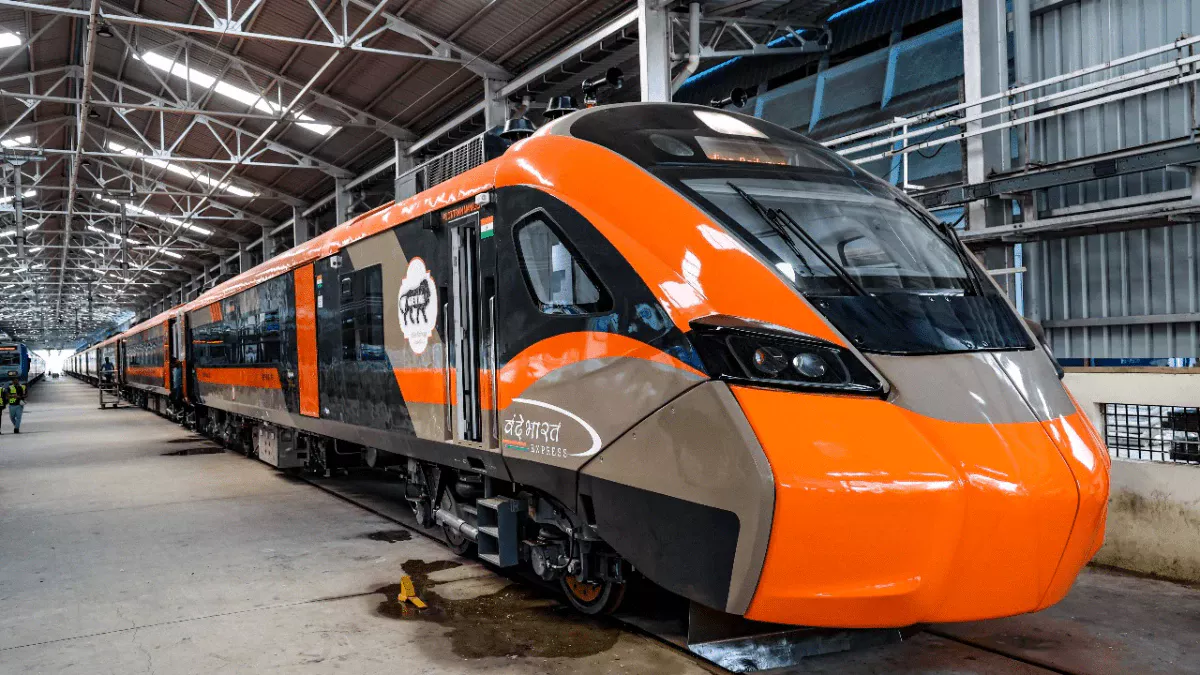
A new overnight semi high-speed rail service linking the national capital with Punjab’s spiritual and commercial centre is expected to be introduced next winter, as Indian Railways prepares to expand its sleeper category fleet. The proposed Delhi Amritsar Vande Bharat Sleeper marks a strategic upgrade on one of North India’s busiest corridors, with implications for regional mobility, tourism and inter-state economic integration.
Railway officials indicate that after the rollout of the first sleeper-configured Vande Bharat services on eastern routes, northern sectors such as Delhi–Amritsar are under consideration for early deployment once fresh trainsets are delivered and certified. The corridor, spanning roughly 450 kilometres, currently relies on conventional express services that take over seven hours to complete the journey.
The Delhi Amritsar Vande Bharat Sleeper is designed to operate at speeds of up to 160–180 km per hour, subject to track conditions.
Unlike the existing chair-car Vande Bharat trains that serve daytime travellers, the sleeper configuration caters to overnight passengers, offering three classes of air-conditioned accommodation within a 16-coach rake capable of carrying more than 800 commuters. Railway engineers say the trainsets incorporate communication-based safety systems, anti-collision technology and advanced fire detection mechanisms. Automatic plug doors, improved sound insulation and redesigned berths are aimed at enhancing passenger comfort on longer routes. Faster acceleration and deceleration are expected to reduce overall journey times once supporting track upgrades are completed.
Transport economists note that the Delhi–Amritsar stretch carries a mix of business travellers, students, migrant workers and religious tourists. A high-speed overnight option could enable late evening departures from Delhi with early morning arrivals in Amritsar, strengthening tourism flows to heritage destinations and supporting small businesses dependent on pilgrimage traffic. Beyond convenience, the Delhi Amritsar Vande Bharat Sleeper reflects a broader policy shift towards modernising long-distance rail as a competitive alternative to short-haul aviation and road transport. Rail travel emits significantly lower carbon per passenger kilometre than air or private vehicles, making corridor upgrades relevant to India’s climate commitments and cleaner urban growth objectives.
Manufacturing orders for hundreds of sleeper-configured trainsets have been placed through public sector and joint venture entities, signalling a scaled production push. Industry observers say such volumes are necessary if premium rail services are to reach multiple high-demand routes across the country.
Urban planners also point to the corridor’s real estate implications. Improved overnight connectivity between Delhi and Amritsar can influence hospitality investments, warehousing demand and second-home markets in Punjab.
Reliable inter-city transport links tend to reshape development patterns along station precincts, often triggering transit-oriented growth. While a formal launch date has yet to be confirmed, preparatory work and production timelines suggest the service could begin operations in the coming winter season. Its performance will likely shape future decisions on deploying sleeper variants across other high-density corridors in northern India.
Delhi Amritsar Vande Bharat Sleeper Planned