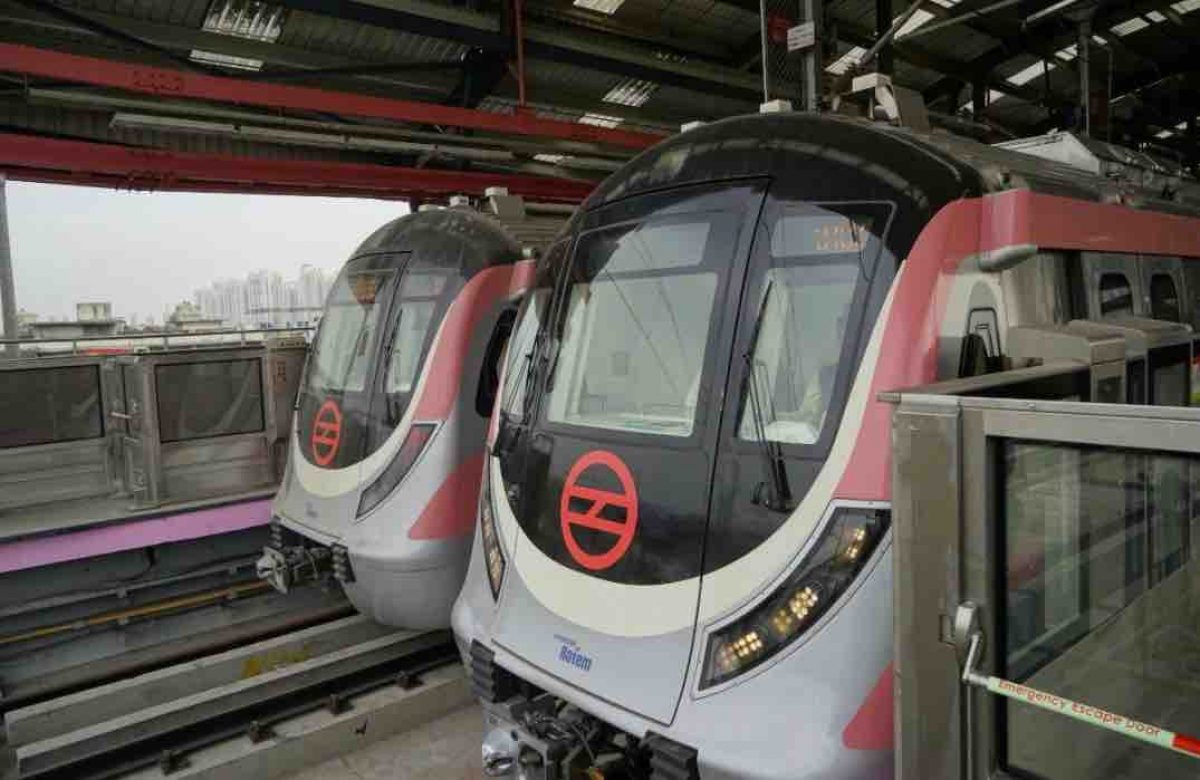
Delhi Metro Rail Corporation has initiated the procurement of 68 new coaches for the planned Red Line extension connecting northwest Delhi to Haryana, signalling a decisive step in strengthening cross-border urban mobility in the National Capital Region. The move lays the groundwork for a direct mass transit link between Uttar Pradesh and Haryana through Delhi, with implications for regional labour flows, housing growth and sustainable commuting patterns.
The rolling stock will serve the Rithala–Narela–Nathupur corridor, a 26-kilometre stretch under Phase 4 expansion that will add 21 stations to the existing Red Line network. Nineteen of these stations will fall within Delhi’s limits, while two will extend into Haryana’s Kundli area, integrating emerging residential and industrial clusters with the capital’s transit backbone. Officials familiar with the planning said the Delhi Metro Red Line extension will initially operate with four-coach train sets. However, the design allows scaling up to eight coaches depending on passenger volumes. The corridor will be built on broad gauge, consistent with the existing Red Line, enabling operational continuity and fleet compatibility. The contract includes a long-term maintenance component spanning 15 years, underlining lifecycle cost planning rather than one-time capital deployment.
At present, the Red Line runs between Shaheed Sthal in Ghaziabad and Rithala in Delhi, carrying heavy peak-hour ridership through densely populated residential and commercial zones. Urban transport analysts note that extending the corridor northwards is likely to redistribute commuting pressure while opening new development corridors along the alignment. Significantly, the project marks the fourth metro expansion into Haryana, following earlier links to Gurugram, Faridabad and Bahadurgarh. It will also create the first continuous metro route connecting Uttar Pradesh and Haryana through Delhi’s network. Planners argue that such inter-state connectivity is essential for managing population spillover from the capital into peripheral towns, where land remains comparatively affordable but employment remains concentrated in urban cores.
The Delhi Metro Red Line extension was previously conceived as a lighter “Metrolite” system, typically deployed in lower-density areas. The decision to proceed with full-scale metro infrastructure suggests revised demand projections and long-term urbanisation expectations for the Narela and Kundli belt. Real estate consultants tracking the corridor say improved transit certainty could accelerate plotted development, group housing and warehousing activity in north Delhi and adjoining Haryana. Construction activity on the corridor is yet to begin, though pre-construction assessments and tendering processes are underway. Delivery of the new coaches is targeted ahead of operational launch, expected toward the end of the decade.
The trains will be equipped to operate on communication-based train control signalling, enabling higher frequency and improved safety through automated systems. As Delhi and its neighbouring states confront congestion, air quality challenges and fragmented growth, the scale and configuration of this extension will test how effectively mass transit can shape inclusive, low-carbon expansion across state boundaries.
Delhi Metro Floats Tender For Red Line Extension