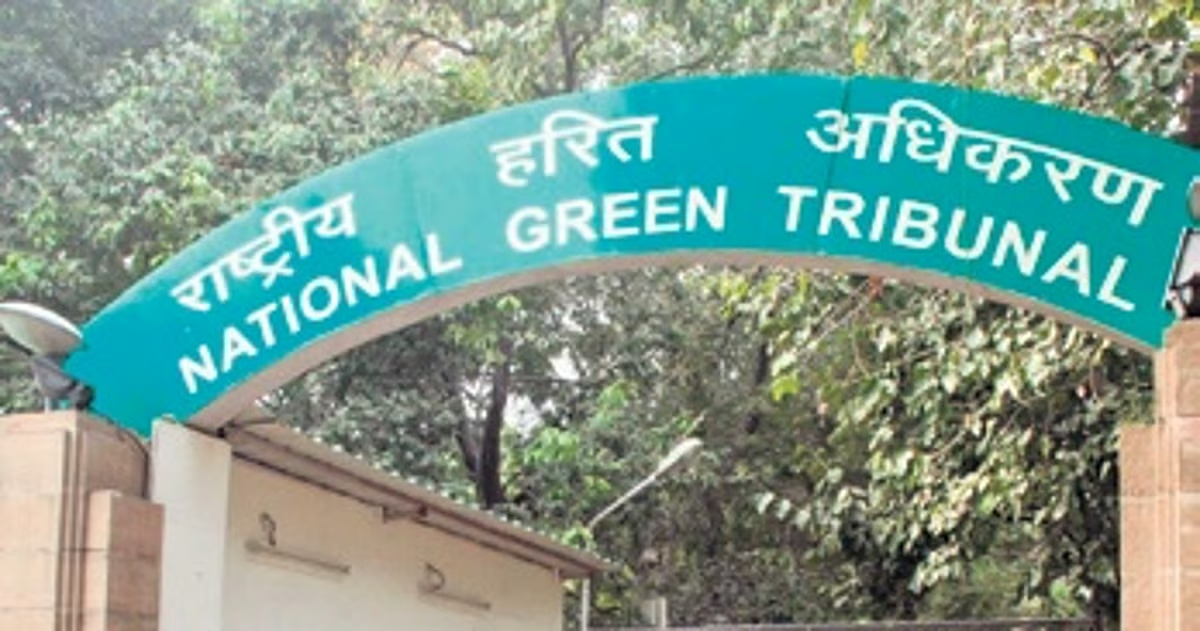
Delhi’s long-stalled efforts to restore its shrinking lakes and ponds have received a judicial push, with the National Green Tribunal directing authorities to prepare a time-bound roadmap for reviving water bodies across the capital. The order mandates the Delhi Pollution Control Committee to frame a comprehensive strategy within six months, signalling tighter environmental oversight in a city battling groundwater stress and seasonal flooding.
The direction emerged during proceedings linked to unauthorised groundwater extraction in East Delhi. While local authorities informed the tribunal that the illegal borewell had been sealed and environmental compensation recovered, the bench broadened its focus to systemic issues around water governance. It asked the Delhi Pollution Control Committee (DPCC) to work alongside the state wetland authority and district-level wetland committees to design a citywide rejuvenation framework. Delhi has more than 1,000 recorded water bodies, many of which have suffered encroachment, sewage inflow and neglect over decades of rapid urbanisation. Urban planners say that restoring these assets is not merely an ecological exercise but central to climate adaptation. Functional lakes and ponds improve groundwater recharge, reduce heat island effects and act as buffers during extreme rainfall events an increasing risk as climate variability intensifies.
The tribunal has also instructed that funds collected as environmental compensation be channelled into implementing the water bodies rejuvenation plan. Compliance reporting has been made mandatory, introducing an accountability mechanism that could shape execution timelines. Experts note that such judicial monitoring often accelerates inter-departmental coordination in fragmented urban governance systems. The move aligns with a broader national scrutiny of groundwater dependency. In recent observations, the tribunal flagged excessive extraction practices, including the continued use of aquifers by large facilities despite access to treated wastewater. Water economists argue that Delhi’s construction and real estate sectors, alongside institutional campuses and sports complexes, must shift towards recycled water systems to reduce pressure on aquifers.
For the capital’s real estate and infrastructure markets, the directive carries long-term implications. Developers are increasingly required to integrate rainwater harvesting, on-site wastewater treatment and blue-green infrastructure into project design. A credible water bodies rejuvenation plan could also enhance property values in adjoining neighbourhoods, as restored lakes often become community and recreational anchors. However, execution remains the critical test. Previous restoration drives have faltered due to weak maintenance frameworks and limited community participation.
Environmental planners suggest that mapping, demarcation using geo-tagging, pollution source control and continuous monitoring must form the backbone of the new strategy. As Delhi expands vertically and horizontally, its water security will hinge less on distant river transfers and more on protecting and restoring local hydrological assets. The tribunal’s intervention may offer a structural opportunity to embed resilience into the city’s growth trajectory provided policy intent translates into sustained action on the ground.
Delhi NGT Orders Water Bodies Revival Plan