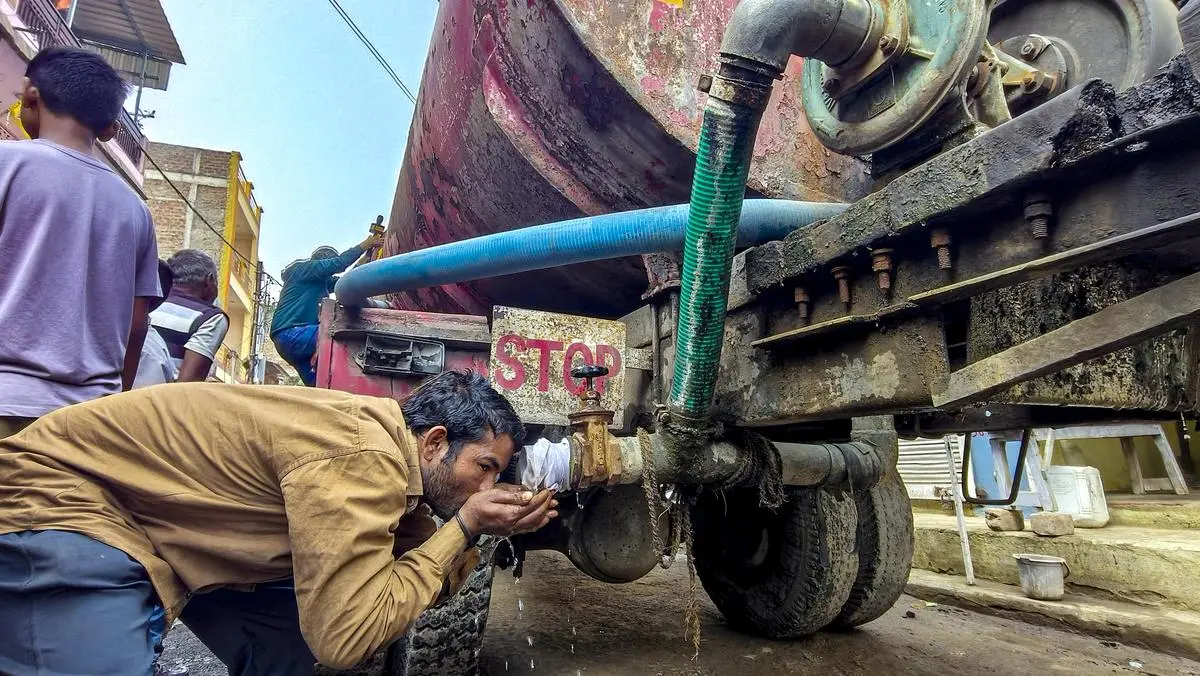
Indore Drinking Water Safety Under Public Health Lens
Indore — Laboratory investigations into the recent waterborne health crisis in Indore’s Bhagirathpura area have confirmed that bacterial contamination in the municipal water supply played a central role in triggering a widespread outbreak of vomiting and diarrhoea that has claimed multiple lives and sickened hundreds of residents.
Public health authorities say the finding highlights critical vulnerabilities in urban water infrastructure and monitoring even in cities celebrated for cleanliness rankings. Initial tests by a city-based medical college linked the outbreak to contamination in the drinking water distribution system after a leak in a main pipeline allowed sewage-tainted water to enter the potable supply. Health officials told media that bacterial contaminants — typically associated with sewage — were detected in multiple samples from affected localities, correlating with the pattern of acute diarrhoeal disease reported in the community.
The affected area’s water reportedly showed signs of foul smell and discolouration before the surge in illness was reported, prompting residents to seek medical care for symptoms ranging from severe diarrhoea and dehydration to vomiting and fever. Official counts suggest more than 1,400 people experienced symptoms consistent with waterborne infection in late December and early January, with the confirmed death toll varying across sources but rising into double digits according to local statements. Public health experts describe such bacterial contamination — particularly when sewage enters drinking water lines — as a classic trigger for acute gastrointestinal outbreaks, often involving organisms such as Escherichia coli and other coliforms. The presence of these pathogens in drinking water can rapidly fuel disease spread in dense urban neighbourhoods, especially where distribution pipelines run close to sanitation systems without adequate protective separation or monitoring.
In response to the crisis, municipal and state authorities have initiated emergency measures, including supplying alternate clean water sources, flushing and disinfecting pipeline networks, and suspending or dismissing officials deemed responsible for lapses in oversight. Courts and regulatory bodies have also taken cognisance of the incident, with orders issued for comprehensive reporting and enhanced water quality enforcement. The episode has ignited a broader debate about urban water governance in India’s growing cities. Urban planners note that robust water quality surveillance, frequent microbial testing, and protective engineering controls — especially around pipelines adjacent to sanitation infrastructure — are essential to preventing contamination events that can escalate into public health emergencies. Without such safeguards, rapid urban expansion and ageing networks risk repeating similar tragedies.
As public health teams continue their work, the crisis serves as a stark reminder that municipal water safety is foundational to resilient city infrastructure, requiring sustained investment, transparent monitoring and accountable management to protect urban communities.