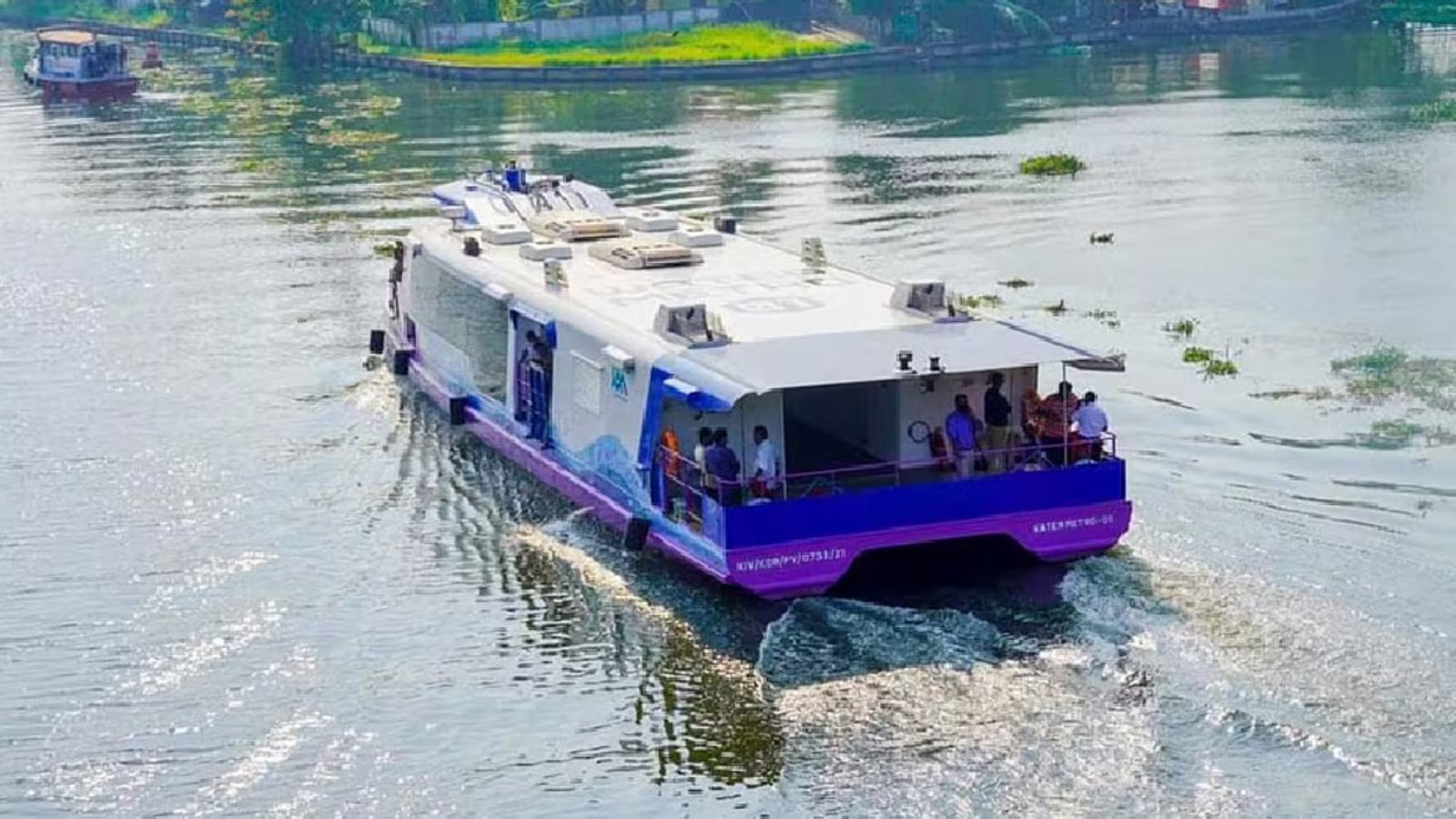
Maharashtra is gearing up to introduce a Water Metro system in the Mumbai Metropolitan Region (MMR), a move that could reshape urban commuting and ease road congestion by using battery‑powered ferries along key waterways. The phased rollout, expected to begin from December this year, signals a significant shift toward multimodal transport planning that embraces both sustainability and expanded accessibility.
Announced recently by the Maharashtra Ports Minister, the initiative envisions an interconnected network of electric boat services linking diverse waterfront precincts across the metropolitan region. A Detailed Project Report (DPR) is due by 28 February, after which priority routes will be selected in consultation with state leadership. Initially, two routes within Mumbai city are likely to go live, with subsequent expansion into the broader MMR.The project draws inspiration from the Kochi Water Metro, one of India’s first integrated water‑based transit systems. Mumbai’s version is planned around at least six to eight routes, integrating strategically placed jetties and terminals at locations such as Nariman Point, Worli, Bandra, Juhu and Versova, and potentially extending to areas near Navi Mumbai International Airport.
Urban planners say this model could offer multiple benefits. In a densely built megacity like Mumbai — where road congestion and pressure on existing rail and metro networks remain persistent challenges — leveraging waterways provides an underutilised transit corridor that is both low‑carbon and scenic. Ferries powered by renewable‑compatible battery systems are expected to cut travel times for commuters and create alternative connectivity especially for waterfront suburbs and key economic nodes.Analysts also highlight the potential impact beyond daily commutes. A Water Metro framework could encourage tourism‑linked travel circuits connecting coastal attractions, historic islands and riverfront precincts within the MMR, all while supporting economic activity around port and dock zones traditionally sidelined from mainstream transport planning.
However, the success of such water transport systems in a monsoon‑affected littoral environment depends on robust design and integration with existing infrastructure. Experts stress that terminals must be engineered with resilient docking, tidal mitigation and real‑time service management to ensure reliability throughout the year. Coordinated ticketing and last‑mile links with rail, metro and bus networks will be crucial to make the Water Metro a viable alternative rather than a standalone novelty.City‑region officials already view the project as part of a larger sustainable mobility push, dovetailing with expansions in metro rail, elevated roads and traffic decongestion schemes outlined in the current infrastructure budget cycle. A formal announcement on implementation timelines and funding — including potential private sector participation — is expected with the state budget on 6 March.
For residents, the prospect of a Water Metro — connecting major hubs with less reliance on congested surface roads — could signal a new era of people‑centred, climate‑aligned urban transportation. As the DPR moves forward and first services are piloted later this year, planners and commuters alike will be watching closely for operational details and integration strategies that shape Mumbai’s waterfront mobility future.