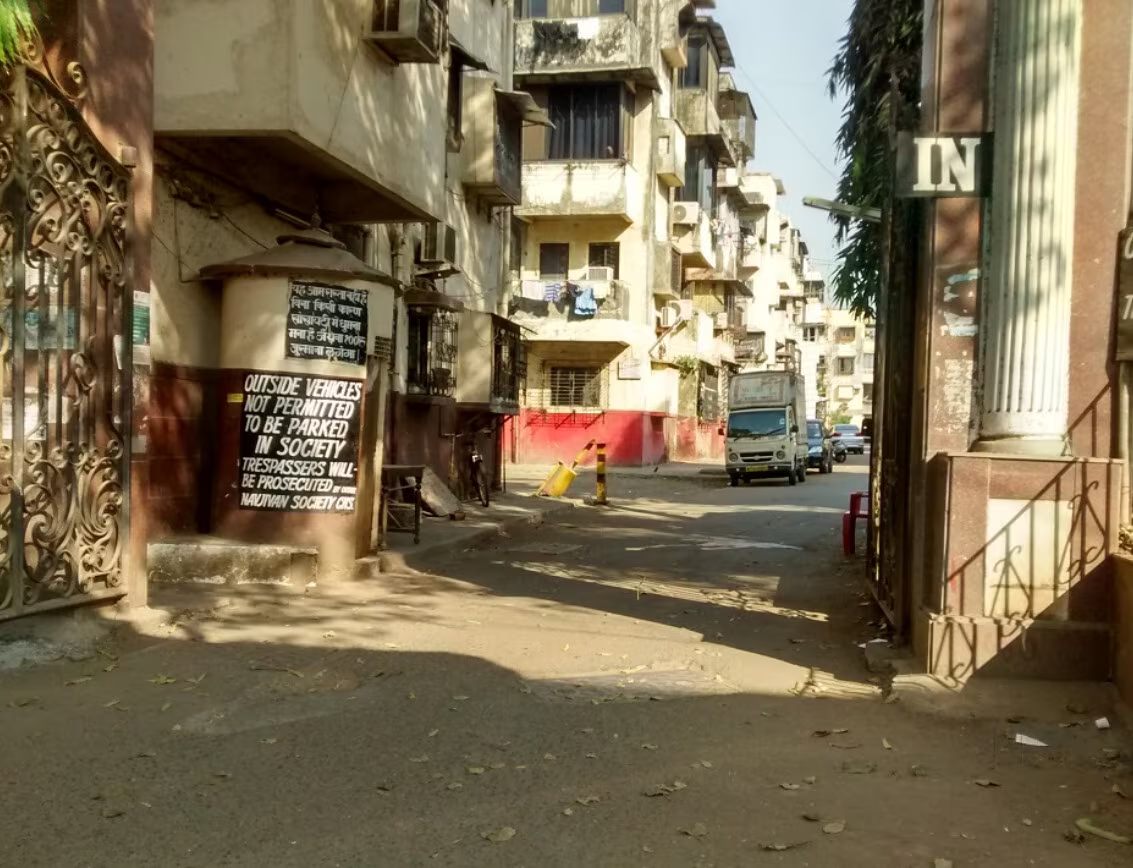
Mumbai Chembur Society Starts Long Delayed Tower Construction
After a 19‑year legal and organisational struggle, members of the Tilak Safalya Co‑operative Housing Society in Chembur have begun actual construction of a new residential tower on their site, marking a landmark win for resident‑driven redevelopment in the city’s densely built eastern precinct. The project reflects a growing shift in Mumbai’s housing landscape, where societies are increasingly asserting control over redevelopment to gain agency, improve living conditions, and build sustainably.
The journey to groundbreaking has been fraught: the society’s old 200 sq ft MHADA flats were demolished in 2010 after a developer was initially appointed to rebuild homes, but construction never began. Residents then engaged in prolonged disputes that wound through arbitration and courts, ultimately securing redevelopment rights at the Supreme Court of India. With legal clarity achieved in 2018, the society opted for a self‑redevelopment model, managing planning, financing and execution directly — a departure from traditional builder‑led redevelopment.This resident‑centric approach is notable in a city where redevelopment timelines often stretch into decades, leaving families in rented accommodation and under temporary hardship. Urban development analysts say such self‑driven models can enhance community agency, reduce dependency on external developers who may prioritise commercial interests, and enable tailored design that better meets resident needs. However, they also require strong organisational capacity within societies to navigate approvals, financing and construction complexities.
For the Tilak Safalya community, the milestone brings more than structural progress. Planned features include larger homes — quadruple the size of original tenements — along with sustainable amenities such as centralised air‑conditioning systems, solar power integration, and rainwater harvesting. Residents are also pursuing green building certification, signalling an intent to embed climate resilience and environmental responsibility into urban living — a growing theme in metropolitan redevelopment strategy.Such people‑led redevelopment resonates with broader patterns in Mumbai’s real estate evolution. In recent years, multiple cooperatives in the city have faced similar challenges with stalled projects and developer abandonment, prompting a surge in self‑redevelopment initiatives. These efforts dovetail with policy incentives — including benefits from reduced stamp duties and streamlined approvals — aimed at decongesting ageing stock and revitalising internal city districts.
Yet the path is not without hurdles. Experts note that strong governance and financial oversight within societies are prerequisites for success. Without them, self‑managed projects risk delays or quality issues, particularly among smaller cooperatives lacking technical expertise. Balancing cost‑efficiency with long‑term maintenance planning will be crucial, especially as newer, larger developments can carry higher lifecycle service costs.
For Chembur residents, however, the current progress represents a decades‑long aspiration coming to life — a testament to collective resolve and community leadership. As the project transitions from groundwork to full construction, municipal planners and housing policy advocates will be watching closely for its broader implications: can resident‑led redevelopment offer a replicable urban housing model that supports inclusivity, sustainability and equitable growth in Mumbai’s dense urban fabric.