


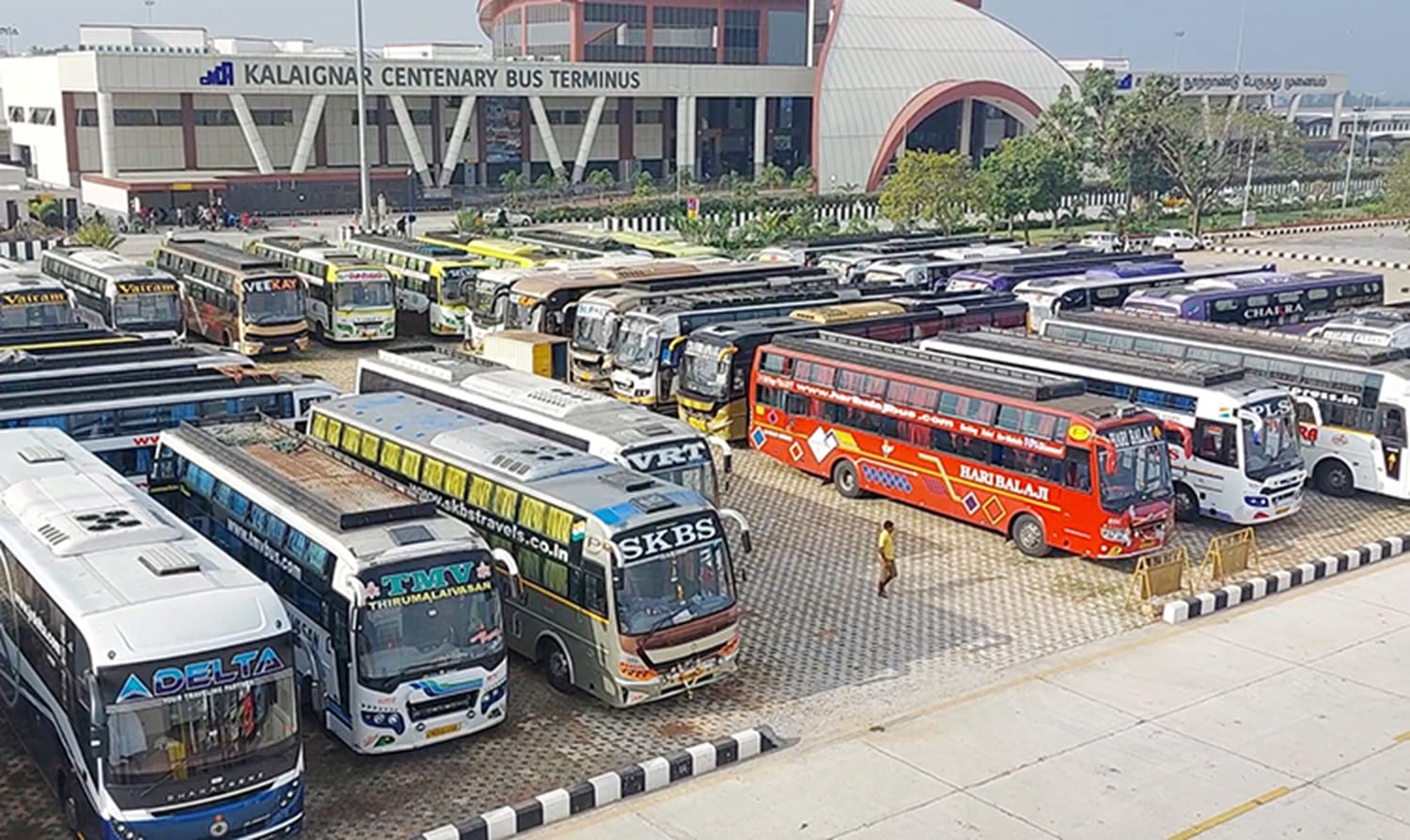
More than two years after the inauguration of the Kalaignar Centenary Bus Terminus in Kilambakkam, private operators continue to halt along GST Road for passenger boarding, exposing regulatory gaps and weakening the intended decongestion strategy for south Chennai. The persistence of Chennai omni bus violations highlights coordination challenges between transport authorities and traffic enforcement agencies in managing intercity mobility infrastructure.
The terminus was conceived as a peripheral transit hub to streamline outbound traffic, reduce inner-city congestion and formalise private bus operations. However, field observations along the Grand Southern Trunk Road show multiple omni buses pausing outside the facility, especially during peak travel days and weekends, often leading to lane blockages and traffic slowdowns.Traffic officials acknowledge that their intervention largely centres on clearing bottlenecks rather than ensuring strict compliance with designated pickup norms. Enforcement responsibility for authorised boarding points, they indicate, falls under transport and terminus management authorities. This fragmented oversight has allowed a parallel boarding system to continue along the arterial corridor.
Operators cite turnaround time and passenger convenience as key reasons for avoiding entry into the terminus, arguing that detours and internal circulation increase trip duration. Commuters, meanwhile, report being directed to roadside pickup points, where basic amenities such as sheltered waiting areas and sanitation facilities are limited.For the Chennai Metropolitan Development Authority, which oversees the terminus, the issue has financial implications. Each private bus entry attracts a user fee, intended to support facility maintenance and operational costs. Continued roadside boarding translates into foregone revenue and underutilisation of infrastructure built at significant public expense.
Urban mobility experts say the episode underscores a broader governance dilemma: infrastructure expansion without aligned enforcement dilutes public returns. Peripheral bus terminals are designed to reduce vehicular load in city cores, cut emissions from idling traffic and improve commuter safety. When compliance falters, congestion shifts rather than diminishes.Transport economists further note that informal boarding points create safety risks, particularly for women, elderly passengers and children navigating high-speed corridors. In climate terms, inconsistent traffic flow along GST Road increases fuel burn and carbon output, countering efforts to promote low-emission urban mobility.
Stakeholders within the private bus industry maintain that larger operators are using the terminus, but concede that uniform adherence remains a challenge. Festival seasons and demand surges add complexity, often prompting temporary relaxations in pickup norms.As Chennai continues investing in decentralised transport hubs, the success of such projects will depend not only on physical infrastructure but also on integrated enforcement frameworks. Strengthening coordination between transport regulators, police and terminus management could determine whether the Kilambakkam facility evolves into a fully functional mobility anchor — or remains an under-leveraged asset on the city’s southern edge.
Also Read:Pune MCCIA Launches Drone Innovation Hub For MSMEs
Chennai GST Road Omni Bus Violations Persist
