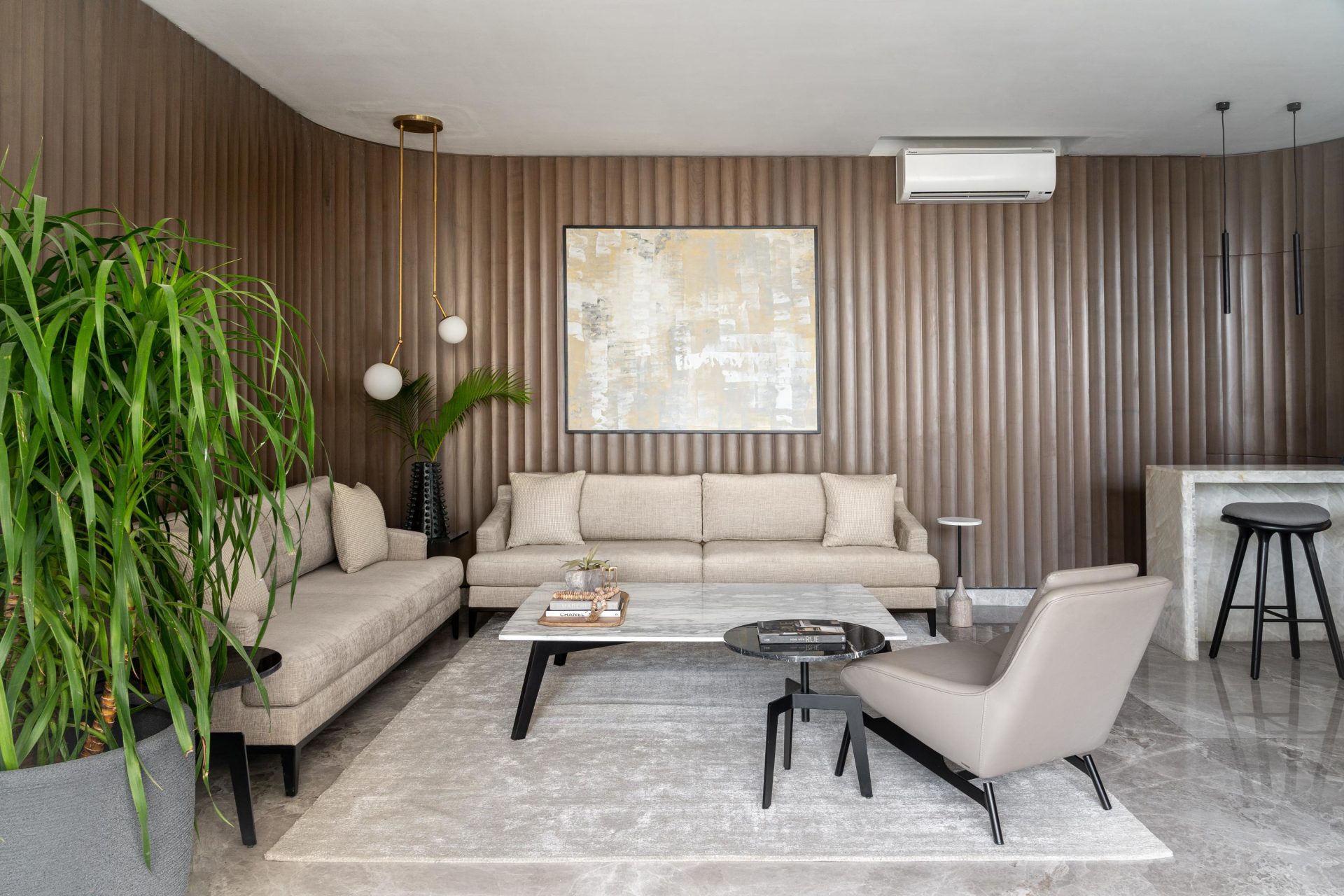
A newly completed residential project along the city’s coast demonstrates how thoughtful design can weave together contextual responsiveness, sensory experience and resilience — a synthesis increasingly visible in India’s urban luxury housing landscape. Created by Alara Studio, the Chennai Waterside Home embodies a design language that responds directly to its maritime setting while prioritising comfort, sustainability and spatial harmony.
Set against the dynamic backdrop of the Bay of Bengal, the residence was conceived to engage with the rhythms of the sea — from the shifting light of dawn to the monsoon winds that define Chennai’s climate. Faced with intense sunlight, corrosive saline atmospheres and seasonal weather variation, Alara Studio adopted a design strategy that balances openness with protection, ensuring the home performs well across extremes without compromising aesthetic aspirations.Large, carefully oriented windows and deep sheltered terraces allow views toward the water while buffering heat gain, reflecting a growing trend among Indian coastal homeowners and architects who prioritise climate‑aware design over purely decorative concerns. This approach aligns with best practices in bioclimatic architecture, where passive strategies enhance indoor comfort and reduce dependence on mechanical systems — a crucial factor in hot‑humid contexts.
Material choices play a central role in the project’s success. Alara Studio selected a palette of weather‑resilient materials — textured limestone, treated timber and light‑toned finishes — that age gracefully in a marine environment and reduce long‑term maintenance burdens. These selections also help moderate indoor temperatures and support thermal comfort, important given Chennai’s high diurnal heat ranges and humidity levels.Spatial organisation within the home reflects a deeper understanding of how people inhabit coastal residences. Rather than compartmentalising spaces rigidly, the design features fluid transitions, shaded social zones and quiet retreats that respond to changing light, wind and visual focus throughout the day. Such spatial dynamics echo broader shifts in contemporary architecture that place human experience and well‑being at the centre, even in high‑end residential briefs.
The Chennai Waterside Home also exemplifies how luxury and resilience can coexist. Passive cooling strategies, sun‑shading devices and cross‑ventilation channels not only reduce energy use but also foster conditions that feel naturally comfortable to occupants — an increasingly desirable quality as Indian metropolises confront rising temperatures and climate variability.
For urban developers and real estate investors, projects like this underscore how premium residential design is evolving beyond ornamentation toward contextually intelligent architecture that responds to environment, lifestyle and longevity. Alara Studio’s work illustrates how elegant form and sustainable performance can be woven into the DNA of high‑end housing — a template that other coastal cities may well emulate as India’s built environment adapts to future climatic and cultural priorities.